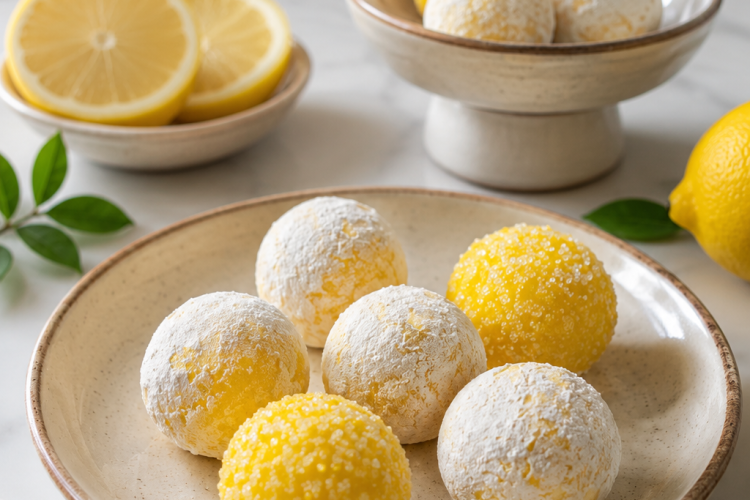
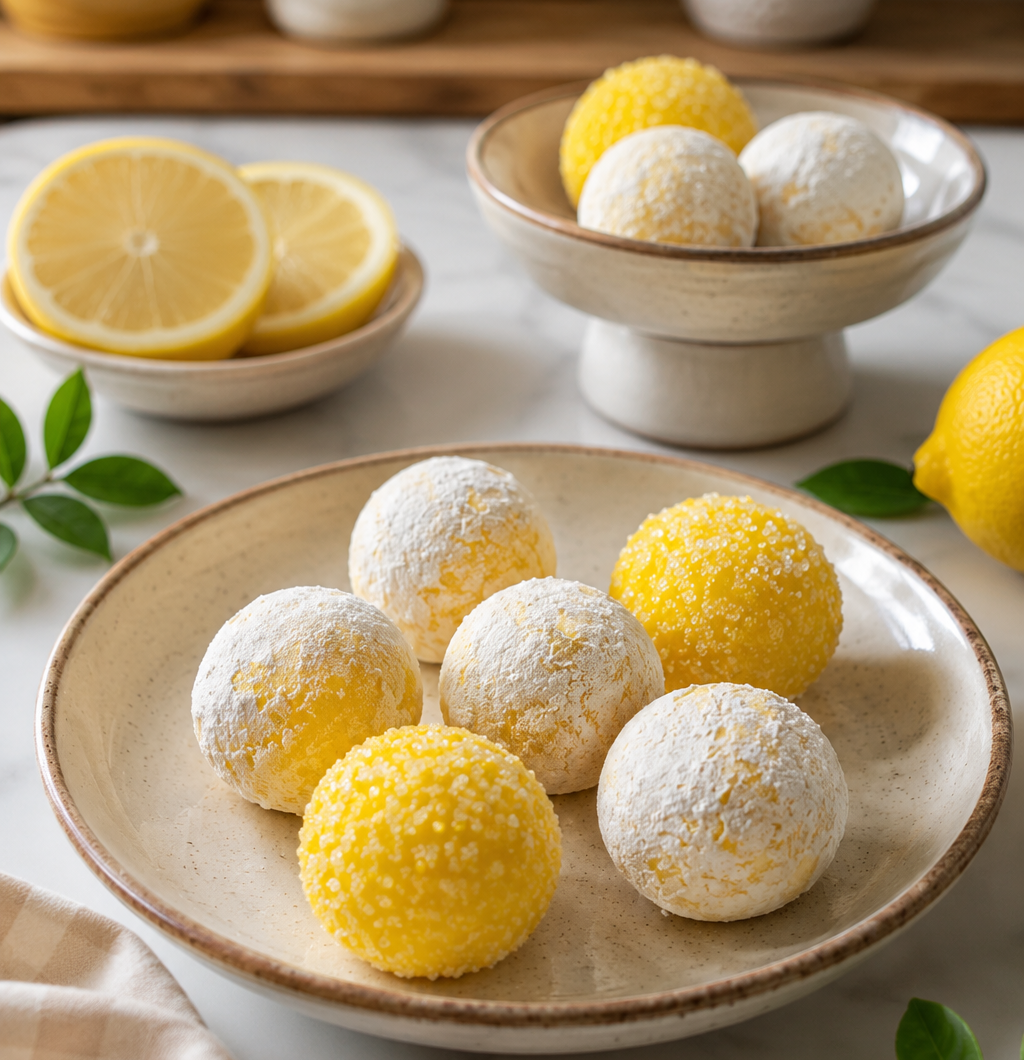
Lemon truffles are a simple homemade candy made with white chocolate, heavy cream, butter, and lemon extract. The mixture turns into a soft, creamy ganache that becomes firm after chilling. Once set, the ganache is shaped into small balls and covered with powdered sugar or colorful sprinkles. Each bite has a smooth white chocolate texture with a clear lemon flavor.
This easy lemon truffles recipe is a good choice when you want a dessert that looks special without requiring complicated candy-making equipment. The method is mostly about controlling heat, mixing gently, and giving the ganache enough time to chill. Once the mixture is properly set, shaping the truffles is straightforward. The finished candies are small, rich, sweet, and easy to serve.
These white chocolate lemon truffles are especially useful for parties, dessert tables, holiday treats, homemade gifts, and afternoon sweets. Their pale color and bright coating make them attractive on a serving plate. You can use powdered sugar for a simple finish or choose small sprinkles for a more colorful appearance. The basic truffle mixture stays the same either way.
Why White Chocolate Works So Well With Lemon
White chocolate has a rich, sweet flavor that pairs naturally with the sharper taste of lemon. Because the chocolate is mild, the lemon extract can stand out without being hidden by a strong cocoa flavor. Heavy cream gives the mixture a smooth texture, while butter adds richness and helps create the soft ganache used for the truffle centers.
The balance is important because these truffles are meant to taste creamy as well as lemony. The lemon extract is added to the hot cream rather than directly to the finished candy. This spreads the flavor through the ganache as the warm cream melts the chopped chocolate. Gentle stirring helps bring everything together without making the mixture overly loose or uneven.
Choosing the Right White Chocolate
The type of white chocolate matters in this recipe. Use a good-quality white chocolate bar rather than white chocolate morsels or white melting candy. The recipe depends on the chocolate having the right balance of cocoa butter and other ingredients so the ganache can become firm enough to roll after chilling.
Coarsely chop the chocolate before placing it in the heatproof bowl. Smaller pieces melt more easily when the hot cream is poured over them. You do not need to melt the chocolate separately before beginning. The hot cream will do that work gradually, while the softened butter helps create a smooth and rich mixture.
Preparing the Chocolate and Butter
Start by placing the chopped white chocolate into a large heatproof bowl. Add the softened unsalted butter directly on top. There is no need to mix these ingredients at this stage. Keeping them together in the bowl allows the hot cream mixture to melt them evenly when it is added later.
The butter should be softened to room temperature before you begin. Soft butter blends into the warm ganache more easily than a cold, hard piece. If the butter is cold, it may take longer to melt and can leave small pieces in the mixture. Having the chocolate and butter ready before heating the cream also helps you work without delay.
Heating the Heavy Cream
Pour the heavy cream into a small saucepan and place it over medium heat. Whisk occasionally while it warms. The goal is to bring the cream just to the beginning of a boil. You do not need a long, rolling boil, and the cream should not be left unattended on the stove.
As soon as the cream begins to boil, remove the saucepan from the heat. Add the lemon extract carefully and whisk it into the hot cream. The liquid may bubble up when the extract is added, so pour it in carefully and keep your hands away from the rising steam. This short step gives the cream its lemon flavor before it reaches the chocolate.
Making the Lemon Ganache
Pour the hot cream and lemon mixture over the white chocolate and butter. Allow the heat from the cream to soften the chocolate. Then use a wooden spoon to stir gently in one direction. Avoid beating or stirring aggressively because the goal is to create a smooth ganache rather than whip air into the mixture.
Continue stirring until the white chocolate and butter have completely melted. The finished mixture should look smooth, creamy, and even, without visible pieces of chocolate or butter. If you still see small pieces, continue with gentle stirring so the remaining heat can melt them. Do not rush this stage, because the smoothness of the ganache affects the final texture of the truffles.
Why Gentle Stirring Matters
Gentle stirring is an important part of making these homemade lemon truffles. A wooden spoon works well because it allows you to mix the thickening ganache steadily. Stirring in one direction also keeps the process controlled as the hot cream and chocolate combine.
The mixture may look quite soft when it is first prepared. That is normal. It will not have the texture of a finished truffle immediately after mixing. The ganache needs time at room temperature and then several hours in the refrigerator to become firm enough to scoop and shape.
Covering and Chilling the Ganache
Once the ganache is completely smooth, cover the bowl with plastic wrap. Press the wrap directly against the surface of the mixture. This keeps the surface protected while the ganache rests and chills. Let the covered mixture sit at room temperature for one hour before moving it to the refrigerator.
After the one-hour rest, refrigerate the ganache for at least six hours. Overnight chilling also works well if you want to prepare the mixture ahead of time. The long chilling period is important because the ganache needs to firm up before you can shape it into balls. When properly chilled, it should be soft enough to scoop but firm enough to hold its shape.
Getting Ready to Shape the Truffles
When the ganache has finished chilling, prepare two large baking sheets. Line them with parchment paper or silicone baking mats. This gives you a clean surface for the finished truffles and makes handling them easier. Set the prepared trays close to your work area before you begin rolling.
Pour powdered sugar or your chosen sprinkles into a small bowl. Have everything ready before scooping the ganache because the mixture can become softer as it warms in your hands. Working with a small amount at a time helps you maintain a neat shape and keeps the process manageable.
How to Make Smooth Lemon Truffle Balls
Use a melon baller or teaspoon measure to portion out the chilled ganache. The exact size is up to you, but keeping the portions similar will give you a more uniform batch. Place a portion between your hands and gently roll it into a ball. Try not to handle the ganache longer than necessary.
Immediately roll each shaped truffle through the powdered sugar or sprinkles. Make sure the coating covers the outside evenly. Place the coated truffle on the lined baking sheet and continue with the remaining ganache. If the ganache starts feeling too soft, return it to the refrigerator briefly before continuing.
Keeping Your Hands Clean While Rolling
The ganache naturally becomes softer as it warms from contact with your hands. A simple way to keep the truffles neat is to wipe your hands clean after shaping each one. This removes sticky chocolate from your palms and makes the next truffle easier to roll.
It may take a little extra time, but clean hands make a noticeable difference when shaping homemade truffles. If the mixture becomes difficult to handle, take a short break and place the ganache back in the refrigerator. Keeping the ganache cool is more helpful than trying to force soft mixture into a perfect ball.
Powdered Sugar or Sprinkles
Powdered sugar gives these lemon truffles a simple, classic appearance. The fine sugar lightly covers the creamy white chocolate center and works well when you want an understated finish. It also keeps the focus on the lemon flavor and soft texture.
Small non-pareils or sanding sugar create a brighter look. Tiny sprinkles are particularly useful for parties, celebrations, dessert trays, and edible gifts. Choose a color that suits the occasion, or use a sunny yellow shade to emphasize the lemon flavor visually. The coating is a finishing element, so you can choose based on the look you want.
The Best Way to Serve Lemon Truffles
These truffles can be served immediately after they are shaped and coated. They are small enough to enjoy as a single bite or two, making them easy to add to a dessert platter. Arrange them in small paper candy cups if you want a cleaner presentation for guests.
For a firmer texture, keep the finished truffles chilled until serving. Refrigeration helps the ganache maintain its shape, especially if the room is warm. If you are preparing the truffles for a party, place them in the refrigerator after shaping and remove them when you are ready to serve.
Making the Truffles Ahead
The ganache needs a minimum of six hours in the refrigerator, so this recipe naturally works well as an advance-preparation dessert. You can make the chocolate mixture, cover it, and allow it to chill while you handle other cooking or baking tasks. Chilling the ganache overnight is also a convenient option.
Once the ganache is firm, shape the truffles and coat them. Keep the finished candies tightly covered in the refrigerator until serving. This keeps the creamy centers cool and helps the coating stay in place. Preparing them ahead can also make party planning easier because the shaping can be completed before guests arrive.
Common Problem: Ganache Is Too Soft
If the chilled ganache seems too soft to roll, the first thing to check is whether it has been refrigerated for the full recommended time. White chocolate ganache needs sufficient chilling time before it becomes manageable. Give it more refrigerator time before changing the recipe or adding anything else.
Warm hands can also make a properly chilled ganache seem softer than expected. Scoop smaller portions and work quickly. If the mixture continues to soften, refrigerate it again for a short period. Avoid adding extra powdered sugar or other ingredients to the ganache because that would change the original recipe and its balance.
Common Problem: Chocolate Does Not Melt Completely
Small pieces of white chocolate can remain in the bowl if the chocolate was chopped into large or uneven pieces. Gentle stirring helps the remaining pieces melt in the hot cream. Keep stirring patiently rather than increasing the heat, since direct high heat can affect the texture of white chocolate.
Using quality white chocolate is particularly important here. White chocolate bars intended for melting are better suited to this ganache than white chocolate morsels or melting candy. The recipe relies on the finished mixture setting properly after refrigeration, so the chocolate you choose has a direct effect on the final consistency.
Common Problem: Truffles Become Messy While Rolling
If the truffles are sticking heavily to your hands, the ganache may have become too warm. Work with smaller portions and keep the remaining mixture refrigerated. Wiping your hands between truffles also helps keep the outside smooth and reduces the amount of ganache left on your palms.
Do not spend too much time trying to make each ball perfectly round. A quick, gentle rolling motion is enough. Once the truffle is coated with powdered sugar or sprinkles, small imperfections become much less noticeable. The coating also gives the finished candy a neat appearance.
Notes for Better Results
Use softened butter rather than butter straight from the refrigerator. Have the chopped white chocolate ready before heating the cream. Remove the cream from the heat as soon as it begins to boil, then add the lemon extract carefully. These small details make the preparation easier and help the ingredients combine smoothly.
Use a wooden spoon for mixing the hot cream into the chocolate. Stir gently in one direction until the ganache becomes completely smooth. Avoid forceful stirring, and do not try to speed up the chilling process by changing the refrigerator temperature. The ganache needs enough time to firm naturally.
Notes About White Chocolate
For the best texture, use quality white chocolate. White chocolate morsels and white melting candy are not suitable substitutes for the chocolate specified in this recipe because their ingredient balance can produce a ganache that does not set correctly. A good-quality white chocolate bar is the better choice.
The chocolate should be coarsely chopped before it goes into the bowl. There is no need to melt it separately. The hot cream will soften the pieces while the softened butter melts into the mixture. This method keeps the process simple and reduces the number of cooking steps.
Notes About the Coating
Powdered sugar and sprinkles both work as the outer coating. Fine non-pareils or sanding sugar are useful when you want a colorful finish with small, even pieces. Powdered sugar is better suited to a simple white finish and requires no additional preparation.
Keep the coating in a shallow bowl so each truffle can be rolled easily. Coat the truffle soon after shaping while the outside is still slightly soft. If the ganache has become very firm, let it sit for a few minutes before shaping, but do not allow it to become warm.
Notes About Handling
A melon baller is helpful when you want truffles of a similar size, but a teaspoon can also be used. The important part is to portion the ganache consistently. Similar-sized truffles will chill and serve more evenly, and they will look better together on a plate.
Keep the prepared baking sheets nearby while you work. Place each coated truffle directly onto the parchment paper or silicone baking mat. Once all the ganache has been used, cover the finished truffles tightly and refrigerate them until they are ready to serve.
Notes About Storage and Serving
Keep finished lemon truffles covered in the refrigerator. The cool temperature helps the white chocolate ganache remain firm and makes the candies easier to handle. If you are serving them at a gathering, take out only the amount you expect to serve rather than leaving the entire batch at room temperature.
These truffles are also suitable for arranging on a dessert tray or placing into small candy containers for gifts. Because the recipe makes about 30 truffles, it is convenient for sharing. For the cleanest presentation, keep the coating intact and handle the finished candies as little as possible after they are shaped.
What Makes These Lemon Truffles Different
The main feature of this recipe is its soft white chocolate ganache center. Instead of using a baked base or a complicated candy mixture, the truffle filling comes together from a short list of ingredients. The cream melts the chocolate, the butter adds richness, and the lemon extract gives the mixture its distinct citrus flavor.
The finished texture is creamy rather than crunchy. The outer coating provides a small contrast to the soft center, while the lemon flavor keeps the sweetness from feeling one-dimensional. That combination makes these white chocolate lemon truffles suitable for simple family desserts as well as more polished party presentations.
When to Make This Recipe
These easy lemon truffles can be made whenever you need a small homemade dessert that can be prepared in advance. They are a natural choice for holiday cookie trays, birthday parties, afternoon tea, showers, and casual gatherings. Their small size also makes portioning simple when several desserts are being served.
The recipe is especially convenient when you have several hours available for chilling. Most of the hands-on work happens before refrigeration and again when the truffles are shaped. Planning around the six-hour chilling period allows you to finish the recipe without rushing.
Homemade Lemon Truffles
 Recipe by admin
Smooth homemade lemon truffles made with quality white chocolate, heavy cream, butter, and lemon extract. The creamy ganache is chilled, shaped into small balls, and finished with powdered sugar or bright sprinkles.
30
truffles6
hours40
minutes92
kcal6
hours40
minutesIngredients
14 ounces (398g) quality white chocolate, coarsely chopped
1 tablespoon (14g) unsalted butter, softened to room temperature
¾ cup (180mL) heavy cream
1 teaspoon lemon extract
Powdered sugar or sprinkles, for coating
Directions
- Put the chopped white chocolate in a large heatproof bowl. Place the softened butter on top. Leave both ingredients unmixed and set the bowl aside.
- Pour the heavy cream into a small saucepan. Warm it over medium heat, whisking from time to time, until it just starts to boil.
- Remove the saucepan from the heat. Carefully whisk the lemon extract into the hot cream because the mixture may bubble when the extract is added.
- Pour the hot lemon cream over the white chocolate and butter. Using a wooden spoon, stir gently in one direction until the chocolate and butter have melted and the mixture is completely smooth.
- Cover the ganache with plastic wrap, pressing the wrap directly against its surface. Leave it at room temperature for 1 hour.
- Transfer the covered ganache to the refrigerator. Chill for at least 6 hours, or until it is firm enough to scoop and roll.
- Line two large baking sheets with parchment paper or silicone baking mats. Put powdered sugar or sprinkles into a bowl for coating.
- Scoop portions of the chilled ganache with a melon baller or teaspoon. Roll each portion gently between your hands to form a ball.
- Roll each truffle in powdered sugar or sprinkles until evenly coated. Place the finished truffle on the prepared baking sheet.
- Continue until all the ganache has been shaped and coated. Serve immediately, or cover tightly and refrigerate until ready to serve.
Nutrition Facts
- Calories: 92kcal
- Fat: 6g
- Carbohydrates: 8g
- Fiber: 0.03g
- Sugar: 8g
- Protein: 1g