Classic fruit cake is a rich, moist dessert made with dried fruit, citrus zest, warm spices, nuts, and a buttery cake base. This traditional fruit cake recipe is designed for holiday baking, gifting, and making ahead. The dried fruit is soaked before baking, which helps it become tender and adds deep flavor to every slice.
Why This Fruit Cake Is Different
This fruit cake uses a generous amount of unsweetened dried fruit rather than relying on a small amount of fruit mixed into a large quantity of cake batter. Raisins, figs, tart cherries, prunes, peaches, apricots, or other dried fruit can create a varied texture. The result is dense and fruit-filled without being dry or crumbly.
Soaking the Dried Fruit
The dried fruit needs time to absorb the dark rum before the cake is baked. A minimum soaking time of 12 hours works, but allowing the fruit to sit for about 24 hours gives it more time to soften. This step also allows the rum to move through the fruit, giving the finished cake a fuller and more developed taste.
Choosing Unsweetened Dried Fruit
Unsweetened dried fruit is important for keeping the sweetness balanced. The recipe already contains light brown sugar, orange juice, and naturally sweet dried fruit, so extra sugar on the fruit can make the cake overly sweet. Unsweetened raisins, figs, cherries, prunes, and mixed dried fruit provide a better contrast with the spices and citrus.
Getting the Fruit Mixture Ready
Place the raisins, mixed dried fruit, figs, tart cherries, and prunes in a large bowl. Pour the dark rum over the fruit and stir so the pieces are evenly coated. Cover the bowl and leave it at room temperature while the fruit absorbs the liquid. If the fruit absorbs most of the rum, the remaining mixture can go directly into the batter.
Preparing the Cake Batter
The batter begins with a simple mixture of flour, baking powder, cinnamon, ginger, nutmeg, and kosher salt. Combining these dry ingredients first helps distribute the spices throughout the cake. This is especially useful in a fruit-heavy batter because it reduces the chance of getting pockets of flour or concentrated spices in individual slices.
Creaming Butter and Brown Sugar
Softened butter and light brown sugar are beaten together until the mixture becomes light and fluffy. This step helps create the basic structure of the cake while adding buttery flavor. The eggs are then added one at a time. The mixture may look slightly separated after the eggs go in, but that is normal and does not mean the batter has gone wrong.
Adding the Fresh Citrus
Fresh lemon zest, orange zest, and freshly squeezed orange juice bring brightness to the rich fruit cake. Citrus works particularly well with raisins, cherries, figs, and rum-soaked fruit. The zest adds concentrated citrus flavor, while orange juice contributes moisture and a mild natural sweetness to the batter.
Adding Grated Apple
A Granny Smith apple is peeled and coarsely grated before being folded into the mixture. The apple adds moisture and a gentle fresh flavor without making the cake taste strongly of apple. Granny Smith is a useful choice because its tartness balances the sweetness of the dried fruit and brown sugar.
Adding Nuts and Candied Ginger
Slivered almonds provide a light crunch throughout the cake, while finely diced crystallized ginger gives small bursts of warm, sweet spice. Pecans or walnuts can be used in place of the almonds as listed in the original ingredient options. The nuts also add texture to a cake that is otherwise very soft and fruit-heavy.
Adding Chocolate
Chopped bittersweet chocolate or dark chocolate chips are optional, so the cake can be made with or without them. When included, the chocolate adds a slightly bitter, rich flavor that works well with dried cherries, orange, ginger, and dark rum. It also gives the sliced cake small pockets of chocolate throughout.
Why the Batter Is Very Thick
Do not expect this fruit cake batter to look like a light sponge cake batter. It contains a large amount of dried fruit, nuts, apple, ginger, and other additions. Once everything is combined, the mixture should be very thick and packed with fruit. A large spatula is useful for folding everything together without crushing the fruit.
Preparing the Loaf Pans
The recipe makes two 8 x 4-inch loaf cakes. If using the specified nonstick loaf pans, greasing and lining may not be necessary. If you are using another type of loaf pan, lightly grease it and line it with parchment paper. The parchment makes it easier to remove the dense cake after baking.
Baking at a Low Temperature
Fruit cake benefits from a moderate oven temperature because the center needs time to cook while the fruit stays moist. Bake the cakes at 300°F (150°C) with the rack in the center of the oven. The lower temperature helps the cakes bake steadily without causing the outside to become too dark before the center is set.
Dividing the Batter
Divide the thick batter evenly between the two prepared loaf pans. An offset spatula can help spread the mixture into an even layer. Since the batter contains so much fruit, take a little time to distribute the mixture evenly rather than simply dropping it into the pans and leaving the surface uneven.
Knowing When Fruit Cake Is Done
The cakes generally need 75 to 90 minutes in the oven. Rotate the loaf pans halfway through baking so they cook more evenly. The cake is ready when the batter has set and the tops are golden brown. You may also notice the edges beginning to pull slightly away from the sides of the pans.
Cooling the Cakes Properly
Once the cakes are baked, place the loaf pans on a cooling rack and allow the cakes to cool completely. Dense fruit cake needs time to firm up before it is removed from the pan. Taking the cake out while it is still hot can make it more difficult to handle and may cause the loaf to break.
Aging the Fruit Cake
One of the best features of this traditional fruit cake is that it can be made well before serving. After the cakes have cooled, they can be wrapped in cheesecloth lightly soaked with medium sherry or triple sec. The wrapped loaves are then covered with wax paper and foil and placed inside a large Ziploc bag.
How Long to Store It
The wrapped fruit cake can be stored in the refrigerator for about 6 to 8 weeks. The cake can be eaten once it has cooled, but allowing it to rest for several days gives the flavors more time to blend. For a stronger aged fruit cake flavor, one to two weeks of resting is recommended before serving or gifting.
Re-Soaking the Cheesecloth
If you are aging the cake, the cheesecloth can be unwrapped and lightly re-soaked once a week. It should be damp rather than dripping wet. If too much sherry or triple sec is used, squeeze out the excess before wrapping the cake again. This keeps the cake moist without making the outer layer excessively wet.
Making the Apricot Glaze
The optional apricot glaze gives the fruit cake a shiny finish and works especially well when the cake is being served soon after preparation. Warm the apricot preserves with water in a small saucepan and stir until smooth and glossy. If the mixture is too thin, allow it to reduce slightly. If it becomes too thick, a teaspoon of water can loosen it.
Decorating the Loaves
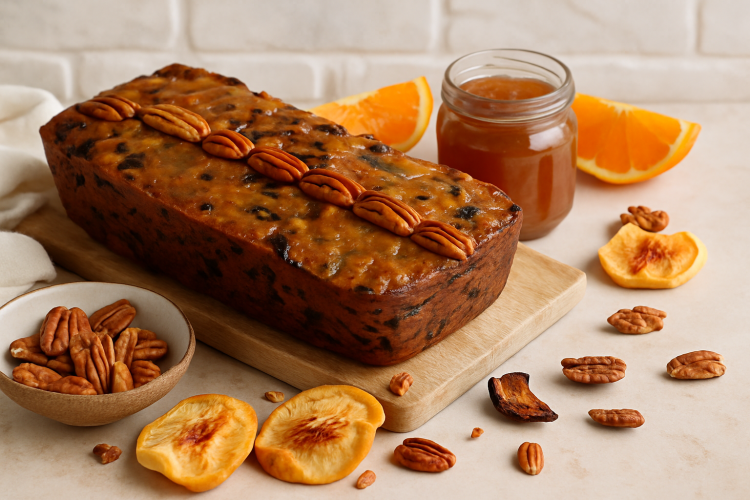
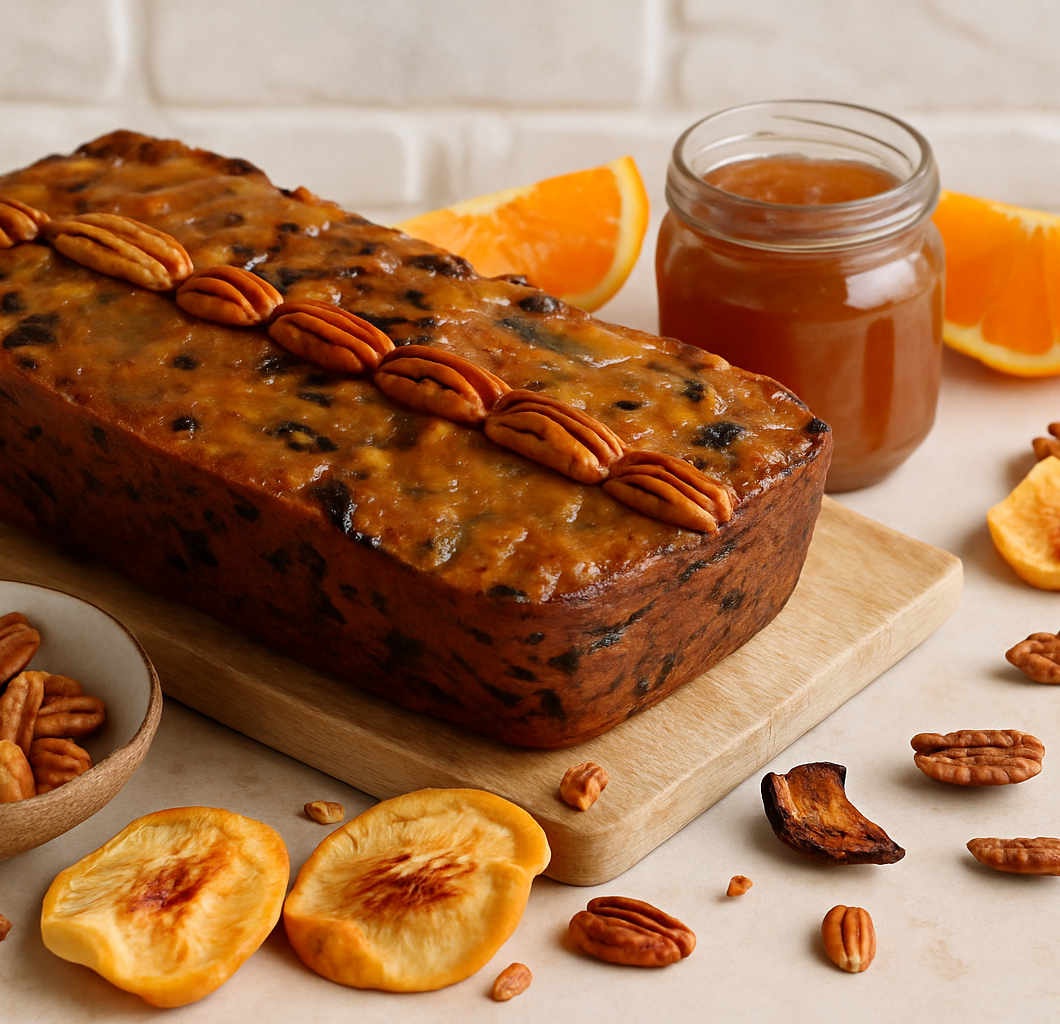
Brush the prepared apricot glaze lightly over the tops of the fruit cakes and add whole pecans for decoration. The glaze is optional, so the cake can also be served without it. If you plan to continue aging the fruit cake after glazing, skip the glaze because it is better suited to a cake that is ready for serving.
How to Slice Fruit Cake
Fruit cake is dense, so a serrated knife works well for cutting clean slices. Thin slices are often enough because each piece contains a lot of dried fruit, nuts, and rich cake. You can serve the cake plain or add a small amount of salted butter for a simple contrast with the sweet fruit and warm spices.
Best Fruit Combinations
The recipe provides a balanced mixture of sweet and tart dried fruit. Peaches and apricots can be used in equal parts for the mixed dried fruit, while pears or apples are other listed options. If changing the dried fruit combination, keep the overall quantity the same and consider how sweet or tart each fruit is.
Keeping the Texture Balanced
Different dried fruits absorb liquid at different rates, so weighing the fruit is helpful when making substitutions. Very sweet fruit can change the overall flavor, while tart fruit can make the cake taste brighter. Keeping a mixture of sweet and tart choices helps maintain the character of this traditional fruit cake.
Making Fruit Cake Without Alcohol
For a non-alcohol version, the dried fruit can be soaked in orange juice, apple juice, or hot steeped tea such as Earl Grey. This can soften and plump the fruit, although the flavor will not be identical to a rum-soaked fruit cake. The cake should also skip the alcohol-based cheesecloth soaking during storage.
What to Expect Without Alcohol
Without the alcohol-based soaking and aging process, the cake will have a somewhat different flavor and may be slightly less complex. It can still be moist because of the fruit, apple, butter, eggs, and orange juice. The storage life will also be somewhat shorter, so it is better to plan on serving the alcohol-free version sooner.
Making This Cake Ahead
This is a useful make-ahead dessert because the flavor can improve as the cake rests. If you are preparing it for a holiday gathering or as a homemade gift, baking it several days ahead gives the ingredients time to settle together. The aged version can be prepared even earlier when stored correctly in the refrigerator.
Baking in Other Pans
The recipe is written for two 8 x 4-inch loaf pans, although 9 x 5-inch loaf pans can also be used. Other pan shapes may change the baking time and the final thickness of the cake. A bundt or tube pan has been used successfully by some bakers, but baking results can vary with different equipment.
Why This Recipe Works for Holidays
The combination of dried fruit, orange, lemon, ginger, cinnamon, nutmeg, almonds, and rum gives this cake the flavors often associated with holiday baking. It is also convenient for entertaining because the cake can be prepared in advance. Two loaves make it easy to keep one for serving and reserve another for gifting or later.
Common Questions
Can I prepare the fruit a day before baking?
Yes. The dried fruit should soak for at least 12 hours, while 24 hours is ideal. This gives the fruit enough time to soften and absorb the dark rum before it is mixed into the cake batter.
How early should I bake fruit cake?
You can bake it several days or even one to two weeks before serving if you want a more developed flavor. Once cooled, the cake can be wrapped in lightly soaked cheesecloth and stored properly in the refrigerator.
Can I change the dried fruit?
Yes, the recipe allows different varieties of dried fruit, but the total amount should remain consistent. Weighing substitutions is helpful because different fruits have different sizes, densities, sweetness levels, and moisture content.
World’s Best Fruit Cake
 Recipe by admin
A traditional moist fruit cake made with rum-soaked unsweetened dried fruit, citrus zest, fresh orange juice, Granny Smith apple, warm spices, nuts, and crystallized ginger. This rich holiday fruit cake makes two loaf cakes and can be aged in lightly soaked cheesecloth for deeper flavor.
2
servings24
hours1
hour30
minutes196
kcal30
minutes26
hoursIngredients
- Soaked Fruit Mixture
1¼ cups (200g) dark raisins
1¼ cups (200g) golden raisins
2 cups (320g) mixed unsweetened dried fruit, chopped
1 cup (160g) dried unsweetened black figs, chopped
1 cup (160g) dried unsweetened tart cherries, chopped
¾ cup (120g) dried unsweetened prunes, chopped
¾ cup (6 oz; 180 mL) dark rum
- Fruit Cake:
1½ cups (180g) unbleached all-purpose flour
½ teaspoon baking powder
1 teaspoon ground cinnamon
1 teaspoon ground ginger
¼ teaspoon ground nutmeg
1 teaspoon kosher salt
1 stick (4 oz; 115g) unsalted butter softened
¾ cup (160g) packed light brown sugar
5 large eggs room temperature
1 tablespoon freshly grated lemon zest
1 tablespoon freshly grated orange zest
½ cup (120 mL) freshly squeezed orange juice
1 Granny Smith apple peeled and coarsely grated
¾ cup (90g) slivered almonds (or chopped pecans or walnuts)
3 tablespoons (36g) finely diced crystallized ginger
one batch soaked fruit mixture
⅔ cup (100g) chopped bittersweet chocolate or dark chocolate chips optional
- For Storage
medium sherry or triple sec for soaking
- Decorative Glaze Optional
¼ cup (72g) apricot preserves
¼ cup (60 mL) water
whole pecans for garnishing
Directions
- Soak the fruit: Combine all dried fruit in a large bowl. Pour in the dark rum, cover, and leave at room temperature for at least 720 minutes or ideally 1440 minutes before making the cake.
- Make the batter: Heat the oven to 300°F (150°C). Whisk the flour, baking powder, cinnamon, ginger, nutmeg, and salt together. Separately, beat the softened butter and brown sugar for about 3 minutes until fluffy, then add the eggs one at a time.
- Add the fruit and flavorings: Slowly mix in the dry ingredients until just combined. Fold in the lemon zest, orange zest, orange juice, grated apple, almonds, crystallized ginger, soaked fruit with any remaining liquid, and optional chocolate.
- Fill the pans: Divide the thick batter between two 8 x 4-inch loaf pans. Smooth the tops with an offset spatula and place the pans on the center oven rack with space between them.
- Bake and cool: Bake for 75–90 minutes, rotating the pans halfway through. The cakes are ready when set and golden brown, with the edges beginning to pull slightly from the pans. Cool completely on a rack before removing.
- Wrap and store: For aging, lightly soak cheesecloth with medium sherry or triple sec, wrap each cake, then cover with wax paper and foil. Place in a large Ziploc bag and refrigerate. Re-soak the cheesecloth once a week if continuing to age the cakes.
- Optional Glaze
- Warm the apricot preserves and water in a small saucepan over low heat. Stir until smooth, shiny, and thin enough to brush over the cake. Reduce slightly if needed, or add a teaspoon of water if it becomes too thick. Brush over the cooled fruit cakes and garnish with whole pecans.
Notes
- Serving Ideas
Serve slices of classic fruit cake at room temperature for the best texture and flavor. A thin slice is often enough because the cake is rich and packed with fruit. Salted butter can be spread over the slice for a simple serving option, while the apricot glaze and pecans can make the cake more suitable for a holiday dessert table. - Storage
Keep the prepared fruit cake well wrapped while it is refrigerated. For the alcohol-aged version, the cheesecloth should remain lightly damp and the cake should be protected with wax paper, foil, and a sealed bag. Always allow the cake to cool completely before wrapping it so condensation does not collect inside the wrapping.
Nutrition Facts
- Calories: 196kcal
- Fat: 5g
- Cholesterol: 30mg
- Sodium: 58mg
- Carbohydrates: 36g
- Fiber: 2g
- Sugar: 26g
- Protein: 3g