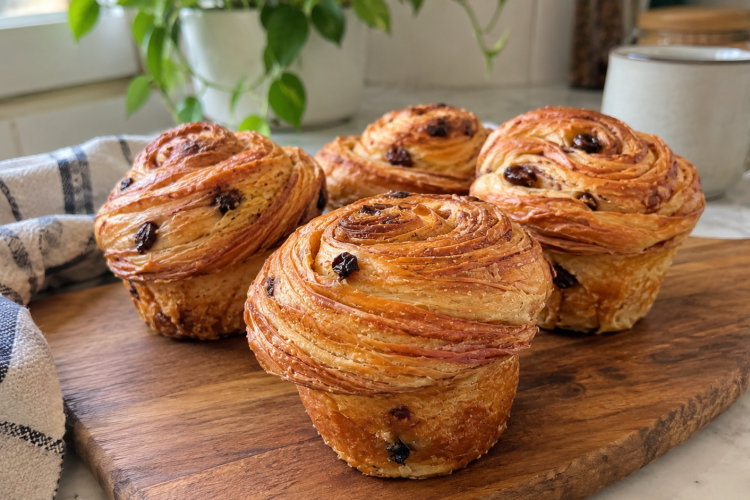
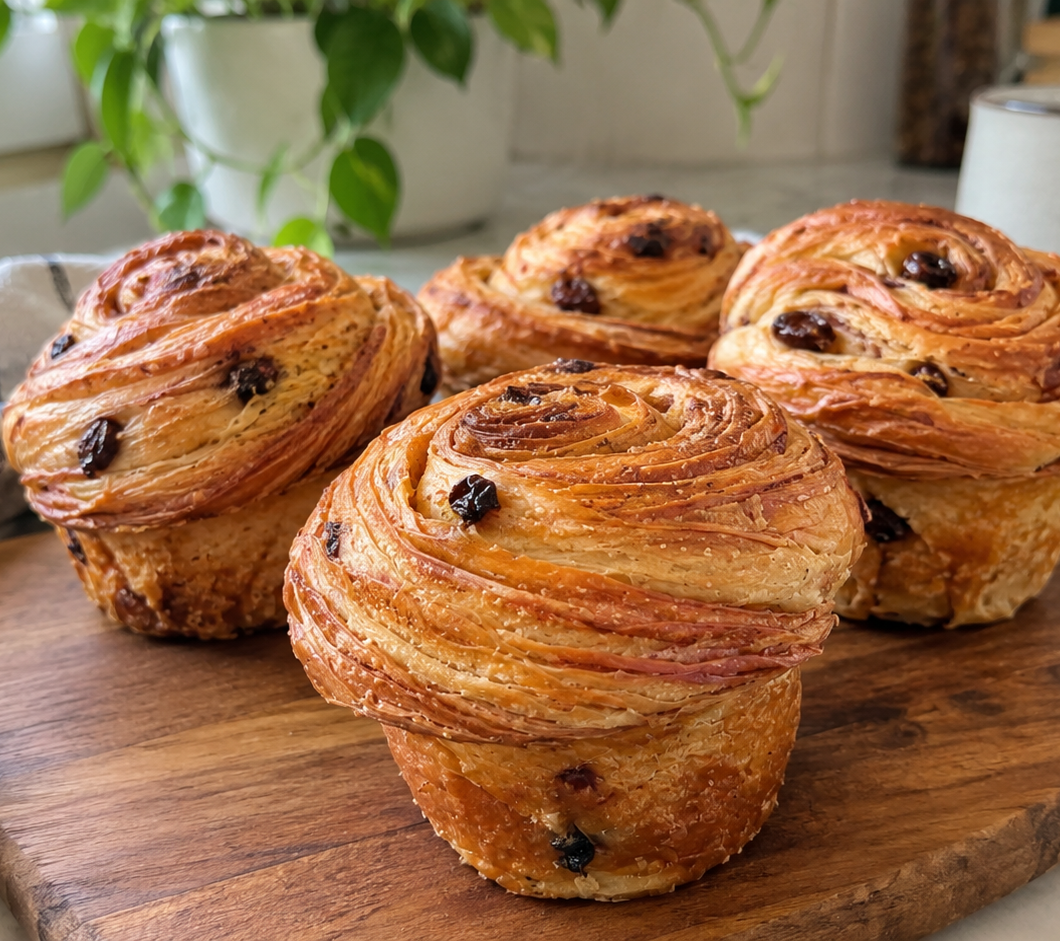
Blueberry sourdough cruffins are a creative pastry that brings together two popular baked goods: French-style croissants and classic blueberry muffins. Instead of shaping the dough into traditional crescent rolls, the laminated pastry is cut into narrow strips, rolled into spirals, and baked in a muffin tin. This distinctive shape gives each cruffin crisp, buttery layers on the outside and a soft, fruity center.
Unlike quick blueberry muffins made with baking powder, these sourdough cruffins use a naturally fermented dough made with sourdough starter. The dough rests in the refrigerator between preparation stages, allowing time for fermentation while making it easier to handle. Dried blueberries provide concentrated fruit flavor throughout the pastry, while optional crushed freeze-dried blueberries and purple sweet potato powder add extra color and visual interest.
Although the process takes several days from start to finish, much of the time is spent chilling, resting, and proofing the dough. These steps help develop the pastry’s layered structure and give the butter time to firm up between folds. The finished cruffins are a rewarding homemade alternative to bakery pastries and make a memorable addition to a breakfast or brunch table.
Why You Will Love This Blueberry Cruffin Recipe
One of the biggest attractions of this recipe is its combination of texture and flavor. Properly laminated dough produces delicate layers that separate during baking, creating a crisp exterior and a rich, buttery interior. Dried blueberries add sweet-tart fruitiness without introducing the excess moisture that fresh berries can release. Because the berries are distributed through the dough, the blueberry flavor appears in different places throughout each spiral-shaped pastry.
Another reason to try this recipe is the use of sourdough starter. The starter contributes to the fermentation process and gives you another practical way to use a portion of your sourdough culture. The recipe also includes a small optional quantity of active dry yeast, which can be useful if you want additional fermentation support. However, fermentation speed depends on starter activity, room temperature, and dough conditions, so the dough’s appearance is more important than following the clock alone.
These cruffins are also attractive enough for special occasions without requiring professional decorating skills. Their naturally formed spirals create an appealing appearance as the pastry expands in the oven. The optional purple sweet potato paste gives the dough a decorative marbled effect, while crushed freeze-dried blueberries can add extra color and berry flavor. Serve them plain, or arrange them on a platter for a breakfast gathering, holiday brunch, or afternoon coffee break.
Ingredients for Blueberry Sourdough Cruffins
The recipe uses three main groups of ingredients: the base dough, optional ingredients for blueberry marbling, and a separate butter block for lamination. Each group has a specific purpose, and careful measuring is particularly important when making laminated pastry. A digital kitchen scale is recommended because the recipe uses grams, which makes it easier to reproduce the same dough consistency and maintain the correct proportions.
All-purpose flour forms the structure of the pastry, while water and whole milk provide hydration. Granulated sugar adds sweetness, and kosher salt balances the flavor. Sourdough starter contributes to fermentation, while the softened butter mixed into the base dough helps create a tender crumb. Dried whole blueberries are the main fruit ingredient, providing flavor without the additional moisture associated with fresh berries.
The separate butter block is essential for creating the croissant-style layers. Use unsalted butter with approximately 84–86% butterfat, as specified in the original recipe. Butter with a suitable fat content is generally easier to work with for lamination because it can remain pliable when cool. The optional purple sweet potato powder creates colored streaks in the dough, and freeze-dried blueberries can be sprinkled over the surface for extra berry flavor.
Understanding Sourdough Fermentation and Lamination
Two techniques make this recipe different from ordinary muffin recipes: sourdough fermentation and butter lamination. Fermentation allows the dough to rise before shaping and baking, while lamination creates alternating layers of dough and butter. Both processes need time and attention, and neither should be rushed simply to finish the recipe sooner.
During lamination, the butter is enclosed inside the dough and distributed through repeated rolling and folding. When the pastry enters the hot oven, the water in the dough and butter produces steam that helps separate the layers. This process is responsible for the flaky texture associated with croissants. If the butter becomes too warm, it can blend into the dough instead of remaining in distinct layers, so chilling between folds is important.
Sourdough starter activity also affects the schedule. A lively starter can ferment dough more efficiently than a weak or recently refrigerated starter. The initial rise should produce a noticeable increase in volume, while the final proof should leave the shaped cruffins visibly expanded and delicate. The optional yeast may provide additional help, but it does not eliminate the need for proper fermentation and temperature control.
Helpful Tips for Better Results
Keep the dough and butter at compatible temperatures throughout lamination. If the butter is too hard, it may break into pieces; if it is too soft, it can smear into the dough. Pause and chill the dough whenever it becomes sticky or difficult to roll. Use only a light dusting of flour on the work surface, and brush away excess flour before folding, because too much flour between layers can interfere with the finished texture.
Measure ingredients accurately and pay attention to the dough rather than relying entirely on the schedule. Sourdough fermentation varies according to starter strength, room temperature, and the flour used. During the final proof, look for visible expansion and a delicate, slightly wobbly feel. When cutting strips, use a sharp knife or pastry wheel and avoid pressing down too firmly, as crushed edges may limit how well the pastry layers separate during baking.
Storage, Serving, and Make-Ahead Advice
These blueberry sourdough cruffins are best enjoyed on the day they are baked, when the outside is crisp and the interior is tender. Once completely cool, store leftovers in an airtight container at room temperature for a short period, ideally one to two days. Because humidity can soften flaky pastry, avoid sealing the cruffins while they are still warm. For the best texture, reheat them briefly in an oven until the outside becomes crisp again.
For longer storage, freeze fully cooled cruffins in a freezer-safe container or bag, separating them if necessary to prevent sticking. Thaw at room temperature and warm in the oven before serving. Avoid extended refrigeration of baked pastries if maintaining crispness is your priority, since the texture can become firm or stale more quickly. If preparing for guests, you can complete the dough lamination in advance and keep it chilled overnight before shaping and proofing.
Frequently Asked Questions
Can I make blueberry sourdough cruffins without commercial yeast?
Yes. The recipe lists active dry yeast as an optional ingredient, so you can leave it out and rely on your sourdough starter. However, the starter needs to be active enough to ferment the dough effectively. Without commercial yeast, proofing may take longer, and the final rise will depend on the strength of your starter and the surrounding temperature.
Can I use fresh blueberries instead of dried blueberries?
Dried blueberries are specified because they provide concentrated fruit flavor with less moisture. Fresh blueberries release juice when handled and baked, which can make the dough wetter and complicate lamination. For the most reliable result, follow the recipe with dried whole blueberries. Freeze-dried blueberries are an optional extra, but they are not a direct replacement for the full quantity of dried berries.
Why does the dough need so much chilling time?
Chilling firms the butter, relaxes the gluten, and makes the dough easier to roll without tearing. It also gives the dough time to rest between folds, helping preserve distinct layers. The overnight rest before shaping is particularly useful because cold dough is easier to cut into neat strips and roll into spirals without losing its structure.
How do I know when the cruffins are fully proofed?
Properly proofed cruffins should look noticeably larger, feel light, and jiggle gently when the tray is moved. The exact timing depends on your starter and kitchen temperature. If the pastries still look compact and firm, they may need more time. Avoid allowing them to become excessively fragile or collapse, as overproofing can affect their ability to rise properly in the oven.
What causes cruffins to lose their flaky layers?
Butter that becomes too warm during rolling can blend into the dough instead of forming separate layers. Excessive pressure, insufficient chilling, and underproofing can also affect the final texture. Work in a cool environment when possible, chill the dough between folds, and handle it gently. Baking until the exterior is deeply golden helps the layers develop a crisp finish.
Blueberry Sourdough Croissants
 Recipe by admin
Flaky, buttery sourdough pastries with dried blueberries, rolled into spirals and baked in a muffin tin.
1
hour1
hour25
minutes16
hours18
hours25
minutesIngredients
- Cruffin Dough
605 g all-purpose flour, plus extra for dusting
66 g granulated sugar
12 g kosher salt
60 g sourdough starter
214 g water, at room temperature
120 g whole milk, at room temperature
57 g unsalted butter, softened and cut into ½-inch pieces
100 g dried whole blueberries
1.5 g active dry yeast (optional, 0.2%)
- Blueberry Marbling
6 g purple sweet potato powder
6 g water, to mix with the purple sweet potato powder
20–40 g crushed freeze-dried blueberries (optional)
- Butter Block
– 340 g unsalted butter (84–86% butterfat)
Directions
- Prepare the Dough
- Reserve approximately 30–50 g of whole dried blueberries. Tear the remaining berries into smaller pieces. The original recipe suggests approximately 30 g whole berries and 70 g berry pieces.
- Combine the flour, sugar, salt, sourdough starter, water, milk, dried blueberries, and optional yeast in a stand mixer fitted with a dough hook. Mix on low speed until the ingredients begin to come together. Add the softened butter and continue mixing until a shaggy dough forms, approximately 3–4 minutes.
- Mix the purple sweet potato powder with 6 g water to form a paste. Add small portions to the dough and knead by hand for approximately 3 minutes to create purple streaks. Sprinkle with crushed freeze-dried blueberries if desired.
- Shape the dough into a ball, place it in a covered bowl, and leave at room temperature for 3–4 hours, or until its volume increases by approximately 1.5 times. Refrigerate for 4–12 hours.
- Place the butter between sheets of parchment paper and flatten it with a rolling pin. Shape it into an even 8-by-8-inch square, remove air pockets, and refrigerate until firm but pliable.
- Laminate the Dough
- Flatten the chilled dough gently into a square, wrap it, roll it into an 8-by-8-inch square, and freeze for 20 minutes.
- Roll the dough into a 16-by-8-inch rectangle. Place the butter block in the center, fold the dough over it, and seal the edges completely.
- Roll the dough into a long rectangle approximately 24 inches long. Fold both ends toward the center, leaving a small gap, and fold the entire piece in half like a book. Wrap, freeze for 15 minutes, and refrigerate for 1 hour.
- Roll the dough into a long, narrow sheet approximately ⅜ inch thick. Fold it into thirds, wrap it, freeze for 15 minutes, and refrigerate for 1 hour.
- Roll the dough into a 20-by-12-inch rectangle. Place it on a baking sheet, wrap it securely, freeze for 20 minutes, and refrigerate overnight for 8–12 hours.
- Shape the Cruffins
- Roll the chilled dough back to 20-by-12 inches if necessary. Trim the edges, cut it lengthwise into two 20-by-6-inch pieces, and slice each piece into strips approximately 1 inch wide.
- Arrange the strips on a parchment-lined tray, separating stacked layers with parchment. Cover and refrigerate for 30 minutes.
- Place two strips together with their ends offset by approximately ½ inch. Pinch the top ends together, roll the strips into a spiral, fold the loose ends over the top, and press gently to secure. Round the shape lightly and place it seam-side down in a muffin tin or popover tray. Make a small hole in the center.
- Proof and Bake
- Allow the shaped cruffins to rise at room temperature for approximately 4–6 hours, until nearly doubled and gently jiggly. Alternatively, proof for 2–3 hours at 70–75°F in a suitable controlled environment.
- Preheat the oven to 375°F (190°C). Bake for 15 minutes, rotate the trays, and continue baking for another 10–15 minutes until the cruffins are deeply golden brown.
- Allow the pastries to cool completely on the baking sheets before serving.