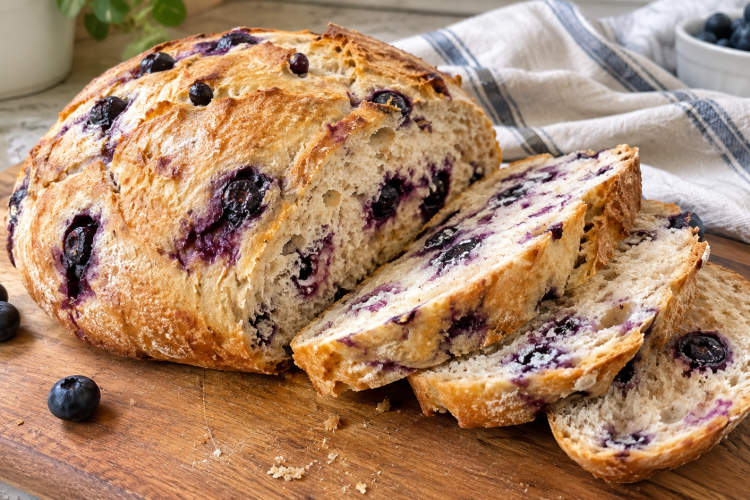
Blueberry Lemon Cream Cheese Sourdough Bread brings together the rich flavor of homemade sourdough, sweet blueberries, fresh lemon, and a smooth cream cheese filling. This artisan-style loaf offers a delicious balance of sweet, tangy, fruity, and creamy flavors, making it a wonderful choice for breakfast, brunch, an afternoon snack, or a special weekend baking project. Its golden crust and soft interior create a satisfying texture that makes each slice feel like a treat from a local bakery.
Unlike traditional sourdough bread, which is usually served with savory toppings, this version has a sweeter character without losing the distinctive flavor of natural fermentation. The sourdough starter contributes a gentle tang, while lemon zest adds a fresh citrus aroma and blueberries provide juicy pockets of fruit throughout the dough. The cream cheese filling adds a rich, velvety layer that complements the fruit and gives the loaf its special appeal.
This blueberry lemon sourdough bread is suitable for home bakers who enjoy experimenting with fruit-filled artisan loaves. Although the recipe requires time for rising and fermentation, the preparation itself is straightforward. With a few basic ingredients, careful dough handling, and enough time for the bread to rise, you can prepare a beautiful loaf that works for everyday meals as well as holidays, family gatherings, and brunch tables.
Why You Will Love This Blueberry Lemon Sourdough Bread
One of the best features of this recipe is the way its flavors complement one another. Blueberries bring natural sweetness and a fruity taste, lemon adds brightness, and cream cheese provides a smooth richness. Meanwhile, the sourdough base keeps the bread from tasting like an ordinary sweet cake. Every component has a purpose, creating a loaf that feels balanced rather than overly sugary.
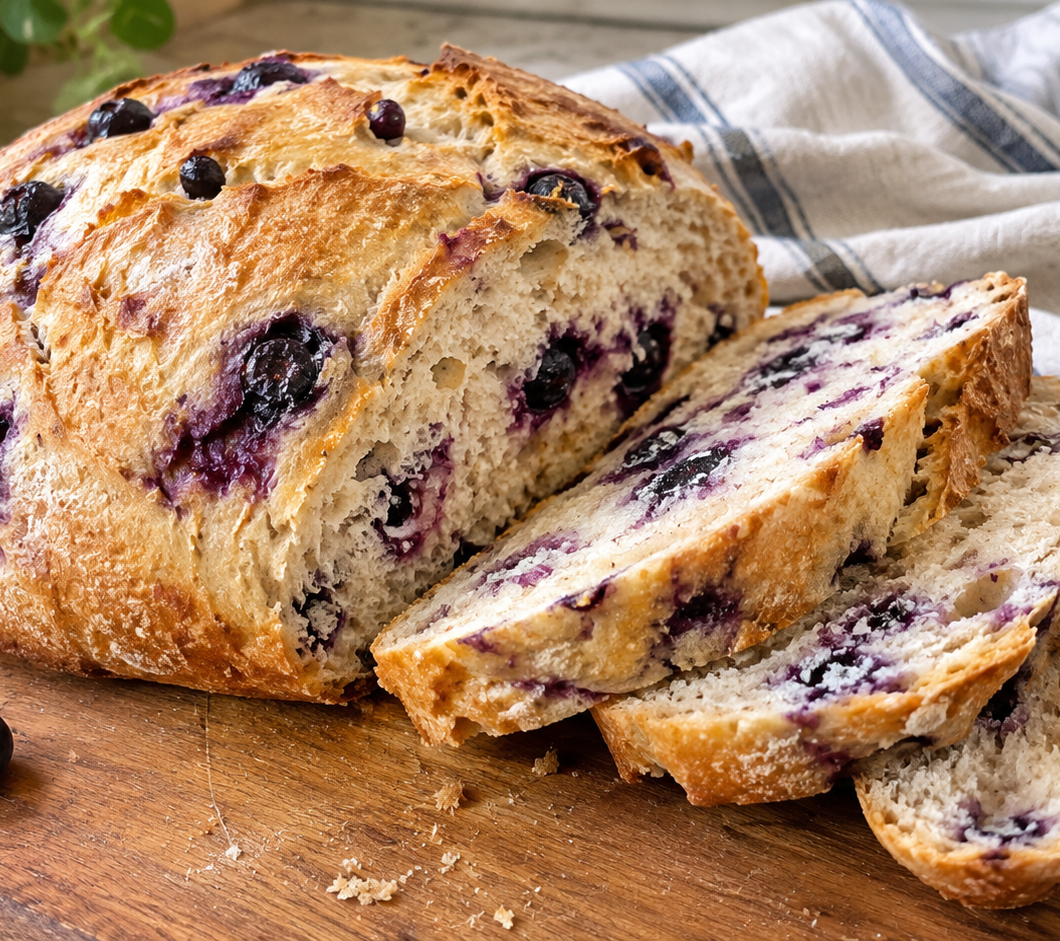
Another reason to try this recipe is its attractive appearance. When sliced, the bread reveals colorful blueberry pieces and a creamy filling surrounded by tender sourdough. The golden crust creates a pleasant contrast with the soft interior. This makes the loaf an appealing option for a breakfast spread, weekend brunch, or homemade food gift, especially when served on a platter with fresh fruit and a hot drink.
The recipe also offers flexibility in how you serve it. A slice can be enjoyed plain, lightly warmed, or spread with a little butter. For a sweeter presentation, you can serve it with a lemon glaze prepared separately. Because the bread combines fruit, citrus, and cream cheese, it tastes delicious without needing many additional toppings or complicated decorations.
What Makes Sourdough Bread Different?
Sourdough bread uses a fermented mixture of flour and water known as a sourdough starter to help the dough rise. A healthy, active starter contains natural yeasts and bacteria that support fermentation, producing gas that expands the dough and organic acids that contribute to its characteristic flavor. Compared with bread made using commercial yeast alone, sourdough often develops a more complex taste and a distinctive texture.
In this blueberry lemon recipe, the starter provides the foundation for the loaf. Its mild tang works especially well with sweet fruit and creamy filling. However, the starter must be active enough to raise the dough properly. A recently fed starter that has become bubbly and expanded is generally a better choice than one that has been sitting unused in the refrigerator for a long time.
Fermentation is also important for developing the dough’s structure. During the rising period, the flour absorbs moisture, and the gluten network becomes capable of holding the gases produced by the starter. Since blueberries introduce extra moisture and the cream cheese filling adds weight, proper fermentation and careful shaping are especially helpful for maintaining a loaf that holds together when sliced.
Ingredients That Make This Recipe Special
Bread Flour
Bread flour gives the dough the strength needed to support the blueberries and cream cheese filling. Its protein content helps form gluten, creating an elastic structure that can trap gas during fermentation. This structure is important because a fruit-filled loaf can become heavy if the dough is too weak. Measuring the flour accurately and avoiding excessive additions during shaping help produce a tender but stable crumb.
Active Sourdough Starter
The active sourdough starter supplies natural leavening and the familiar tangy flavor associated with artisan bread. For this recipe, a 100% hydration starter means it contains equal weights of flour and water. It should look bubbly and expanded after feeding. A starter that is weak or inactive may cause the dough to rise slowly, so pay attention to its activity rather than relying entirely on the clock.
Blueberries
Blueberries provide juicy fruit flavor and natural sweetness. Fresh blueberries are a convenient option when they are in season, while frozen blueberries make it possible to bake this loaf throughout the year. Both can work well, although frozen berries may release less color into the dough when they are added directly from the freezer. Handle the berries gently to reduce crushing and keep the finished bread visually appealing.
Lemon Zest and Lemon Juice
Lemon zest gives the dough a concentrated citrus aroma because it contains fragrant oils from the outer peel. Lemon juice contributes a sharper, refreshing taste that balances the sweetness of the berries and the richness of the cream cheese. Together, these ingredients create the bright lemon flavor that makes this recipe different from an ordinary blueberry sourdough loaf. Use fresh lemon for the best natural aroma and flavor.
Cream Cheese Filling
Softened cream cheese forms the creamy center of the bread. Its mild tang complements the sourdough and lemon, while the added sugar and vanilla extract give the filling a gentle sweetness. Bringing the cream cheese to room temperature makes it easier to mix into a smooth consistency. A smooth filling is also easier to spread evenly, helping each slice contain a pleasant balance of dough and creaminess.
Sugar, Salt, and Egg Wash
Granulated sugar adds a touch of sweetness to the dough and filling while helping balance the tart ingredients. Salt enhances the overall flavor and prevents the bread from tasting flat. The beaten egg is used as an egg wash before baking, helping the crust develop a golden color and attractive finish. Each ingredient has a practical role, so following the listed quantities helps maintain the intended flavor and texture.
Prepare the Cream Cheese Filling
While the dough rises, place the softened cream cheese in a bowl and combine it with the sugar and vanilla extract. Mix until the ingredients form a smooth, creamy filling without large lumps. Softened cream cheese is easier to work with than cream cheese taken straight from the refrigerator, so allow enough time for it to soften before mixing.
The filling should be smooth enough to spread across the dough without tearing it. However, it should not be excessively warm or runny. A thick, manageable consistency helps prevent the filling from leaking out during shaping and baking. Keep the mixture covered if you prepare it well before the dough is ready, and refrigerate it if necessary until you are ready to assemble the loaf.
Shape the Loaf and Add the Filling
Once the dough has risen, transfer it carefully to a lightly floured work surface. Gently roll or stretch it into a rectangle, taking care not to press out all the air developed during fermentation. Spread the cream cheese mixture over the surface while leaving approximately one inch around the edges. The uncovered border gives you space to fold and seal the dough more securely.
Fold the dough over the filling and seal the edges carefully to help keep the creamy mixture inside. Shape the dough into a loaf that fits your prepared baking vessel or pan. Avoid squeezing it too tightly, because excessive pressure may force the filling toward the edges. If some berries appear near the surface, handle them gently so they do not break and release too much juice during the final rise.
Complete the Second Rise
Place the shaped loaf in a suitable baking vessel or pan, cover it, and allow it to rise again for approximately two to three hours. During this period, the dough should become slightly fuller and more relaxed. The precise timing depends on the room temperature and starter activity. Keep the loaf covered so the surface does not dry out, which could interfere with expansion and affect the finished crust.
The second rise is important because shaping removes some of the gas built up during the first fermentation. Allowing the loaf to rest again gives the dough an opportunity to expand before it enters the oven. Avoid judging readiness by time alone. If the dough has barely expanded, it may need longer, while dough that becomes excessively loose or begins losing its shape may have fermented too far.
Bake Until Golden and Fragrant
Preheat the oven to 375°F (190°C). Beat the egg and brush a thin, even layer over the surface of the shaped loaf. This egg wash helps the crust develop an appealing golden finish. Transfer the bread to the oven and bake for approximately 35 to 40 minutes, watching for an evenly browned surface and a loaf that appears set rather than wet.
Because the bread contains both fruit and cream cheese, the center may take longer to finish than the outside suggests. If the top browns too quickly, loosely cover it with foil while the loaf finishes baking. When possible, check the center with a food thermometer and follow appropriate food-safety guidance for filled bread. Allow additional baking time if the middle remains underdone instead of relying only on crust color.
Cool the Bread Before Slicing
Once baked, remove the loaf from the oven and allow it to cool before cutting. Cooling helps the crumb settle and gives the cream cheese filling time to firm up. Cutting too early can cause the bread to compress, while warm filling may smear across the slices. For cleaner cuts, use a sharp serrated knife and a gentle sawing motion rather than pressing straight down.
The finished loaf should have a golden exterior, a tender sourdough crumb, fruity blueberry pockets, and a creamy center. Some blueberry juice may create purple streaks, and small variations in the filling are normal for homemade bread. These natural differences do not mean the loaf has failed. Once cooled sufficiently, slice it and serve it plain or with your favorite breakfast accompaniments.
Frequently Asked Questions
Can I Use Frozen Blueberries Instead of Fresh Ones?
Yes, fresh and frozen blueberries can both be used in this recipe. Frozen berries should go into the dough directly from the freezer to reduce excess moisture and color bleeding. Fresh berries are convenient when they are in season, but either option can provide a fruity flavor. Handle both gently so the berries remain as intact as possible during mixing and shaping.
Why Is My Sourdough Dough Taking So Long to Rise?
Slow fermentation is often caused by a cool kitchen or a starter that is not sufficiently active. Sourdough does not rise according to a fixed schedule because temperature and starter strength vary from one kitchen to another. Keep the dough covered and allow it more time if necessary. For future batches, use a recently fed, bubbly starter and monitor the dough’s expansion throughout fermentation.
Can I Prepare This Bread Ahead of Time?
You can prepare some components ahead, such as mixing the cream cheese filling and measuring the dry ingredients. However, the dough’s fermentation and proofing still need to be managed carefully. If you want to prepare the loaf in advance, plan the rising schedule around your kitchen temperature and refrigerate the cream cheese filling when appropriate. Always ensure the filled bread is stored safely after baking.
How Can I Tell When the Bread Is Fully Baked?
The crust should be golden, and the loaf should feel set rather than soft and wet in the middle. Since fruit and cream cheese can make the center moist, the outside alone is not a reliable indicator. Check the center carefully and use a food thermometer when possible. If the bread is browning too quickly before the inside finishes baking, cover it loosely with foil and continue baking.
Is This Bread Very Sweet?
This recipe contains only a small amount of sugar in the dough and filling, so the sweetness comes partly from the blueberries and the flavor of the cream cheese mixture. Its overall taste combines sweet fruit, tangy lemon, and naturally fermented dough. It is different from a traditional cake or sugary quick bread, although the cream cheese filling gives it a richer, dessert-like character.
Blueberry Lemon Cream Cheese Sourdough Bread
 Recipe by admin
A homemade sourdough loaf filled with juicy blueberries, fresh lemon flavor, and a sweet, creamy vanilla cream cheese filling.
10
servings20
minutes35
minutes6
hours6
hours55
minutesIngredients
- For the Dough
1 cup active sourdough starter (100% hydration)
3 cups bread flour
1 teaspoon salt
1 tablespoon granulated sugar
1 cup fresh or frozen blueberries
1 tablespoon lemon zest
1 tablespoon lemon juice
- For the Cream Cheese Filling
8 oz cream cheese, softened
1 tablespoon sugar
1 teaspoon vanilla extract
1 teaspoon vanilla extract
1 egg, beaten (for egg wash)
Directions
- Combine the active sourdough starter, bread flour, salt, and granulated sugar in a large bowl. Mix until a rough dough forms.
- Gently fold in the blueberries, lemon zest, and lemon juice. If using frozen blueberries, add them straight from the freezer.
- Cover the dough and let it rise for 4–5 hours, or until it has noticeably increased in volume.
- Mix the softened cream cheese, sugar, and vanilla extract in a separate bowl until smooth and creamy.
- Transfer the risen dough to a lightly floured surface and roll it into a rectangle.
- Spread the cream cheese mixture over the dough, leaving a one-inch border around the edges.
- Fold the dough over the filling, seal the edges carefully, and shape it into a loaf.
- Place the shaped loaf in a suitable baking vessel or pan, cover, and let it rise for another 2–3 hours.
- Preheat the oven to 375°F (190°C). Brush the beaten egg over the surface of the loaf.
- Bake for 35–40 minutes, or until the crust is golden and the center is fully baked. Cover loosely with foil if the top browns too quickly.
- Allow the bread to cool before slicing. Serve plain, slightly warmed, or with butter if desired.
Notes
- Use frozen blueberries straight from the freezer to avoid bleeding.
Store in fridge up to 5 days or freeze for 3 months.
Great served warm with butter or lemon glaze.