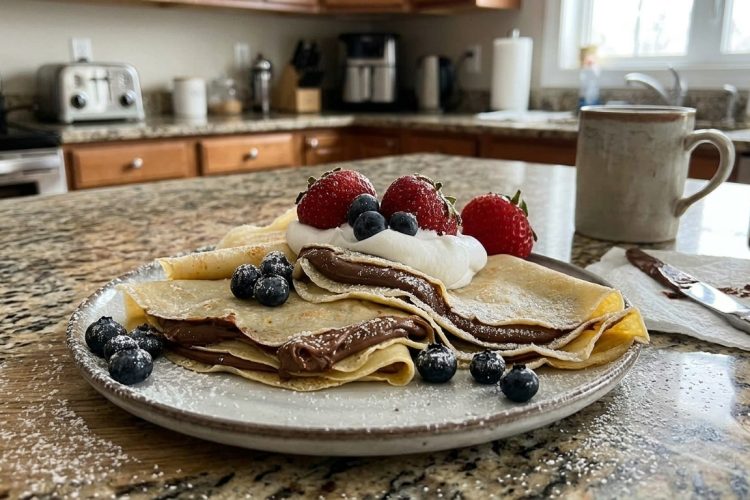
Sourdough crepes are thin, delicate French-style pancakes made with sourdough starter discard, flour, eggs, milk, butter, and a few simple pantry ingredients. They have tender centers, lightly golden surfaces, and beautifully crisp edges when cooked in a properly heated skillet. Unlike thick breakfast pancakes, crepes are spread into a thin layer, making them perfect for wrapping around sweet fillings, folding with savory ingredients, or enjoying with a simple dusting of sugar.
This sourdough crepes recipe is an excellent way to use leftover sourdough discard instead of throwing it away. The starter adds a subtle tang that complements both sweet and savory toppings without overpowering the delicate flavor of the pancakes. With just a handful of everyday ingredients and a non-stick skillet, you can prepare a delicious homemade breakfast, brunch, snack, or dessert without needing special equipment.
One of the best things about making crepes at home is their versatility. You can serve them with fresh fruit, chocolate spread, honey, jam, or whipped cream for a sweet treat. If you prefer savory meals, fill them with cheese, sautéed vegetables, eggs, or other favorite ingredients. The basic batter remains the same, so you can prepare one batch and offer several different serving options for the whole family.
Why You Will Love This Sourdough Discard Crepes Recipe
A delicious way to use sourdough discard
If you regularly maintain a sourdough starter, you probably have leftover discard that needs to be used. These sourdough discard crepes offer a practical and tasty solution. Instead of wasting the portion removed during starter maintenance, you can turn it into a fresh batch of delicate pancakes using ingredients that are commonly available in most kitchens.
The sourdough starter contributes flavor and works alongside the flour, eggs, and milk to create a smooth batter. The finished crepes are not intended to be thick, bread-like pancakes. Their appeal comes from their thin texture, flexible structure, and lightly crisp edges. This makes the recipe especially useful when you want to enjoy your sourdough baking routine in a different way.
Thin, tender centers with golden edges
A good French-style crepe should be thin enough to fold or roll without breaking. The batter needs to flow easily across the bottom of the skillet, creating an even layer that cooks quickly. As the moisture evaporates, the surface becomes lightly golden, while the edges may turn pleasantly crisp.
Butter helps give these crepes their rich flavor and tender texture. Cooking them in a lightly greased non-stick skillet also makes turning easier and helps prevent sticking. With a little practice, you can make consistently thin crepes that look attractive on the plate and hold their shape around your favorite fillings.
Suitable for sweet and savory meals
These homemade sourdough crepes can be served in many different ways. For breakfast, pair them with sliced bananas, berries, yogurt, or a little honey. For dessert, try chocolate spread, fruit preserves, or whipped cream. Their delicate flavor allows toppings to stand out without competing with the pancake itself.
For a savory meal, omit the optional sugar from the batter and add fillings such as cheese, cooked vegetables, scrambled eggs, or mushrooms. Because the recipe does not require a complicated preparation process, it is easy to adapt the finished crepes to different tastes and occasions.
Ingredients for Homemade Sourdough Crepes
This recipe uses a short list of ingredients to create a smooth, pourable batter. Each ingredient contributes to the final texture, flavor, or cooking performance, so measuring them carefully helps you achieve reliable results.
Sourdough starter discard
Sourdough starter discard forms the foundation of this recipe. It adds moisture and a mild fermented flavor while helping you use leftover starter productively. The discard does not need to be freshly fed for this recipe, provided it has been stored and handled safely. Its flavor may vary depending on how mature your starter is, which can give different batches a slightly different taste.
All-purpose flour
All-purpose flour provides the structure that holds the crepes together. Because the batter contains a relatively small amount of flour compared with its liquid ingredients, the finished pancakes remain thin and delicate. If you use whole wheat flour instead, the batter may absorb more liquid and become thicker. A little additional water can help restore the consistency needed for easy spreading.
Eggs and milk
Eggs help bind the batter and give the crepes enough structure to be turned without tearing. Milk contributes moisture and creates a smoother texture, while also helping the pancakes develop an appealing golden color during cooking. Dairy milk works well, but plant-based milk can also be used as listed in the ingredients.
Melted butter
Melted butter adds richness and a pleasant buttery flavor. It also contributes to the soft texture of the cooked crepes. Allow the butter to cool slightly before mixing it with the other ingredients so that it blends smoothly into the batter. Dairy-free butter is another option if you prefer a plant-based alternative.
Water, salt, and optional sugar
Water helps loosen the batter so it spreads easily across the skillet. Fine sea salt balances the flavors and prevents the finished crepes from tasting flat. Granulated sugar is optional and is especially useful when preparing sweet crepes. If you plan to serve the pancakes with savory fillings, leaving out the sugar makes the finished dish more suitable for those flavors.
How to Make Sourdough Crepes
Step 1: Mix the crepe batter
Add the sourdough starter discard, melted butter, eggs, all-purpose flour, milk, water, and fine sea salt to a large mixing bowl. If you are preparing sweet crepes, include the optional granulated sugar. Whisk everything together until the mixture is smooth and no noticeable lumps of flour remain.
You can also use a blender to combine the ingredients. Blending is particularly helpful if you want an extra-smooth batter with minimal effort. Whichever method you choose, scrape the sides of the bowl or blender container if necessary so that all the flour is incorporated evenly. The batter should initially look quite thin, which is normal for French-style crepes.
Step 2: Rest the batter in the refrigerator
Cover the bowl and place the batter in the refrigerator for one hour. This resting period allows the flour to absorb moisture and gives the ingredients time to combine more evenly. It also makes it easier to judge the batter’s final consistency before cooking.
Do not worry if the mixture appears very runny immediately after mixing. The flour will gradually absorb some of the liquid as the batter rests. After chilling, the consistency should resemble heavy cream: fluid enough to pour easily and spread quickly when the skillet is tilted, but not so watery that it becomes difficult to control.
Step 3: Prepare the skillet
Place a non-stick skillet over medium heat and lightly grease it with butter or cooking oil. Allow the pan to warm before adding the batter. A properly heated skillet helps the thin mixture begin setting quickly, making it easier to spread and turn without tearing.
Avoid using excessive butter or oil, as too much grease can interfere with the batter spreading into an even layer. A thin coating is sufficient for most non-stick pans. If the first crepe cooks too quickly or develops dark spots before the center sets, lower the heat slightly and allow the skillet to adjust before cooking the next one.
Step 4: Pour and spread the batter
Pour approximately one-quarter cup of batter into the center of the skillet. Immediately lift and tilt the pan in a circular motion, allowing the batter to flow across the bottom and form a thin, even circle. Work quickly because the batter begins setting as soon as it touches the hot surface.
If the crepe appears too thick, the batter may need a little additional water. Add water gradually, especially if you are using whole wheat flour or preparing the mixture ahead of time. A thin, even layer is important because it allows the crepe to cook through quickly while developing delicate edges and a flexible center.
Step 5: Cook until the edges turn golden
Let the crepe cook for approximately 60–90 seconds. Watch for the edges to begin lifting or pulling away from the skillet, and check that the underside has developed a light golden-brown color. These are useful signs that the first side is ready to turn.
Cooking time can vary depending on your skillet, stove, and batter thickness. Avoid trying to flip the crepe too early, as the center may still be too soft and could tear. If the edges have started to release naturally and the pancake moves easily when nudged with a spatula, it is usually ready for the next step.
Step 6: Flip and finish cooking
Carefully slide a large spatula underneath the crepe and turn it over. Cook the second side for approximately 30–60 seconds, or until it develops a light golden color. The second side generally cooks faster because the crepe is already mostly set.
Transfer the finished crepe to a plate or baking sheet and repeat the process with the remaining batter. Lightly grease the skillet again if needed, especially if the surface begins to stick. Keep the heat at a steady medium level and adjust it as necessary to prevent the thin pancakes from becoming overly dark or brittle.
Step 7: Keep the crepes warm and serve
If you are preparing several crepes for a meal, stack them on a baking sheet and keep them warm in an oven preheated to 350°F (176°C) until you are ready to serve. Avoid leaving them in the oven longer than necessary, as prolonged heating can dry out their delicate texture.
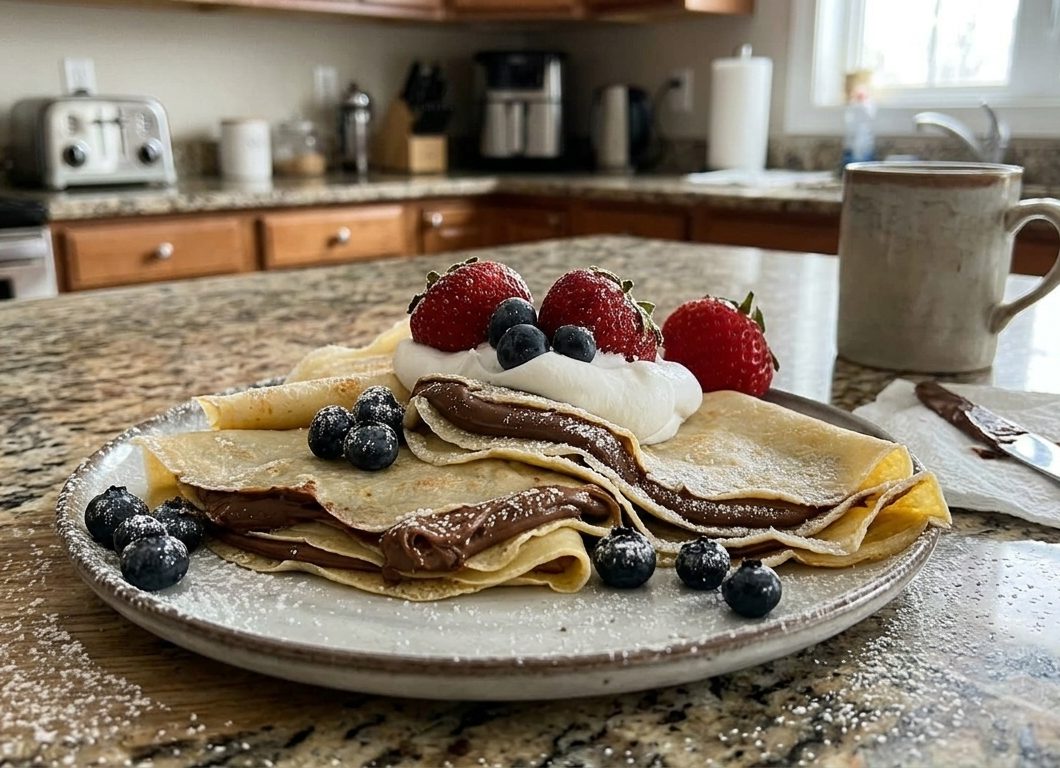
Serve the crepes warm with your preferred toppings or fillings. You can fold each one into quarters, roll it around a filling, or leave it flat and add toppings across the surface. Their thin texture makes them easy to customize, whether you are preparing a quick breakfast, a relaxed weekend brunch, or a simple homemade dessert.
Frequently Asked Questions About Sourdough Crepes
Can I use sourdough discard straight from the refrigerator?
Yes, refrigerated sourdough discard can generally be used directly in this recipe if it has been stored safely and shows no signs of spoilage. Whisk it with the other ingredients until the batter is smooth, then allow the mixture to rest in the refrigerator for the recommended hour. The discard’s age and acidity may affect the flavor slightly, but the basic cooking method remains the same.
Why is my crepe batter so thin?
Thin batter is normal for French-style crepes. Unlike traditional breakfast pancakes, crepes need a pourable mixture that can spread quickly across the bottom of the skillet. The flour will absorb moisture during the resting period, so the consistency may change after chilling. If the batter is still too thick, add a little water; if it already spreads easily, no adjustment is necessary.
Why are my crepes tearing when I flip them?
Crepes can tear if they are too thin in some places, if the skillet is not at the right temperature, or if you attempt to turn them before the first side has set. Make sure the batter is evenly distributed and allow the edges to begin lifting before flipping. A wide spatula and a non-stick skillet also make turning easier, particularly when preparing your first few crepes.
Can I make this recipe without sugar?
Yes. The granulated sugar is optional, so you can leave it out when preparing savory crepes or when you prefer a less sweet base. The remaining ingredients still provide the structure and flavor needed for thin pancakes. If you decide to serve the crepes as dessert, you can add sweetness later through fruit, honey, jam, or your favorite topping.
Can I double the recipe?
Yes, this recipe can easily be doubled when you need more servings. Mix the ingredients thoroughly in a sufficiently large bowl, then rest the batter in the refrigerator as directed. Cook the crepes in batches, keeping the finished pancakes warm if necessary. If you are making a large quantity, check the batter consistency periodically because it may thicken while standing.
Sourdough Crepes
 Recipe by admin
These sourdough discard crepes are thin, tender, and buttery, with lightly golden edges. Made with simple ingredients, they work beautifully with sweet toppings or savory fillings.
4
servings5
minutes6
minutes191
kcal11
minutesIngredients
½ cup (125 g) sourdough starter discard
3 tablespoons (42 g) melted butter (dairy or plant-based)
½ cup (60 g) all-purpose flour (see notes)
2 large eggs
¾ cup (183 g) milk (dairy or plant-based)
2 tablespoons (30 g) water
¼ teaspoon fine sea salt
3 tablespoons granulated sugar (optional, for sweet crepes)
1 tablespoon butter or cooking oil for skillet
Directions
- Whisk the sourdough discard, melted butter, eggs, flour, milk, water, and salt in a large bowl until smooth. Add the optional sugar if making sweet crepes.
- Cover the bowl and refrigerate for 1 hour. Stir the batter before cooking and check that it has a consistency similar to heavy cream.
- Place a non-stick skillet over medium heat and lightly grease it with butter or cooking oil.
- Pour ¼ cup of batter into the skillet. Tilt the pan in a circular motion to spread it into a thin, even layer. Cook for 60–90 seconds, until the edges begin to lift and the underside turns golden.
- Gently flip the crepe with a large spatula. Cook the second side for 30–60 seconds, or until lightly golden. Repeat with the remaining batter.
- Stack the cooked crepes on a baking sheet and keep them warm in an oven preheated to 350°F (176°C) until ready to serve. Add your favorite sweet or savory fillings.
Notes
- It may absorb more liquid than all-purpose flour. After resting, add water one tablespoon at a time if needed to achieve a very thin, pourable batter.
- The mixture may look very runny at first and thicken as it rests. If preparing it a day ahead, cover and refrigerate it. Add one or two tablespoons of water if it becomes too thick.
- The sugar is optional. Leave it out for savory crepes.
- Stack cooled crepes with parchment or wax paper between layers. Wrap tightly or place in an airtight container and refrigerate for up to 7 days.
- Freeze the separated stack in a freezer bag or freezer-safe container for up to 2 months. Thaw in the refrigerator before reheating in a skillet over medium heat.
Nutrition Facts
- Total number of serves: 1
- Calories: 191kcal
- Fat: 4g
- Carbohydrates: 30g
- Fiber: 1g
- Sugar: 12g
- Protein: 7g