Making homemade bread does not always require flour, yeast, eggs, or a long list of ingredients. Sometimes, a few simple ingredients are enough to make something delicious and satisfying. This 3-Ingredient Seeded Bread is a great example of how easy homemade baking can be. It uses ground flaxseed, water, and your choice of seeds to create a hearty loaf that is simple to prepare and full of natural goodness.
If you enjoy homemade bread but want to try something different from traditional wheat bread, this recipe is worth making. It has a lovely nutty flavor, a firm texture, and a soft, slightly moist center. The outside becomes nicely set during baking, while the seeds on top add a little crunch to every slice.
One of the best things about this bread is that it does not need regular flour or yeast. Ground flaxseed does most of the work. When flaxseed is mixed with water, it absorbs the liquid and forms a thick, sticky mixture. This natural binding quality helps hold the bread together without needing eggs or other binding ingredients.
This bread is also a useful option for people following certain eating styles, including keto, low-carb, and gluten-free diets. Since it is made with flaxseed rather than regular flour, it offers a different nutritional profile from traditional bread. It is especially rich in fiber and contains plant-based omega-3 fatty acids.
You can enjoy it for breakfast, lunch, or as a snack. Serve it with butter, avocado, cream cheese, or your favorite spread. It also works well as a base for simple sandwiches.
The preparation is straightforward, and you do not need special baking equipment. Just mix the ingredients, allow the mixture to rest, transfer it to a baking dish, and bake until firm. Once cooled, you will have a homemade loaf that is easy to slice and enjoy.
What Makes This 3-Ingredient Seeded Bread Special?
There are several reasons why this bread is a useful recipe to keep in your kitchen.
1. Only Three Main Ingredients
You do not need a long shopping list to prepare this bread. Ground flaxseed and water make the base, while your favorite seeds can be added on top. These simple ingredients come together to create a filling loaf without complicated preparation.
2. No Flour Needed
Traditional bread usually depends on wheat flour or another type of flour to create its structure. This recipe uses ground flaxseed instead. When combined with water, flaxseed develops a thick consistency that helps hold the loaf together.
3. No Yeast or Rising Time
There is no need to activate yeast or wait for the dough to rise. You simply mix the ingredients and let the mixture rest for five minutes before baking. This makes the recipe convenient when you want homemade bread without a lengthy process.
4. Naturally Nutty Flavor
Flaxseed has a mild, earthy, and nutty taste. It gives the bread a pleasant flavor that works with both sweet and savory toppings.
5. Easy to Customize
You can choose different seeds for the topping. Sunflower seeds, pumpkin seeds, sesame seeds, and chia seeds are all good options. You can also enjoy the basic bread without adding extra flavorings.
Understanding the Main Ingredients
Each ingredient has an important role in making this bread. Since the recipe uses only a few ingredients, measuring them correctly is especially important.
Ground Flaxseed – 2 Cups
Ground flaxseed is the main ingredient in this recipe. It provides the body and structure of the bread and gives it a naturally nutty flavor.
Flaxseed is known for its fiber content and plant-based omega-3 fatty acids. It also contains other useful nutrients that make it a popular ingredient in many healthy recipes.
For this bread, finely ground flaxseed works best because it mixes more evenly with water. It also creates a smoother dough and helps give the finished loaf a more even texture.
You can use store-bought ground flaxseed or grind whole flaxseeds at home. Make sure the flaxseed is fresh and has a pleasant smell before using it.
Water – 1 Cup
Water combines with the ground flaxseed and helps create the dough.
When the two ingredients are mixed, the flaxseed absorbs the water and gradually becomes thicker. This process is important because it creates the sticky consistency needed to hold the bread together.
Measure the water carefully. Using the correct amount helps the dough reach the right thickness. Too much water can make the mixture difficult to shape, while too little water may leave it dry and crumbly.
Seeds – ¼ Cup (Optional Topping)
The seeds are used to add texture, crunch, and a decorative finish to the bread.
You can use sunflower seeds, pumpkin seeds, sesame seeds, or chia seeds. Choose one type or combine different varieties according to your preference.
The topping is optional, but it adds a lovely finishing touch. Press the seeds gently into the surface of the dough so they stay in place during baking.
How to Make 3-Ingredient Seeded Bread
This recipe is easy to prepare, even if you do not bake bread regularly. The most important part is allowing the flaxseed mixture to rest before baking. This gives it enough time to thicken and develop the right texture.
Step 1: Preheat the Oven and Mix the Ingredients
Start by preheating your oven to 350°F (175°C).
Take a medium-sized mixing bowl and add the ground flaxseed. Pour in the water and stir everything together thoroughly for about one minute.
Make sure the ground flaxseed is evenly mixed with the water. Scrape the sides and bottom of the bowl if necessary so there are no dry patches left.
At first, the mixture may look loose, but it will become thicker as the flaxseed absorbs the water.
Important resting step: Allow the mixture to sit for 5 minutes. During this time, it will develop a sticky, thick, dough-like consistency.
Do not skip this step. The resting time helps the mixture bind together properly and makes it easier to transfer into the baking dish.
Step 2: Prepare the Baking Dish
While the flaxseed mixture is resting, prepare your baking dish.
Use a small baking dish measuring approximately 6–7 inches. Line it with parchment paper or lightly grease it to prevent the bread from sticking.
Once the mixture has thickened, transfer it into the prepared dish.
Use a spatula or the back of a spoon to spread the dough evenly. Try to keep the surface smooth and the thickness consistent so the bread bakes evenly.
Now take your chosen seeds and sprinkle them over the top. Spread them across the surface so each slice will have a little crunch.
Gently press the seeds into the dough. This helps them stay attached while the bread is baking.
Step 3: Bake the Bread
Place the baking dish on the center rack of your preheated oven.
Bake for 40–45 minutes. The exact baking time may vary slightly depending on your oven and the thickness of the loaf.
As the bread bakes, the flaxseed mixture will become firm and hold its shape.
Look for these signs to check whether the bread is ready:
- The top should feel firm and become slightly crisp.
- The edges may begin to pull away from the baking dish.
- The loaf should feel set when you gently press the surface.
If you prefer a firmer and crispier crust, you can bake it for an additional five minutes.
However, keep an eye on it to avoid overbaking. Baking it for too long may make the bread dry.
Step 4: Cool Completely Before Slicing
When the bread is finished baking, remove the dish from the oven.
Let it cool in the baking dish for 10–15 minutes. This gives the loaf time to settle and makes it easier to remove without breaking.
After that, carefully lift the bread out of the dish and place it on a cooling rack.
Allow it to cool completely before cutting it into slices.
This cooling step is important because the bread continues to firm up as it cools. Cutting it while it is still warm may cause it to crumble or break apart.
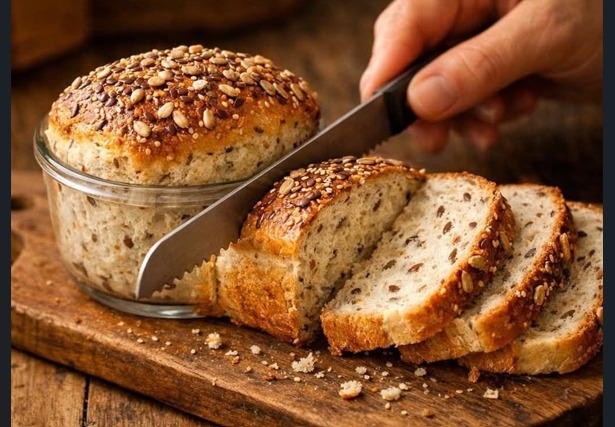
Once completely cooled, use a sharp knife to cut the loaf into thick slices.
What Does This Bread Taste Like?
This seeded flaxseed bread has a simple, natural flavor. It does not taste exactly like traditional wheat bread, but it has its own enjoyable qualities.
The inside is soft, slightly dense, moist, and hearty. It has enough structure to hold toppings without feeling too light or airy.
The outside becomes lightly crisp during baking. The seeds add an extra layer of crunch and make every slice more interesting.
The flavor is mild, earthy, and nutty. This makes the bread suitable for many different combinations.
For a savory breakfast, try it with butter, cheese, or mashed avocado. If you prefer something sweet, serve it with honey or peanut butter.
The natural flavor of flaxseed is quite versatile, so you can enjoy this bread in different ways without needing to change the basic recipe.
Best Ways to Serve 3-Ingredient Seeded Bread
One of the nicest things about homemade seeded bread is that you can serve it with many different foods.
Here are some simple ideas:
With Butter or Desi Ghee
Spread a little butter or desi ghee over a slice of warm bread. The rich taste goes nicely with the nutty flavor of flaxseed.
With Mashed Avocado
Mash a ripe avocado and season it with salt and pepper. Spread it over a slice for a simple and satisfying breakfast or snack.
With Cream Cheese
Cream cheese gives the bread a smooth and creamy topping. You can also add your favorite cheese slices for a more filling snack.
With Honey
If you enjoy sweet flavors, drizzle a little honey over a slice. The sweetness balances the earthy flavor of flaxseed.
With Peanut Butter
Spread peanut butter over the bread for a simple breakfast or afternoon snack.
As Sandwich Bread
Use the slices to make sandwiches with your preferred fillings. You can add cheese, vegetables, or other sandwich ingredients according to your taste.
Easy Flavor Variations
The basic recipe has a mild flavor, which makes it easy to enjoy in different ways. If you want to change the taste, you can try a few simple variations.
These are optional additions and are not part of the original three-ingredient recipe.
Savory Herb Bread
For a more savory flavor, add:
- ½ teaspoon garlic powder
- 1 teaspoon dried herbs, such as oregano, thyme, or rosemary
These seasonings give the bread a delicious herb flavor that works well with cheese, butter, and savory spreads.
Sweet Breakfast Bread
If you prefer a sweeter taste, try adding:
- 1 tablespoon honey or stevia
- ½ teaspoon cinnamon
This version is a nice choice for breakfast. Serve it with peanut butter or another favorite topping.
Spicy Seeded Bread
For a little heat, add:
- A pinch of chili flakes
- A little cumin or black pepper
This variation is suitable for anyone who enjoys bold, savory flavors.
Common Mistakes to Avoid
Although this bread is simple to prepare, a few small mistakes can affect the final texture.
Using Too Much Water
The correct amount of water is important. If the mixture becomes too wet, the dough may not hold its shape properly. Measure the flaxseed and water carefully.
Skipping the Resting Time
The five-minute resting period allows the ground flaxseed to absorb water and thicken. If you skip this step, the mixture may not bind properly.
Cutting the Bread While Warm
Freshly baked bread needs time to cool and firm up. Cutting it too early can cause the slices to crumble. Always allow it to cool completely before slicing.
Overbaking the Loaf
Leaving the bread in the oven for too long can make it dry and hard. Start checking it around the 40-minute mark and remove it when it is firm and properly baked.
Not Spreading the Dough Evenly
An uneven layer of dough can lead to uneven baking. Spread the mixture smoothly in the baking dish before adding the seeds.
How to Store Homemade Seeded Bread
Proper storage helps keep the bread fresh and makes it easier to enjoy throughout the week.
At Room Temperature
Store the bread in an airtight container for up to five days, following the storage guidance provided with this recipe. Keep it in a cool, dry place.
In the Refrigerator
You can refrigerate the bread for up to seven days. Place it in an airtight container to help protect it from drying out and absorbing other food odors.
In the Freezer
For longer storage, cut the cooled bread into slices and freeze them for up to one month.
Place the slices in a freezer-safe bag or container. You can separate the slices with parchment paper if you want to take out only a few at a time.
When you are ready to eat, toast the frozen slices directly. There is no need to thaw them first.
Why Flaxseed Is a Popular Ingredient
Flaxseed is often included in healthy eating plans because it contains several useful nutrients.
It is particularly known for its dietary fiber, which supports normal digestion. Fiber also helps make meals more filling.
Flaxseed contains plant-based omega-3 fatty acids, which are an important part of a balanced diet. It also provides other plant nutrients.
Because this bread is made without regular flour, it can be a useful alternative for people looking for a lower-carbohydrate bread option.
It is also naturally gluten-free when made with pure, uncontaminated flaxseed and other gluten-free ingredients. Anyone with celiac disease or a strong gluten sensitivity should check product labels for possible cross-contamination.
Some of the main reasons people enjoy flaxseed bread include:
- High in fiber: Flaxseed provides dietary fiber that supports digestive health.
- Low in carbohydrates: It can fit into many low-carb and keto meal plans.
- Gluten-free ingredients: It does not require wheat flour.
- Filling texture: Its fiber content and hearty texture can help make a meal more satisfying.
This bread is not a replacement for a balanced diet, but it is a useful way to add flaxseed to everyday meals.
My Best Tips for Making Perfect Flaxseed Bread
A few simple details can help you get better results every time you make this recipe.
- Use finely ground flaxseed for a smoother and more even texture.
- Measure the ingredients carefully to get the correct dough consistency.
- Allow the mixture to rest for the full five minutes before transferring it to the baking dish.
- Press the topping seeds gently into the dough so they stay in place.
- Spread the dough evenly to help it bake properly.
- If you prefer a crispier crust, bake for an extra five minutes.
- For thinner bread, use a larger baking dish and reduce the baking time slightly.
- Let the loaf cool completely before slicing.
- Toast the slices before serving if you enjoy a crispier texture.
3-Ingredient Seeded Bread
A simple homemade flaxseed bread with a hearty texture, mild nutty flavor, and crunchy seed topping. Made without regular flour or yeast.
Duration
| Details | Time |
|---|---|
| Preparation | 10 minutes |
| Resting | 5 minutes |
| Baking | 40–45 minutes |
| Cooling | 10–15 minutes |
| Total time | Approximately 55–60 minutes, plus cooling |
| Servings | 6–8 thick slices |
Ingredients
- 2 cups ground flaxseed
- 1 cup water
- ¼ cup seeds (optional topping), such as sunflower, pumpkin, sesame, or chia seed
Instructions
- Preheat the oven to 350°F (175°C).
- Add the ground flaxseed and water to a medium mixing bowl. Stir well for about one minute until combined.
- Let the mixture rest for 5 minutes until it becomes thick and sticky.
- Line a small 6–7-inch baking dish with parchment paper or lightly grease it.
- Transfer the dough into the prepared dish and spread it evenly using a spatula or the back of a spoon.
- Sprinkle the seeds over the top and gently press them into the dough.
- Bake on the center oven rack for 40–45 minutes, until the top is firm, the edges begin to pull away from the dish, and the loaf feels set.
- For a crispier crust, bake for an additional five minutes.
- Remove from the oven and let the bread cool in the dish for 10–15 minutes.
- Carefully transfer it to a cooling rack and allow it to cool completely before slicing.
Tips & Tricks
- Use finely ground flaxseed for a smoother texture.
- Do not skip the five-minute resting time.
- Press the topping seeds gently into the dough.
- For thinner bread, use a larger baking dish and reduce the baking time slightly.
- Let the bread cool completely before slicing to prevent crumbling.
- Toast slices before serving for extra crispness.
- Store at room temperature for up to 5 days, refrigerate for up to 7 days, or freeze sliced bread for up to 1 month.
- Toast frozen slices directly without thawing.