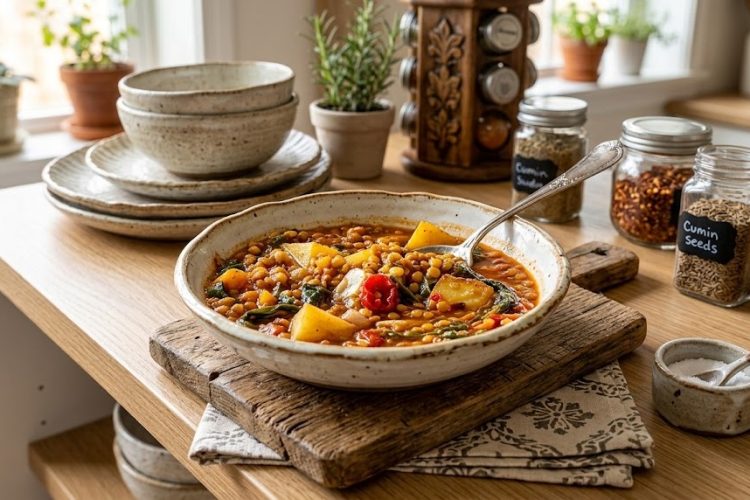
Mediterranean Lentil Soup is a hearty one-pot meal made with dried lentils, potatoes, carrots, celery, onion, tomatoes, spinach, herbs, and a bright splash of balsamic vinegar or lemon juice. It is filling without being heavy and makes a practical choice for a wholesome weeknight dinner. The combination of lentils and vegetables creates a thick, satisfying soup with plenty of texture, while the tomato-based broth gives every spoonful a rich, savory flavor.
This Lentil Soup
This easy Mediterranean lentil soup is the kind of recipe that fits comfortably into a busy cooking routine. Most of the preparation involves chopping a few vegetables, rinsing the lentils, and adding everything to one large pot. Once the soup begins simmering, the lentils and potatoes become tender while the vegetables soften into the flavorful broth. Fresh spinach is added near the end, so it retains its color and gives the finished soup a fresh vegetable element.
Another reason this recipe works so well is its combination of simple pantry ingredients. Dried lentils are inexpensive, filling, and easy to keep on hand, while canned tomatoes, vegetable broth, potatoes, carrots, celery, and onions are familiar ingredients that can turn into a complete meal. You do not need complicated cooking techniques or specialty equipment. A large pot and a wooden spoon are enough to prepare this comforting homemade lentil soup.
What Makes It Mediterranean Style?
Mediterranean cooking often relies on vegetables, legumes, herbs, olive oil, tomatoes, and fresh acidic ingredients to create meals that are flavorful without requiring complicated sauces. This soup follows that approach with extra virgin olive oil, lentils, onion, celery, carrots, garlic, oregano, tomatoes, spinach, and balsamic vinegar or lemon juice. Each ingredient has a useful role, and together they create a balanced bowl of soup.
The lentils provide the hearty foundation, while the vegetables build flavor and texture. Crushed tomatoes add body and a gentle tang to the broth, and oregano brings an earthy herbal note. The final addition of balsamic vinegar or lemon juice is especially important because acidity can brighten the deeper flavors of lentils and vegetables. The result is a rustic vegetable lentil soup that tastes substantial while remaining straightforward to prepare.
Choosing the Right Lentils
Dried lentils are the main ingredient in this recipe, and several varieties can work. Brown, green, French, or black lentils can be used depending on what you have available. Their cooking times and final textures can vary slightly, so keep an eye on the pot as the soup simmers. For this particular preparation, the lentils should become tender without completely disappearing into the broth.
If you already have cooked lentils available, they can also be used according to the recipe instructions. Cooked lentils require less simmering time than dried lentils because they are already tender. When using canned or pre-cooked lentils, the amount of vegetable broth is reduced and the cooking time is shortened. This makes the recipe useful when you want an easy lentil soup that can be prepared quickly.
Preparing the Vegetables
The vegetables form the flavor base of this homemade Mediterranean soup. Start by chopping the onion, celery, carrots, and garlic. The pieces do not need to be perfectly uniform, but keeping them reasonably similar in size helps them cook evenly. The carrots contribute natural sweetness, celery adds savory depth, and onion creates a mellow foundation as it softens in the olive oil.
You can chop the vegetables by hand with a chef’s knife, or use a food processor to speed things up. If using a processor, pulse the vegetables rather than blending them into a smooth puree. A little texture is desirable because the finished soup should contain recognizable pieces of vegetables along with tender lentils and potatoes.
Building the Flavor Base
Begin by heating the extra virgin olive oil in a large pot over medium heat. Add the chopped onion, celery, carrots, garlic, and dried oregano. Cook the vegetables for about five minutes, stirring frequently. The goal is to soften them and release their flavors rather than deeply brown them. This short sautéing step gives the soup a more developed taste than simply placing every ingredient into cold broth.
Pay attention to the bottom of the pot while the vegetables cook. If they begin sticking, stir well and lower the heat if necessary. The vegetables should become fragrant and tender while still retaining some texture. Once this base is ready, the remaining ingredients can be added and the soup can move into its main simmering stage.
Cooking the Lentils and Potatoes
After the vegetable base has softened, add the rinsed dried lentils, diced potatoes, vegetable broth, and crushed tomatoes. Season with salt and black pepper, then bring the mixture to a boil. Once it reaches a boil, reduce the heat and allow the soup to simmer gently. Stir occasionally to prevent ingredients from settling on the bottom and to check the consistency.
The lentils generally need around 30 minutes of simmering to become tender, although the exact time can vary depending on their variety and age. The potatoes should also become soft enough to pierce easily with a fork. If the soup becomes thicker than you prefer while cooking, additional broth or water can be added as needed.
Why Potatoes Work So Well Here
Potatoes make this lentil soup especially satisfying. They add substance to the bowl and absorb some of the tomato and vegetable flavors as they cook. Yukon gold or russet potatoes are particularly suitable, and leaving the skin on is fine if they have been cleaned thoroughly. Dicing the potatoes into moderate-sized pieces helps them cook alongside the lentils without becoming overly soft too early.
Sweet potatoes can also be used according to the ingredient notes, giving the soup a naturally sweeter taste and a different appearance. Whichever potato you choose, try to cut the pieces into similar sizes so they cook at approximately the same rate. The potatoes should be tender but not completely dissolved into the soup.
Adding Spinach at the End
Fresh spinach is added during the final few minutes of cooking. Because spinach wilts quickly, it does not need to simmer for the entire cooking time. Stir the spinach into the hot soup and allow it to cook until the leaves soften and blend into the broth. Adding it toward the end helps maintain a fresher vegetable flavor and keeps the finished soup from becoming unnecessarily overcooked.
If spinach is not available, kale, Swiss chard, or frozen spinach can be used as alternatives. Kale generally needs more time to soften than spinach, so add it earlier. Frozen spinach is convenient when fresh greens are not available, although excess water should be considered when adjusting the consistency of the soup.
The Finishing Touch
Balsamic vinegar or lemon juice may seem like a small addition, but it can make a noticeable difference to the final flavor. Lentils, potatoes, tomatoes, and root vegetables create deep earthy flavors during cooking. A small amount of acidity cuts through those heavier notes and makes the soup taste brighter and more balanced.
Add the balsamic vinegar or lemon juice near the end, stir thoroughly, and taste the soup before serving. You can then adjust the salt and black pepper according to your preference. The goal is not to make the soup taste strongly acidic. Instead, the acidic ingredient should subtly sharpen the other flavors already present in the pot.
How to Serve Mediterranean Lentil Soup
Serve this hearty lentil soup hot as a main course, particularly on cool evenings when a warm bowl of homemade food is welcome. Crusty bread is a natural companion because it can be used to soak up the tomato-rich broth. A small drizzle of olive oil over each serving can add richness, while optional toppings such as parmesan, scallions, or Greek yogurt can provide additional flavor and texture.
The soup can also be served as part of a larger meal. A simple green salad, roasted vegetables, or a piece of crusty bread can round out the table. Because the lentils and potatoes make the soup substantial, you do not necessarily need several additional side dishes to turn it into a satisfying dinner.
Making Lentil Soup Ahead
This recipe is well suited to advance preparation. After cooking, allow the soup to cool appropriately before transferring it to an airtight container and placing it in the refrigerator. The flavors can become more integrated as the soup rests, making leftovers particularly convenient for lunch or dinner the following day.
When reheating refrigerated soup, warm it gently on the stovetop or in the microwave and stir occasionally. Lentils and potatoes can absorb some of the liquid while the soup sits, so you may need to add a little water or broth before reheating if the consistency has become too thick.
Can You Freeze Mediterranean Lentil Soup?
Yes, this lentil soup can be frozen for longer storage. The recipe notes indicate that it can be frozen for up to three months when stored in airtight containers. Allow the soup to cool appropriately before freezing, and leave a little room in the container for expansion. Dividing it into individual portions can make future meals easier to thaw.
When ready to eat, thaw the soup safely and reheat it thoroughly. The texture may be slightly different after freezing, particularly because potatoes can soften further, but the soup remains useful as a make-ahead meal. Stirring well while reheating and adjusting the liquid can help restore a pleasant consistency.
Using Canned Lentils
Canned lentils are a convenient alternative when you do not want to cook dried lentils. Drain and rinse them before adding them to the pot. Because canned or pre-cooked lentils are already tender, they require significantly less cooking time. The recipe specifies reducing both the broth and cooking time by half when using this option.
This variation is especially useful for a quick weeknight meal. The vegetables still need time to soften and develop their flavor, but the lentils themselves no longer need a long simmer. Canned lentils also make it easier to prepare a satisfying soup when you have limited time but still want something homemade.
Easy Ingredient Substitutions
Several ingredients can be adjusted when necessary without changing the basic character of the soup. Extra virgin olive oil can be replaced with avocado oil, or water can be used when an oil-free preparation is preferred. Yellow or white onion can be exchanged for shallots or leeks, while fennel stalks can replace celery for a slightly sweeter aromatic note.
Carrots can be substituted with parsnips or butternut squash, and dried oregano can be replaced with dried thyme or rosemary. Different varieties of lentils can also be used. For the greens, spinach can be exchanged for kale, Swiss chard, or frozen spinach. These substitutions make the recipe flexible while keeping its hearty vegetable-and-lentil foundation.
How to Get the Best Texture
For a soup with distinct vegetables and lentils, avoid cooking everything at an excessively high temperature. A gentle simmer is enough to cook the lentils and potatoes while allowing the broth to thicken naturally. Stir occasionally rather than constantly, since excessive stirring can break down the potatoes and make the soup much thicker.
The final consistency is largely a matter of preference. If you enjoy a thick, stew-like lentil soup, allow it to simmer until more of the liquid has reduced. If you prefer a lighter broth, add extra vegetable broth or water. Remember that the soup may continue thickening as it cools and as the lentils absorb more liquid.
Storage Notes
Store leftover Mediterranean Lentil Soup in the refrigerator for up to four days in airtight containers. For longer storage, freeze it for up to three months. Portioning the soup before refrigeration or freezing can be convenient if you plan to serve individual lunches or dinners.
When storing leftovers, use clean airtight containers and refrigerate the soup promptly after it has cooled appropriately. Before serving leftovers, reheat them thoroughly. If the soup has thickened considerably, loosen it with a little water or vegetable broth and stir well.
Notes for Better Results
For the richest flavor, give the onion, celery, carrots, garlic, and oregano enough time to soften before adding the lentils and liquid. This five-minute step may seem short, but it establishes the savory foundation of the soup. Avoid rushing the vegetables by using very high heat, because the aim is to soften them without excessive browning.
Another useful point is to taste the soup toward the end rather than relying entirely on the initial seasoning. Lentils, broth, tomatoes, and vegetables can vary in their natural saltiness and flavor intensity. Once the spinach has wilted and the balsamic vinegar or lemon juice has been added, taste the soup and make any final seasoning adjustments.
Frequently Asked Questions
Can I use canned lentils instead of dried lentils?
Yes. Drain and rinse the canned lentils before adding them. Because they are already cooked, use the reduced broth amount specified in the recipe and shorten the cooking time by about half. This creates a quicker version of the soup while keeping the vegetables, tomatoes, spinach, and seasonings intact.
Can I make this soup ahead of time?
Yes. Mediterranean Lentil Soup is suitable for preparing ahead because the flavors can develop as the soup rests. Store it in an airtight container in the refrigerator and reheat gently when you are ready to serve. Add a little broth or water if it becomes too thick.
Can I freeze lentil soup?
Yes. The soup can be frozen for up to three months in airtight containers. Individual portions are particularly convenient for future meals. Thaw and reheat thoroughly, adding a little liquid if necessary to adjust the consistency.
Do I have to use spinach?
No. Spinach can be replaced with kale, Swiss chard, or frozen spinach. Fresh spinach cooks very quickly, while kale generally needs additional time to soften. Add the greens according to their cooking time so they reach the texture you prefer.
How can I make the soup more filling?
The lentils and potatoes already make this a substantial meal. Serving the soup with crusty bread can make it even more filling. Optional toppings such as parmesan, scallions, or Greek yogurt can also add another layer of flavor and texture.
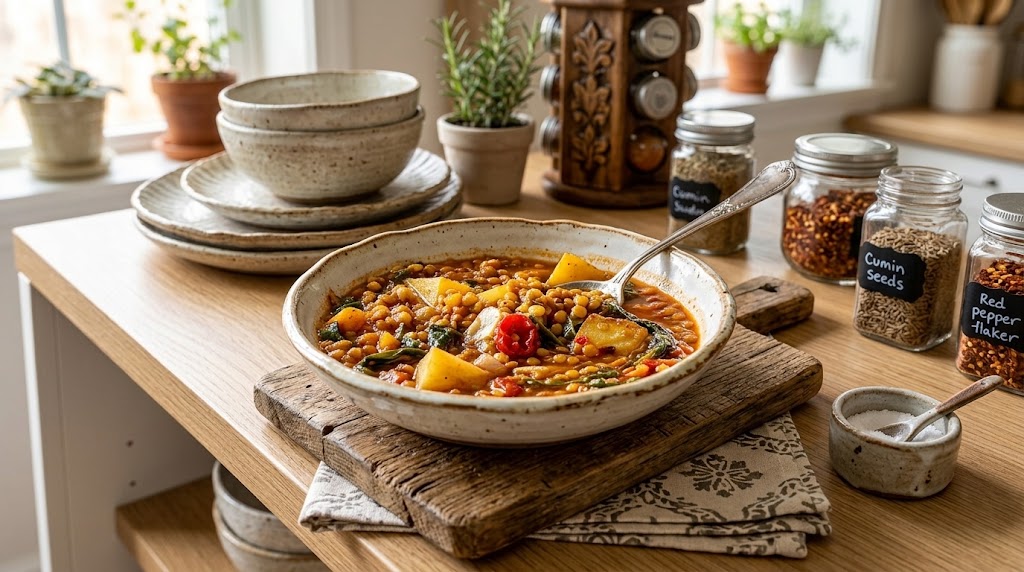
Mediterranean Lentil Soup
 Recipe by admin
This Mediterranean Lentil Soup is a hearty, protein-rich, fiber-packed one-pot meal made with lentils, potatoes, fresh vegetables, crushed tomatoes, spinach, oregano, and balsamic vinegar or lemon juice.
4
servings5
minutes35
minutes409
kcal40
minutesIngredients
2 tablespoons extra virgin olive oil
1 large onion, chopped
1 rib celery, chopped
3 medium carrots, chopped
3 cloves garlic, pressed or minced
1 teaspoon dried oregano
1 cup dried lentils or 3 cups cooked lentils / 2 cans lentils (drain and rinse)
2 medium potatoes, diced – skin on is fine
6 cups vegetable broth; you’ll only need 3 cups if using canned or pre-cooked lentils
1 can crushed tomatoes, 15 oz / 400 g
7 oz spinach, about 7 cups
1½ tablespoons balsamic vinegar or lemon juice
1 teaspoon salt or to taste + black pepper
Directions
- Heat the extra virgin olive oil in a large pot. Add the chopped onion, celery, carrots, garlic, and dried oregano. Cook for about 5 minutes, stirring frequently, until the vegetables soften without browning.
- Add the rinsed dried lentils, diced potatoes, vegetable broth, and crushed tomatoes. Season with salt and black pepper.
- Bring the soup to a boil, then reduce the heat. Simmer for about 30 minutes, stirring occasionally, until the lentils and potatoes are tender and the soup has developed a hearty consistency.
- Check the soup occasionally while it cooks. If it becomes too thick, add additional broth or water according to the desired consistency.
- A few minutes before the soup is finished, stir in the spinach. Continue cooking until the greens wilt.
- Stir in the balsamic vinegar or lemon juice. Taste the soup and adjust the salt and black pepper if needed.
- Serve hot with crusty bread, a drizzle of olive oil or chili oil, and optional toppings such as parmesan, scallions, or Greek yogurt.
Notes
- Canned lentils: Drain and rinse canned lentils before using. Reduce the broth and cooking time by half.
- Greens: Spinach can be replaced with kale, Swiss chard, or frozen spinach. Kale requires additional cooking time.
- Flavor: Add balsamic vinegar or lemon juice near the end to brighten the earthy lentil and vegetable flavors.
- Storage: Refrigerate in airtight containers for up to 4 days.
- Freezing: Freeze in airtight containers for up to 3 months.
- Consistency: Add extra broth or water when reheating if the soup becomes too thick.
Nutrition Facts
- Calories: 409kcal
- Fat: 8g
- Carbohydrates: 68g
- Sugar: 11g
- Protein: 19g