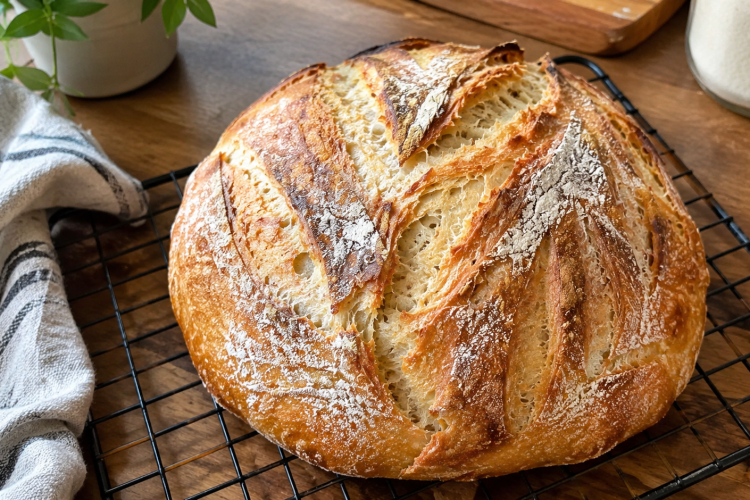
Easy No-Knead Sourdough Discard Bread is a simple homemade bread recipe that combines the familiar tangy flavor of sourdough with the convenience of quick, same-day baking. It produces a crusty golden exterior, a soft interior, and a satisfying texture that works well for sandwiches, toast, soups, and everyday meals. Unlike traditional sourdough bread, which often requires a lengthy fermentation process and several rounds of stretching and folding, this recipe uses active dry yeast to help the dough rise more quickly.
If you keep a sourdough starter in your refrigerator, you probably know how much discard can accumulate between feedings. Rather than throwing it away, you can use it to make a delicious loaf with a distinctive sourdough taste. This easy sourdough discard bread recipe requires only five basic ingredients, a mixing bowl, parchment paper, and a Dutch oven. There is no need for a stand mixer or complicated bread-making equipment, making it suitable for beginners and experienced home bakers alike.
What Makes This Sourdough Discard Bread Special?
The main advantage of this no-knead sourdough discard bread is its straightforward preparation. Traditional sourdough recipes depend on a strong, active starter and carefully managed fermentation to develop their structure and flavor. This version takes a more convenient approach by combining sourdough discard with commercial yeast, allowing you to enjoy homemade bread without waiting an entire day for the dough to rise.
The discard contributes a pleasant tang, while the yeast helps the dough develop volume within a predictable time frame. Because the dough does not require kneading, you can mix the ingredients together, cover the bowl, and allow the dough to rise before shaping and baking. The Dutch oven creates a warm, enclosed environment that helps the loaf expand and develop a crisp crust during baking.
Another benefit is the short ingredient list. All-purpose flour provides the foundation, lukewarm water brings the dough together, salt adds flavor, and sourdough discard gives the loaf its characteristic taste. Active dry yeast supports the rising process, creating a practical alternative to recipes that depend entirely on natural fermentation.
Why Use Sourdough Discard for Homemade Bread?
Sourdough discard is the portion of starter that is removed during regular feeding. Depending on how you maintain your starter, it may be unfed, recently fed, refrigerated, or left over from an earlier baking session. Instead of wasting this mixture, you can incorporate it into recipes such as pancakes, crackers, muffins, pizza dough, and homemade bread.
In this recipe, the discard contributes flavor without being responsible for all the dough’s leavening. The active dry yeast does most of the work needed to create a reliable rise, which is especially helpful when the starter is not strong enough to raise a loaf on its own. This makes the recipe convenient for people who want to use their sourdough starter regularly without committing to a long fermentation schedule.
The flavor will vary slightly depending on the age and condition of your discard. A starter that has been refrigerated for several days may provide a more noticeable sour aroma than a recently maintained starter. However, the finished bread should still have a balanced flavor, with a mild sourdough character that complements both savory and sweet toppings.
Ingredients for Easy No-Knead Sourdough Discard Bread
This recipe uses five ingredients, and each one contributes to the loaf’s final texture, flavor, or structure. Measuring the ingredients by weight is particularly helpful when baking bread because small differences in flour and water quantities can affect how the dough feels and rises.
All-purpose flour
All-purpose flour forms the structure of the bread. It contains enough protein to develop a dough that can hold its shape while remaining relatively easy to handle. Weighing the flour rather than relying on measuring cups helps maintain consistency between batches. Avoid adding extra flour too quickly if the dough feels sticky, because a slightly tacky dough can produce a more pleasant crumb after baking.
Lukewarm water
Water hydrates the flour and activates the yeast. The recipe calls for 350 grams of lukewarm water, which helps create a workable dough with enough moisture for a soft interior. The water should feel comfortably warm rather than hot. Excessively hot water can damage the yeast, making it harder for the dough to rise properly.
Active dry yeast
Active dry yeast provides the dependable rise that makes this a same-day sourdough discard bread recipe. When mixed with lukewarm water and given a few minutes to sit, the yeast can begin activating. A slightly foamy appearance may indicate that it is active, although the amount of visible foam can vary depending on the yeast and water conditions.
Salt
Salt improves the overall flavor and helps regulate yeast activity. Without it, homemade bread can taste flat even when the crust and texture are excellent. Measure the salt carefully and distribute it throughout the dough during mixing so that the finished loaf has an even flavor.
Sourdough discard
The sourdough discard adds the flavor that distinguishes this bread from a standard yeast loaf. Use 100 grams of discard as specified in the recipe. Since discard can vary in consistency, the dough may feel slightly different from one batch to another. Try to use discard that has been stored safely and shows no signs of mold or unusual discoloration.
Equipment You Will Need
You do not need specialized baking equipment to make this easy no-knead bread. A large mixing bowl provides enough room for the dough to rise, while a wooden spoon or clean hands can combine the ingredients. Plastic wrap helps prevent the dough’s surface from drying out during fermentation, and a kitchen scale makes it easier to measure the ingredients accurately.
A Dutch oven is the most important piece of equipment for achieving the crusty exterior associated with artisan-style bread. Its heavy construction retains heat, while the lid traps moisture released by the dough. This creates a steamy environment during the first stage of baking, helping the loaf expand before the crust becomes firm. Parchment paper also makes it easier to transfer the shaped dough into the hot oven-safe pot.
Make-Ahead Instructions and Storage
Preparing the dough in advance
You can prepare the dough up to 24 hours before baking if you want to fit bread-making around a busy schedule. After mixing the ingredients, place the dough in a bowl coated with olive oil, cover it with plastic wrap, and refrigerate it for up to 24 hours. Refrigeration slows yeast activity, allowing the dough to be held for later baking rather than completing the entire rise immediately.
When you are ready to bake, remove the dough from the refrigerator and let it sit at room temperature for about one hour, as directed in the original recipe. Shape the dough if needed, score the top, and bake using the same covered and uncovered stages. Because refrigeration and room temperatures vary, observe the dough’s condition and allow for some variation in its rise.
Storing leftover bread
After the loaf has cooled completely, store leftover bread in a large resealable plastic bag at room temperature for up to five days, following the recipe’s storage guidance. Keeping the loaf away from direct sunlight and excess moisture helps preserve its texture. The crust may soften during storage, but individual slices can be toasted to restore some crispness.
For longer storage, freezing is a practical option. Slice the cooled bread, separate the slices if needed, and place them in a freezer-safe bag. Remove only the amount you need, then thaw or toast the slices before serving. Freezing can help reduce waste when you do not expect to finish the entire loaf within a few days.
Ways to Serve This Homemade Bread
This crusty sourdough discard bread is versatile enough to accompany breakfast, lunch, or dinner. Serve thick slices with butter, jam, honey, or scrambled eggs for a simple breakfast. For lunch, use the bread to make grilled cheese, vegetable sandwiches, or toasted sandwiches filled with your favorite ingredients. Its sturdy crust and soft interior also make it suitable for dipping into soups and stews.
At dinner, offer slices alongside roasted vegetables, pasta, salads, or hearty soups. You can toast leftover bread and cut it into cubes for homemade croutons, or use slightly stale slices to prepare breadcrumbs. The mild tang from the sourdough discard complements both savory toppings and simple spreads, making this loaf a useful addition to an everyday meal plan.
Frequently Asked Questions
Can I make sourdough discard bread without kneading?
Yes. This recipe is designed to be mixed by hand or with a wooden spoon rather than kneaded extensively. Once the flour, water, yeast, salt, and discard are combined into a shaggy dough, the rising period allows the dough to develop before shaping. Minimal handling keeps the method simple and makes it accessible to people who are new to homemade bread.
Does sourdough discard need to be active?
No. The recipe uses active dry yeast to provide the main leavening action, so the sourdough discard does not need to be strong enough to raise bread independently. The discard mainly contributes sourdough flavor and helps you use up excess starter. It should still be stored safely and free from visible mold or other signs of spoilage.
Why is my bread dense?
Dense bread can result from inactive yeast, water that is too hot, insufficient rising, or too much flour. Check the yeast’s freshness and measure the ingredients carefully. The dough should become noticeably fuller during the rising period. Also, allow the finished loaf to cool before slicing, because cutting too early can make the interior appear damp and compressed.
How can I tell when the bread is finished?
Look for a golden-brown crust and a loaf that has expanded during baking. The recipe calls for 30 minutes covered and another 30 minutes uncovered at 450°F. Since ovens vary, the crust’s color and the bread’s overall appearance are useful indicators. For a more precise check, the internal temperature of fully baked lean bread is generally around 200–210°F.
Can I bake this bread without a Dutch oven?
A Dutch oven is recommended because it traps steam and supports crust development. If you do not have one, you can experiment with another oven-safe covered baking vessel, provided it is rated for the required temperature. The crust and shape may differ, so follow the cookware manufacturer’s safety guidance and avoid placing unsuitable glass or other fragile vessels in a very hot oven.
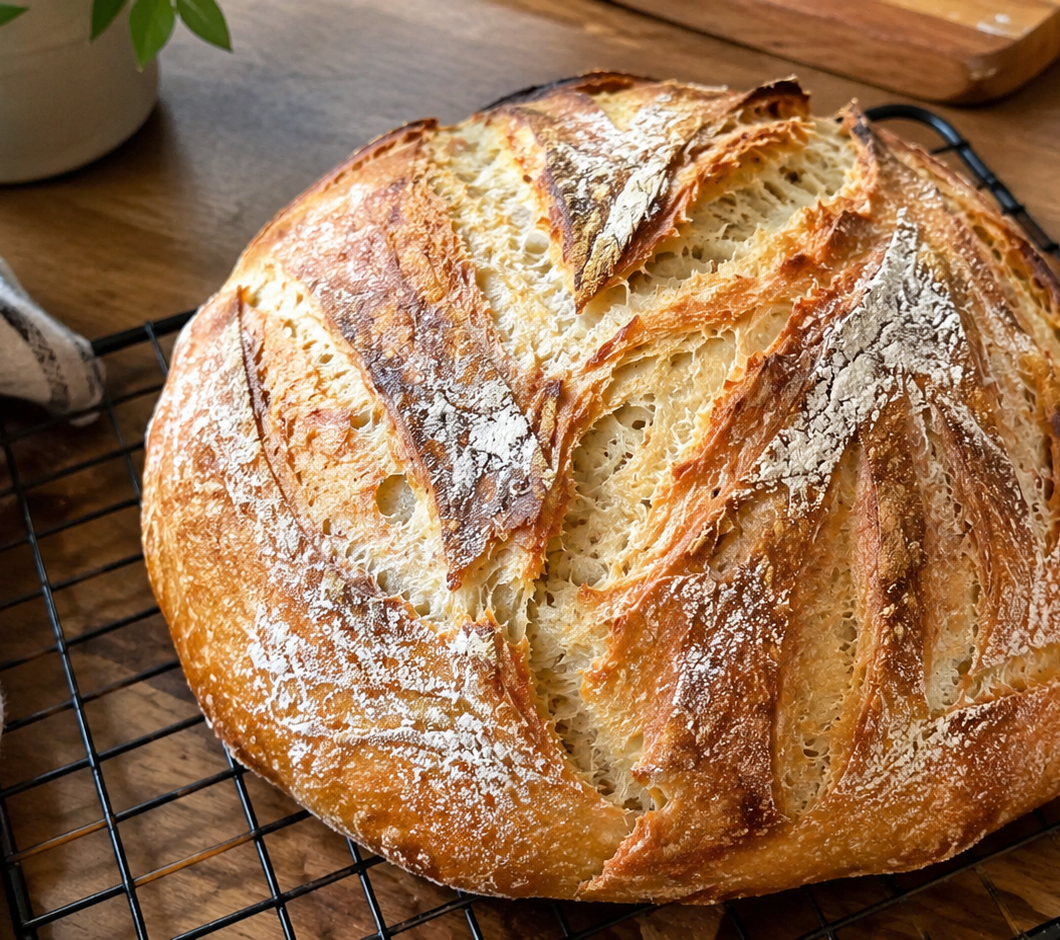
Easy No-Knead Sourdough Discard Bread
 Recipe by admin
A crusty homemade loaf made with sourdough discard, all-purpose flour, and active dry yeast.
8
servings2
hours1
hour277
kcal3
hoursIngredients
350 g lukewarm water
10 g active dry yeast
500 g all-purpose flour
10 g salt
100 g sourdough discard
Directions
- Add the lukewarm water to a large mixing bowl. Add the active dry yeast without stirring and leave it for 5 minutes, until the mixture becomes slightly frothy.
- Add the all-purpose flour, sourdough discard, and salt. Stir with a wooden spoon or your hands until everything is combined and a shaggy dough forms.
- Cover the bowl with plastic wrap and leave the dough in a warm place for 2 hours.
- Preheat the oven to 450°F (232°C).
- Turn the risen dough onto a lightly floured surface. Gently shape it into a ball and place it on parchment paper.
- Use a sharp knife to make a cut across the top of the loaf.
- Transfer the dough, together with the parchment paper, into a Dutch oven. Cover with the lid and bake for 30 minutes.
- Remove the lid and bake for another 30 minutes, until the bread develops a golden-brown crust.
- Carefully remove the loaf from the oven and allow it to cool on a wire rack before slicing.
Notes
- The bread is ready when the crust is golden brown and the loaf has expanded noticeably during baking.
- To prepare the dough ahead, place it in an olive-oil-coated bowl after mixing, cover it with plastic wrap, and refrigerate for up to 24 hours. Remove it from the refrigerator about one hour before baking, then proceed with shaping and baking.
- Preheating the Dutch oven is optional.
- Store completely cooled leftover bread in a large resealable plastic bag at room temperature for up to 5 days.
- For the best texture, let the bread cool before slicing.
Nutrition Facts
- Total number of serves: 1
- Calories: 277kcal
- Fat: 1g
- Carbohydrates: 58g
- Fiber: 2g
- Sugar: 0.2g
- Protein: 8g