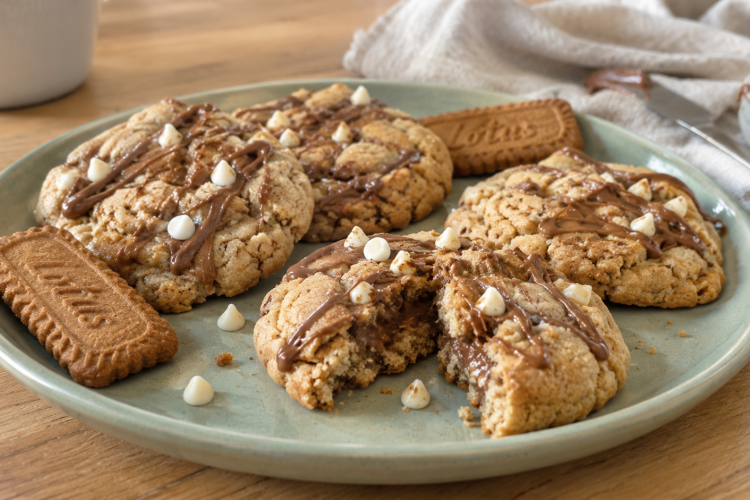
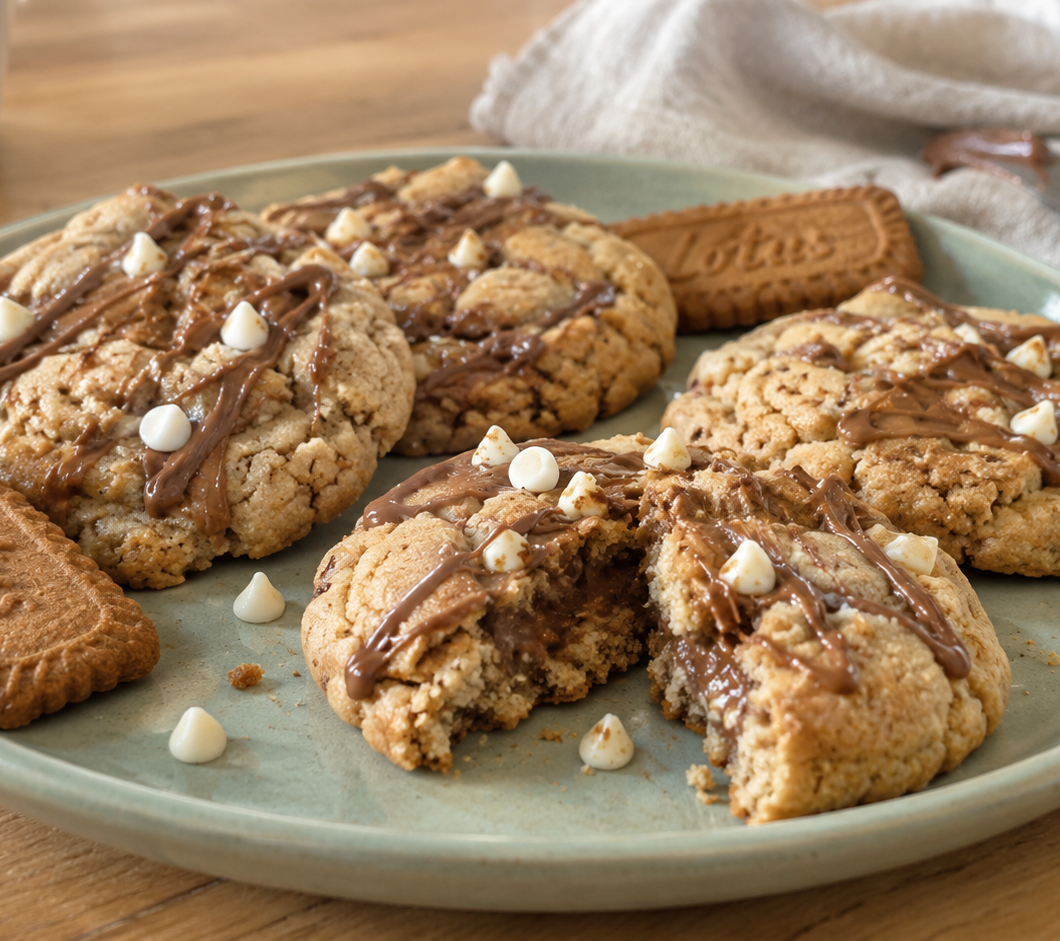
Cookie Butter Sourdough Cookies are a delicious homemade treat that combines the warm flavors of cinnamon, the sweetness of white chocolate, and the caramel-like taste of Biscoff cookies. These cookies have soft, chewy centers, lightly golden edges, and little crunchy pieces of spiced cookies throughout. A generous drizzle of melted cookie butter adds another layer of sweetness, making every bite rich, flavorful, and satisfying. If you enjoy creative sourdough discard recipes, these cookies are a wonderful way to turn leftover sourdough starter into something special.
What makes this cookie recipe stand out is the combination of familiar baking ingredients with the distinctive flavor of cookie butter. Brown sugar gives the dough a deeper sweetness, while granulated sugar helps create the right cookie texture. Cinnamon brings warmth without overpowering the other ingredients, and white chocolate chips add creamy sweetness. Crushed Biscoff cookies provide a little crunch, balancing the soft texture of the baked dough. Together, these ingredients create a bakery-style cookie that is perfect for sharing with family, serving with coffee, or adding to a homemade dessert platter.
Another reason to make these sourdough discard cookies is their versatility. You can prepare the dough in advance, chill it for a short period, or leave it in the refrigerator overnight if you prefer a longer resting time. This flexibility makes the recipe suitable for everyday baking as well as holidays, parties, and special occasions. Whether you are an experienced sourdough baker or someone who is still learning how to use sourdough discard, this recipe offers a straightforward way to create flavorful cookies without complicated techniques.
What Makes These Sourdough Cookie Butter Cookies Special?
Soft and Chewy Texture
The texture is one of the best features of these cookie butter sourdough cookies. The centers remain soft and chewy, while the edges develop a light golden color during baking. Brown sugar contributes moisture and a rich flavor, helping the cookies stay tender after they cool. Chilling the dough also helps it firm up before baking, making it easier to handle and helping the cookies bake more consistently.
The goal is to remove the cookies from the oven when the edges look lightly browned and the surface no longer appears shiny. They may still seem slightly soft in the center, but they will continue to set as they rest on the baking sheet. Avoid waiting until the entire cookie becomes deeply browned, because excessive baking can make the finished cookies drier and firmer than intended.
Rich Biscoff Cookie Butter Flavor
Biscoff cookies and cookie butter are the main ingredients responsible for the distinctive flavor of this dessert. Biscoff cookies have a sweet, spiced taste with caramel-like notes, making them a natural match for cinnamon and brown sugar. When crushed and folded into the dough, they create small pockets of crunch that contrast with the soft cookie interior.
The melted cookie butter drizzled over the finished cookies adds a creamy topping and makes their appearance even more inviting. It reinforces the spiced flavor already present in the dough without requiring a separate frosting or complicated decoration. For the best result, allow the cookies to cool slightly before adding the drizzle so that it remains visible on the surface rather than disappearing too quickly into the warm cookies.
A Delicious Way to Use Sourdough Discard
Sourdough discard is the portion of starter that is removed during the feeding process. Instead of throwing it away, you can incorporate it into baked goods such as pancakes, crackers, muffins, brownies, and cookies. In this recipe, sourdough discard contributes moisture and a subtle depth of flavor while helping make use of an ingredient that might otherwise be wasted.
The discard does not need to provide the main rise in these cookies because baking soda is included in the dough. Its purpose is primarily to contribute flavor and moisture. For a predictable result, use sourdough discard with a consistency similar to a typical 100% hydration starter, unless your own starter recipe specifies otherwise. A starter that is unusually thick or watery may affect the consistency of the dough.
Ingredients That Make These Cookies Delicious
Butter, Brown Sugar, and Granulated Sugar
Softened unsalted butter creates the rich base of the cookie dough and helps combine the sugars into a smooth mixture. It should be soft enough to blend easily but not melted or greasy. Properly softened butter traps air during creaming, which helps create a pleasant cookie texture. If the butter is too cold, it may not combine evenly with the sugar, while melted butter can change how the cookies spread during baking.
Brown sugar adds moisture and a deeper caramel-like flavor that complements the cookie butter. Granulated sugar balances the richness and contributes to the cookies’ edges and overall texture. Creaming both sugars with the butter until the mixture is smooth helps distribute them evenly throughout the dough. Take a little time with this first step because an evenly mixed butter-and-sugar base helps the remaining ingredients incorporate more consistently.
Egg, Vanilla Extract, and Sourdough Discard
The egg helps bind the ingredients together and provides structure as the cookies bake. It also contributes richness and helps create the tender texture expected from a good homemade cookie. Vanilla extract rounds out the sweetness and works particularly well with white chocolate, cinnamon, and cookie butter. Measuring the vanilla accurately helps maintain the intended balance of flavors without making it overpowering.
Sourdough discard is added with the egg and vanilla so the wet ingredients can be combined before the flour mixture is introduced. Mix until everything is incorporated, but avoid beating the mixture unnecessarily once the dough begins to come together. The goal is a consistent dough that can hold the white chocolate chips and cookie pieces without becoming overly tough from excessive mixing.
All-Purpose Flour, Baking Soda, Cinnamon, and Salt
All-purpose flour provides the structure that allows the cookies to hold their shape. Measuring flour accurately is important because adding too much can make the dough dry and the baked cookies dense. If you measure with cups, lightly spoon the flour into the measuring cup and level it off rather than packing it down. A kitchen scale is another useful option for following the recipe’s gram measurements consistently.
Baking soda helps the cookies spread and brown during baking, while cinnamon gives them a warm, spiced flavor. Salt balances the sweetness of the sugars, white chocolate, and cookie butter. These dry ingredients should be mixed into the wet ingredients only until the flour disappears. Overmixing can develop more gluten than necessary and may produce a firmer cookie instead of the soft, chewy result you want.
White Chocolate Chips and Crushed Biscoff Cookies
White chocolate chips add creamy sweetness and create small pockets of chocolate throughout the cookies. Their mellow flavor works especially well with the stronger caramel and spice notes from Biscoff. The chips should be folded into the dough evenly so that each cookie receives a good distribution. Folding gently also helps prevent the crushed cookie pieces from breaking down too much during mixing.
Crushed Biscoff cookies provide texture and additional spiced flavor. Aim for a mixture of small pieces and slightly larger crumbs rather than crushing every cookie into fine powder. Larger pieces create pleasant crunchy bites, while smaller crumbs distribute their flavor throughout the dough. This combination helps the finished cookies feel more interesting than a plain sugar cookie while maintaining the soft, chewy texture of the base.
Biscoff Cookie Butter and Coarse Sea Salt
Cookie butter is a smooth spread made from ground spiced cookies. It has a creamy consistency and a flavor that resembles caramel, cinnamon, and toasted biscuits. In this recipe, cookie butter is used as a finishing drizzle, bringing the appearance and flavor together. Gently warming it makes it easier to pour over the cooled or slightly warm cookies in thin ribbons.
Coarse sea salt is an optional finishing ingredient, but it can be a useful addition if you enjoy sweet-and-salty desserts. A small sprinkle provides contrast against the white chocolate and cookie butter. Use it sparingly so it enhances the flavor without making the cookies taste salty. You can leave it out entirely if you prefer a sweeter finish.
Helpful Tips for the Best Results
Measure Ingredients Carefully
Accurate measurements are important when making sourdough discard cookies because the recipe contains several ingredients that influence moisture and texture. Weighing the flour, butter, sugars, and sourdough discard provides a reliable way to reproduce the recipe. If you use measuring cups, take care not to pack the flour tightly into the cup, since excess flour can make the dough too dry and produce firm cookies.
Do Not Skip the Chilling Time
Refrigerating the dough is especially helpful when making large cookies with butter, chocolate chips, and cookie pieces. Cold dough is firmer and easier to shape, and the butter takes longer to melt once the cookies enter the oven. This helps the cookies spread in a more controlled way. If your kitchen is warm or the dough feels very soft, additional chilling may make it easier to work with.
Avoid Overbaking
For soft and chewy cookie butter sourdough cookies, remove the tray when the edges are lightly golden and the centers have just lost their wet-looking sheen. Cookies continue to firm up on the hot baking sheet after leaving the oven, so they do not need to feel completely solid immediately. Leaving them in the oven until the centers become dark can result in a drier texture once they cool.
Adjust the Topping to Your Taste
The cookie butter drizzle adds extra sweetness and reinforces the Biscoff flavor. You can make the drizzle thin and delicate or slightly thicker, depending on how much topping you prefer. A small amount of coarse sea salt can balance the sweetness, while a piece of Biscoff cookie in the center gives each cookie a decorative finish. Add the topping after baking so the cookie butter keeps its distinct flavor and appearance.
Frequently Asked Questions
Can I Use Active Sourdough Starter Instead of Discard?
Sourdough discard is the intended ingredient for this recipe, but an active starter may also work if it has a similar consistency. Both can contribute moisture and flavor to the dough. However, an active starter may be more recently fed and have a different aroma or fermentation profile. For a consistent result, use the same quantity by weight and make sure the starter is not unusually watery or stiff.
Can I Make Smaller Cookies?
Yes, you can use a two-tablespoon cookie scoop instead of the larger four-tablespoon scoop. Smaller cookies are convenient for parties, lunchboxes, and dessert platters. Since smaller portions bake faster, begin checking them earlier than the suggested 15–16 minutes. Remove them when the edges are lightly golden and the surface has lost its wet-looking sheen, then allow them to set before transferring them to a rack.
Why Do My Cookies Spread Too Much?
Cookies may spread excessively if the butter is too warm, the dough has not chilled sufficiently, or the flour has been measured inaccurately. Make sure the butter is softened rather than melted, measure the flour carefully, and refrigerate the shaped dough for at least 30 minutes. Also, use a cool baking sheet for each batch instead of placing fresh dough portions onto a tray that is still hot from the oven.
How Do I Know When the Cookies Are Done?
Look for lightly browned edges and a surface that no longer appears shiny or wet. The centers may remain soft, especially while the cookies are hot. Let them rest on the baking sheet for a couple of minutes before transferring them to a wire rack. This short resting period helps them firm up without requiring extra baking that could make them dry.
Sourdough Butter Cookies
 Recipe by admin
Soft and chewy sourdough discard cookies filled with white chocolate chips and crunchy Biscoff cookie pieces, finished with a sweet cookie butter drizzle.
20
servings10
minutes15
minutes343
kcal30
minutes55
minutesIngredients
226 grams (1 cup) unsalted butter, softened
220 grams (1 cup) brown sugar
150 grams (¾ cup) granulated sugar
1 large egg (50 grams)
12 grams (1 tablespoon) vanilla extract
75 grams (⅓ cup) sourdough discard
420 grams (3 cups) all-purpose flour
5 grams (1 teaspoon) baking soda
2 grams (1 teaspoon) cinnamon
3 grams (½ teaspoon) salt
170 grams (1 cup) white chocolate chips
85 grams (1 cup) Biscoff® cookies, crushed
130 grams (½ cup) Biscoff® cookie butter
Directions
- Cream the Butter and Sugars:
Add the softened butter, brown sugar, and granulated sugar to a large mixing bowl. Beat until smooth and creamy. - Mix in the Wet Ingredients:
Add the egg, vanilla extract, and sourdough discard. Beat until everything is evenly combined. - Add the Dry Ingredients:
Mix in the all-purpose flour, baking soda, cinnamon, and salt. Stir until just combined, taking care not to overmix the dough. - Fold in the Chocolate and Cookies:
Gently fold the white chocolate chips and crushed Biscoff cookies into the dough until evenly distributed. - Shape the Cookies:
Use a four-tablespoon cookie scoop to portion the dough into large balls. Roll each portion into a slightly tall cylinder. Alternatively, use a two-tablespoon scoop for smaller cookies. Arrange on a parchment-lined baking sheet. - Chill the Dough:
Cover and refrigerate the shaped dough for at least 30 minutes. For an optional longer rest, chill overnight. - Bake the Cookies:
Preheat the oven to 350°F (175°C). Bake approximately six large cookies per tray for 15–16 minutes, until the edges are lightly browned and the surface has lost its sheen. If baking two trays at once, rotate them halfway through and allow an extra minute or two if needed. - Add the Topping:
Let the cookies rest for a couple of minutes. Gently melt the cookie butter until pourable, then drizzle it over the cookies. Add a larger Biscoff cookie piece to the center if desired. - Cool and Serve:
Sprinkle with coarse sea salt if desired. Transfer the cookies to a wire rack to cool before serving.
Nutrition Facts
- Calories: 343kcal
- Fat: 16g
- Carbohydrates: 46g
- Fiber: 1g
- Sugar: 26g
- Protein: 4g