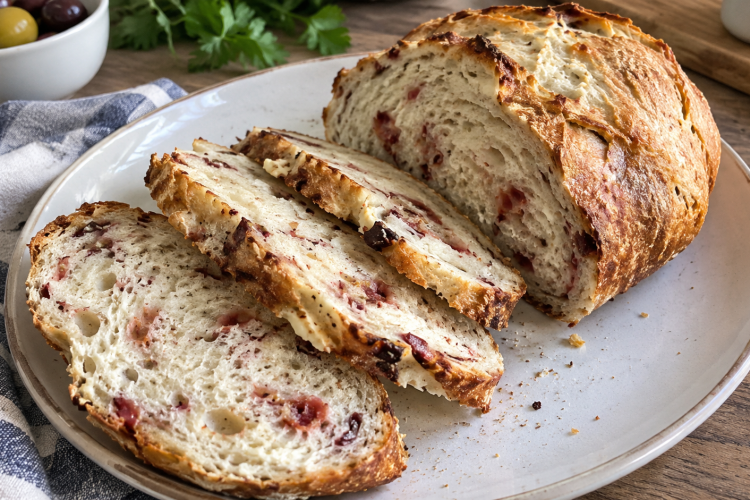
Sourdough strawberry cream cheese loaf is a delicious twist on traditional homemade sourdough bread, combining a naturally fermented dough with sweet freeze-dried strawberries and creamy pockets of cream cheese. The result is a soft, flavorful loaf with a lightly tangy sourdough taste, fruity sweetness, and a rich, creamy filling. Its beautiful appearance and inviting aroma make it a wonderful choice for spring brunches, weekend baking, afternoon coffee, or a special homemade treat to share with family and friends.
Unlike ordinary strawberry bread made with commercial yeast or baking powder, this recipe uses an active sourdough starter to develop the dough’s flavor and structure. The long fermentation process gives the bread its characteristic texture while allowing the dough to develop gradually. Freeze-dried strawberries provide concentrated fruit flavor without adding the extra moisture that fresh strawberries can introduce, while cream cheese creates delicious creamy layers throughout the loaf.
This strawberry cream cheese sourdough bread is an excellent option for bakers who enjoy experimenting with creative sourdough recipes. It combines the familiar crust and chewy interior of artisan bread with ingredients often associated with sweet breakfast pastries. Whether served warm after cooling, toasted with butter, or enjoyed alongside a cup of coffee, every slice offers a satisfying balance of fruity sweetness and gentle sourdough tang.
What Makes This Strawberry Cream Cheese Sourdough Special?
The appeal of this loaf comes from the combination of simple ingredients and thoughtful preparation. Traditional sourdough bread usually contains flour, water, salt, and starter, but adding freeze-dried strawberries and cream cheese creates a completely different eating experience. The dough remains bread-like rather than turning into a cake, while the fruit and cheese introduce sweet, creamy pockets that make each slice interesting.
The strawberries bring a concentrated berry flavor that complements the natural tanginess of fermented dough. Because freeze-dried fruit contains much less moisture than fresh fruit, it is easier to incorporate without significantly changing the dough’s hydration. Lightly crushing the strawberries before adding them also helps distribute the pieces throughout the loaf, allowing the fruity flavor to appear in different areas rather than remaining in a single layer.
Cream cheese adds a smooth, rich contrast to the slightly chewy crumb. When spread over the flattened dough before shaping, it forms creamy sections that complement the strawberries. The finished bread is not as sweet as a traditional dessert cake, making it suitable for breakfast, brunch, or an afternoon snack. This balance is one of the reasons strawberry cream cheese bread works so well for both casual meals and special occasions.
Ingredients for Sourdough Strawberry Cream Cheese Bread
You only need six ingredients to prepare this strawberry sourdough loaf. Each ingredient has a specific purpose, from developing the dough’s structure to adding fruit flavor and creamy richness. Measuring everything accurately, preferably with a kitchen scale, helps maintain consistent results and makes the dough easier to handle during fermentation and shaping.
Active sourdough starter
The recipe uses 55 grams of bubbly, active sourdough starter. A starter that has been recently fed and is close to its peak activity helps the dough rise naturally. Look for visible bubbles and an expanded appearance rather than relying only on a particular number of hours after feeding. Starter activity depends on room temperature, feeding ratio, and the strength of your culture.
Filtered water
Use 360 grams of filtered water to hydrate the flour and bring the dough together. Water helps develop gluten during mixing and folding, giving the loaf the structure needed to hold its shape. If your tap water has a strong chlorine smell, filtered water may be a useful alternative. The water temperature can also influence fermentation speed, so avoid water that is excessively hot.
All-purpose flour
The recipe calls for 500 grams of all-purpose flour. This flour provides the main structure of the loaf and develops the gluten network that traps gas during fermentation. Measuring flour by weight is more reliable than using cups because flour can become compacted during storage. All-purpose flour creates a tender crumb while still providing enough strength for shaping and baking in a Dutch oven.
Salt
Ten grams of salt adds flavor and helps regulate fermentation. It balances the sweetness of the strawberries and cream cheese while improving the overall taste of the bread. Distribute the salt evenly through the dough during the initial mixing stage to avoid concentrated salty areas. Do not omit it, as the finished loaf would taste noticeably different and may ferment differently.
Freeze-dried strawberries
One 1-ounce bag of freeze-dried strawberries, approximately one cup, gives the bread its fruity character. Lightly crush the berries before adding them, leaving some small pieces for texture. Freeze-dried strawberries are especially useful in sourdough baking because they contribute strong strawberry flavor without releasing as much liquid as fresh fruit. Keep the pieces reasonably small so they can be distributed evenly through the dough.
Cream cheese
Four ounces of cream cheese, or half a standard block, creates the creamy filling. Softened cream cheese is easier to spread over the dough without pulling or tearing it. Divide it between the first and second layers as described in the recipe instructions. Spreading the filling gently helps preserve the dough’s structure and creates a better distribution of cream cheese throughout the finished loaf.
Tips for Better Strawberry Cream Cheese Sourdough
Use an active starter
A strong, well-fed starter is important for proper fermentation and a good rise. If your starter is sluggish or has not risen after feeding, give it more time before mixing the dough. Starter strength can vary significantly between kitchens, so pay attention to its appearance, aroma, and expansion instead of following the clock alone.
Handle the filling gently
Cream cheese and freeze-dried strawberries should be incorporated without tearing the dough. Spread the filling carefully and avoid pressing too firmly during shaping. A few uneven pockets are perfectly acceptable and give the loaf a homemade appearance. Keeping the dough intact helps the bread retain its structure during proofing and baking.
Watch fermentation rather than the clock
Temperature affects how quickly sourdough develops. A warm kitchen may accelerate bulk fermentation, while a cooler environment can slow it down. Look for a dough that has expanded and developed a more aerated texture. If the dough becomes excessively loose or difficult to shape, it may have fermented for too long.
Allow enough cooling time
Cooling is part of the baking process, not an optional finishing step. The loaf needs time for its crumb to stabilize before slicing. Use a wire rack so air can circulate around the crust. This helps prevent trapped steam from softening the bottom and sides of the bread while it cools.
Serving Ideas for Strawberry Cream Cheese Bread
This strawberry cream cheese sourdough loaf is versatile enough for several occasions. Serve slices at a spring brunch with fresh fruit, yogurt, eggs, or other breakfast favorites. Its lightly sweet flavor works particularly well alongside black coffee, cappuccino, tea, or a chilled drink. For a simple presentation, place the sliced bread on a wooden serving board and let the strawberry pieces and creamy layers show.
For a richer snack, spread a little butter over a slice after toasting it lightly. You can also serve the bread as part of a weekend breakfast spread or an afternoon tea table. Because the loaf has a distinctive fruit-and-cream-cheese filling, it can be enjoyed on its own without needing a sweet topping. Keep additional toppings simple so they do not overwhelm the strawberry flavor.
Storage and Make-Ahead Suggestions
Because this loaf contains cream cheese, storage deserves particular attention. Once completely cool, place the bread in an airtight container and refrigerate it promptly. Follow standard food-safety guidance for baked goods containing perishable dairy fillings, and avoid leaving the loaf at room temperature for extended periods. For the best texture, allow individual slices to lose some of their refrigerator chill before serving.
If you want to prepare the loaf ahead, the refrigerated proof gives you flexibility to schedule baking around your plans. The original method allows the shaped dough to remain refrigerated for two hours to four days, although fermentation may continue slowly and results can vary. For your first attempt, a shorter cold proof is the more straightforward choice. Always assess the dough’s condition before baking.
Frequently Asked Questions
Can I use fresh strawberries instead of freeze-dried strawberries?
Fresh strawberries contain considerably more moisture than freeze-dried fruit. That extra liquid can affect the dough’s texture, make shaping harder, and create wetter areas in the finished loaf. Freeze-dried strawberries are used in this recipe because their concentrated flavor and low moisture content suit the dough better. For the most reliable results, follow the specified ingredient list.
Why does my sourdough dough feel sticky?
Sourdough dough can feel sticky because of its hydration level, flour characteristics, fermentation stage, or the strength of its gluten network. This recipe contains 360 grams of water for 500 grams of flour, so the dough may feel soft during early mixing. Give it time to rest, use gentle folding movements, and avoid adding excessive flour that could change the recipe.
Why should the loaf cool completely before slicing?
Cooling allows moisture to redistribute and the crumb to finish setting. Slicing too early can make the bread appear compressed or gummy, especially where the cream cheese has softened during baking. Waiting until the loaf has cooled produces cleaner slices and makes the texture easier to appreciate.
Can I make the loaf without a Dutch oven?
A Dutch oven is useful because it traps steam during the first stage of baking and helps the loaf expand. If you do not have one, you can use an appropriate oven-safe bread-baking setup with a method for creating steam. Baking conditions will vary, so monitor browning and doneness carefully. Never place a container in the oven unless it is designed for high-temperature use.
Sourdough Strawberry Cream Cheese Loaf
 Recipe by admin
A naturally fermented sourdough loaf with freeze-dried strawberries and creamy cream cheese pockets.
9
servings3
hours50
minutes3
hours50
minutesIngredients
55 grams bubbly, active sourdough starter
360 grams filtered water
500 grams all-purpose flour
10 grams salt
1 oz bag of freeze-dried strawberries, about 1 cup
4 oz cream cheese, half of a block
Directions
- Feed your sourdough starter in the morning and wait until it is bubbly and at peak activity.
- In the afternoon, mix the starter and water until a milky liquid forms. Add the flour and salt, then mix until a shaggy dough forms.
- Cover and leave for 45 minutes to one hour.
- Pull the sides of the dough toward the center, rotating the bowl as you work. Cover and rest for another 45 minutes to one hour.
- Perform two to four additional sets of stretch and folds, approximately one hour apart. Cover the dough and leave it on the counter overnight for bulk fermentation.
- The next morning, turn the dough onto a lightly floured surface and stretch it into a large rectangle without making it too thin.
- Dollop approximately eight to ten tablespoons of cream cheese over the dough. Lightly crush the freeze-dried strawberries and sprinkle about two-thirds of the cup over the cream cheese.
- Fold the shorter sides toward the middle. Spread the remaining cream cheese and strawberries over the dough, then fold it into a round or oval shape to fit your banneton.
- Place the dough seam-side up in the banneton and rest for 15 minutes. Stitch the sides by pinching and pulling the dough toward the middle from top to bottom.
- Cover the banneton and refrigerate for at least two hours or up to four days.
- Preheat a Dutch oven to 475°F for at least 20 minutes.
- Turn the dough onto parchment paper or a suitable bread mat and score the top carefully.
- Transfer the dough into the hot Dutch oven and bake with the lid on for 25 minutes.
- Remove the lid, reduce the temperature to 450°F, and bake for another 23 to 25 minutes.
- Transfer the loaf to a wire rack and allow it to cool completely before slicing. Serve with butter and coffee if desired.