
A warm bowl of anti-inflammatory vegetable soup with turmeric is a simple way to bring vegetables, lentils, leafy greens, and aromatic spices together in one satisfying meal. This easy one-pot soup combines potatoes, carrots, celery, tomatoes, red lentils, spinach, ginger, turmeric, cumin, and fresh herbs for a hearty dish that works well for lunch or dinner. With a naturally rich broth and plenty of texture, it makes a comforting homemade meal without requiring complicated cooking techniques.
This Turmeric Vegetable Soup
A simple one-pot meal
One of the best things about this healthy vegetable soup recipe is how straightforward it is to prepare. Most of the cooking happens in a single large pot, which means less washing up after dinner. The vegetables are gently cooked with the spices before broth, tomatoes, and lentils are added. After a short simmer, the soup is finished with fresh spinach, parsley, and lemon juice for a bright final touch.
Full of vegetables and lentils
This soup is more substantial than a basic vegetable broth because it includes dry red lentils and potatoes. Red lentils cook relatively quickly and add plant-based protein and fiber while helping give the soup a satisfying texture. Carrots, celery, onion, potatoes, spinach, parsley, tomatoes, garlic, and ginger add different flavors and textures, making every spoonful more interesting than a plain vegetable soup.
What Makes It an Anti-Inflammatory Soup?
Turmeric and black pepper
Turmeric is one of the signature ingredients in this recipe and gives the soup its beautiful golden color and earthy flavor. It contains curcumin, a naturally occurring compound that has been widely studied for its biological effects. Black pepper is included for flavor and because piperine, a compound in black pepper, can increase the absorption of curcumin. This combination is commonly used in turmeric-based recipes.
Ginger, garlic, and fresh vegetables
The recipe also brings together ginger and garlic with a wide range of colorful vegetables. Ginger adds a warm, slightly spicy note that works especially well with turmeric and cumin. Garlic contributes savory depth, while carrots, celery, tomatoes, spinach, and parsley provide variety. Together, these ingredients create a flavorful vegetable soup that does not need cream or heavy ingredients to taste satisfying.
Ingredients That Give This Soup Its Flavor
Red lentils
Red lentils are particularly useful in quick soup recipes because they cook much faster than many whole dried legumes. They add a pleasant texture and make the soup more filling. Their mild flavor also allows the cumin, turmeric, ginger, paprika, tomatoes, and other seasonings to remain noticeable rather than being overwhelmed by the legumes.
Potatoes
Potatoes make this soup hearty enough to serve as a main meal. Cubing them into relatively even pieces helps them cook at a similar rate. The goal is to cook them until tender while avoiding an overly long simmer that could cause them to completely break down. Properly cooked potatoes give the finished soup a comforting, substantial quality.
Carrots and celery
Carrots provide natural sweetness and a pleasant bite, while celery contributes a savory vegetable flavor. These two ingredients form part of the classic vegetable base of the soup. Slicing them evenly helps them cook consistently and ensures that their texture remains pleasant after the lentils have finished cooking.
Onion, garlic, and ginger
The aromatic foundation begins with onion, garlic, and ginger. These ingredients are gently sautéed with the vegetables and spices, allowing their flavors to develop before the liquid is introduced. Ginger brings warmth, garlic adds depth, and onion provides a naturally sweet savory foundation that ties the other ingredients together.
Tomatoes and vegetable broth
Crushed tomatoes and tomato paste create the soup’s rich, savory base. Tomato paste contributes concentrated tomato flavor, while crushed tomatoes add moisture and a gentle acidity. Low-sodium vegetable broth provides the remaining liquid and allows you to have more control over the final salt level.
Spinach, parsley, and lemon
The fresh ingredients added near the end make a noticeable difference. Baby spinach wilts quickly and adds leafy greens without requiring extended cooking. Fresh parsley brings a clean herbal flavor, while lemon juice provides acidity that brightens the entire pot. Adding these ingredients toward the end helps preserve their fresh character.
How to Make Anti-Inflammatory Vegetable Soup
Start with the vegetable base
Place a large pot over medium heat and add the diced onion, minced garlic, sliced carrots, celery, cubed potatoes, cumin, turmeric, paprika, grated ginger, salt, and freshly ground black pepper. Cook the mixture with a splash of water for about five minutes, stirring regularly so the vegetables and spices cook evenly without sticking to the bottom of the pot.
Add the broth and tomatoes
Once the vegetables have started to soften and the spices smell fragrant, pour in the low-sodium vegetable broth. Add the tomato paste and crushed tomatoes, then stir thoroughly. Bring the mixture to a boil. This stage combines the aromatic vegetables with the tomato-based broth and prepares the pot for the red lentils.
Add the red lentils
Add the dry red lentils once the soup reaches a boil. Give everything a thorough stir so the lentils are distributed throughout the liquid rather than settling in one area. Red lentils absorb liquid as they cook, so making sure there is enough broth in the pot helps them cook evenly while creating the hearty consistency expected from this type of soup.
Simmer until tender
Reduce the heat to low and cover the pot. Let the soup simmer for approximately 15 minutes. Stir occasionally and check the potatoes and lentils toward the end of the cooking time. The potatoes should be tender when pierced, while the lentils should be cooked through. Avoid excessive cooking if you want the vegetables to retain some texture.
Finish with spinach and fresh ingredients
Add the baby spinach and allow it to simmer for about five minutes until wilted. Taste the soup and adjust the salt and black pepper if necessary. Remove the pot from the heat, then stir in the finely chopped parsley and lemon juice. The fresh herbs and citrus help balance the earthy spices and rich tomato flavor.
How to Get the Best Flavor
Cook the spices with the vegetables
Adding the cumin, turmeric, paprika, ginger, salt, and pepper while the vegetables are being sautéed allows the spices to mingle with the aromatic ingredients before the broth is added. This small step helps distribute the seasoning throughout the soup rather than leaving the spices concentrated only in the liquid.
Avoid overcooking the potatoes
Potatoes can go from tender to overly soft if the soup is simmered for much longer than necessary. Cut the potatoes into similar-sized cubes and keep an eye on them during the final minutes of cooking. The ideal texture is soft enough to eat easily while still holding its shape in the bowl.
Add greens toward the end
Spinach requires very little cooking. Adding it during the final stage allows it to wilt without becoming excessively soft. If you choose kale instead, it can generally handle longer cooking and may need additional time to become tender. Either option works well when you want to add leafy greens to this vegetable soup.
Easy Ingredient Substitutions
Using other lentils
If red lentils are unavailable, canned brown lentils or chickpeas can be used according to the original suggested substitutions. Keep in mind that cooked or canned legumes do not require the same cooking time as dry red lentils. They can therefore change the timing and texture of the finished soup.
Swapping the greens
Baby spinach is not the only leafy green that works here. Kale or another sturdy leafy green can be used instead. Kale generally has a firmer texture and a stronger flavor, so it may take longer to soften. Add it according to the texture you prefer and adjust the cooking time as needed.
Changing the vegetables
The vegetable combination can be adapted depending on what you have available. Suggested alternatives include sweet potatoes, winter squash, and green beans. These changes can give the soup a different texture and flavor while keeping the basic tomato, lentil, and spice foundation intact.
Ways to Serve This Healthy Soup
With grains
This soup can be served by itself because the lentils and potatoes make it filling, but it can also be paired with rice, millet, or quinoa. A small serving of your preferred grain can turn the meal into an even more substantial dinner. The savory tomato broth works particularly well with grains that can absorb some of the liquid.
With bread
A slice of sourdough, vegan bread, healthy cornbread, or nutty buckwheat bread makes an excellent accompaniment. Bread is especially useful for soaking up the tomato-rich broth. If you prefer a lighter meal, simply serve a small piece alongside the soup rather than adding another large component.
With a sandwich
For a more complete lunch or dinner, serve a bowl of soup with a sandwich. A vegan grilled cheese or another vegetable-focused sandwich can provide a contrasting texture while complementing the warm, savory flavors of the soup. This combination is also convenient when feeding a family because each person can choose the portion that suits them.
Meal Prep and Storage
Refrigerating leftovers
This soup is well suited to batch cooking. Once the cooked soup has cooled, transfer leftovers to a lidded container and refrigerate for up to five days. Keeping the soup properly covered helps maintain its flavor and quality. When you are ready to eat, reheat only the amount you need.
Reheating the soup
The soup can be reheated on the stovetop or in the microwave. If it becomes thicker after refrigeration, add a small amount of vegetable broth or water while reheating and stir well. Heat until thoroughly warmed, then taste and adjust the seasoning if needed.
Dietary Adjustments
Increasing calories and fat
For a richer version, the original recipe suggests sautéing the vegetables in olive oil and adding canned coconut milk. These additions can make the soup creamier and increase its calorie and fat content while maintaining the vegetable and spice foundation.
Reducing carbohydrates
If you want to decrease the calories and carbohydrates, some of the lentils can be replaced with non-starchy vegetables. Keep in mind that this will also change the nutritional profile and consistency of the soup. Additional vegetables can provide bulk while keeping the recipe centered around its tomato, herb, and spice flavors.
Why This Soup Works for Family Dinners
Mild but flavorful seasoning
Although turmeric, ginger, cumin, paprika, and black pepper give the soup plenty of character, the recipe does not rely on extreme heat. This makes it suitable for a broad range of tastes. The seasoning can also be adjusted at the end, allowing individual preferences to be accommodated without changing the basic recipe.
Budget-friendly ingredients
The ingredients are relatively practical for everyday cooking. Lentils, potatoes, carrots, celery, onions, tomatoes, and vegetable broth can create a satisfying meal without requiring expensive specialty ingredients. This makes the recipe useful for meal planning when you want a nutritious homemade dinner that can stretch across several servings.
Notes for Making the Soup
Keep the consistency in mind
The finished soup should be hearty but still spoonable. Red lentils naturally absorb some of the broth as they cook, so the consistency can become thicker after standing or refrigeration. If you prefer a thinner soup, add a little extra broth when reheating.
Season gradually
The recipe uses low-sodium vegetable broth and a measured amount of salt, giving you room to adjust the seasoning. Taste the soup near the end of cooking rather than adding large amounts of salt at the beginning. Lemon juice can also make the flavors taste brighter without requiring additional salt.
Don’t skip the finishing ingredients
Parsley and lemon juice may seem like small additions, but they help balance the deeper flavors of the lentils, tomatoes, turmeric, and cumin. Stirring them in after turning off the heat gives the soup a fresher finish and keeps the final flavor from becoming too heavy.
Frequently Asked Questions
Can I make this soup ahead of time?
Yes. This vegetable and lentil soup is suitable for meal preparation and can be refrigerated for up to five days once cooled and stored in a covered container. In fact, the flavors can become well blended as the soup rests. Reheat it on the stovetop or in the microwave and loosen the consistency with a little broth if necessary.
Can I use kale instead of spinach?
Yes. Kale is specifically listed as an alternative to baby spinach. Because kale is sturdier, it may need additional cooking time compared with tender baby spinach. Add it early enough for it to reach your preferred texture while still keeping the other vegetables from becoming overly soft.
Can I replace the red lentils?
Yes. The suggested substitutions include canned brown lentils or chickpeas. Because these alternatives are already cooked, they do not need the same simmering time as dry red lentils. Adding them later in the cooking process can help prevent them from becoming excessively soft.
Is this soup good for meal prep?
Yes. The recipe is particularly convenient for meal prep because it makes multiple servings and stores well in the refrigerator. Prepare the full pot, allow it to cool, transfer it to a suitable covered container, and reheat individual portions when needed throughout the week.
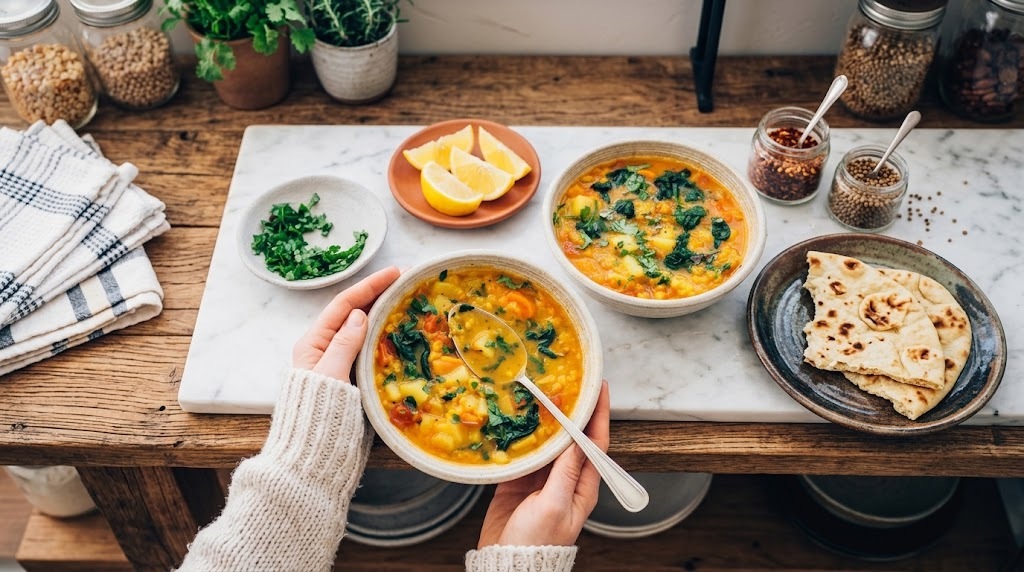
Anti Inflammatory Vegetable Soup With Turmeric
 Recipe by admin
A hearty one-pot vegetable and lentil soup made with turmeric, ginger, cumin, tomatoes, spinach, and fresh parsley.
3
servings10
minutes25
minutes260
kcal35
minutesIngredients
1 onion, finely diced
3 garlic cloves, minced
2 medium carrots, sliced
3 celery stalks, sliced
12 oz potatoes (340 g), peeled and cubed
2 tsp cumin
1 tsp turmeric
2 tsp paprika
1-inch ginger piece, peeled and grated
1 tsp salt
Freshly ground black pepper, to taste
4 cups low-sodium vegetable broth (880 ml)
1 tbsp tomato paste
8.5 oz crushed tomatoes (240 g)
6 oz dry red lentils (170 g)
2 cups baby spinach (60 g)
½ cup fresh parsley (14 g), finely chopped
1 tbsp lemon juice
Directions
- Place a large pot over medium heat. Add the onion, garlic, carrots, celery, potatoes, cumin, turmeric, paprika, ginger, salt, and black pepper. Add a splash of water and cook for about 5 minutes, stirring frequently.
- Pour in the vegetable broth and add the tomato paste and crushed tomatoes. Stir well and bring the mixture to a boil.
- Add the dry red lentils and stir thoroughly so they are evenly distributed throughout the soup.
- Reduce the heat to low, cover the pot, and simmer for approximately 15 minutes. Cook until the lentils are tender and the potatoes are cooked through without becoming overly soft.
- Stir in the baby spinach and let the soup cook for another 5 minutes, or until the spinach has wilted.
- Turn off the heat and stir in the fresh parsley and lemon juice. Taste and adjust the salt and pepper if needed. Ladle the soup into serving bowls and enjoy warm.
Notes
- Baby spinach can be replaced with kale or another sturdy leafy green.
- Suggested vegetable variations include sweet potatoes, winter squash, or green beans.
- Canned brown lentils or chickpeas can replace the red lentils.
- For a richer soup, the vegetables can be sautéed in olive oil and canned coconut milk can be added.
- Leftovers can be refrigerated in a covered container for up to 5 days.
- Reheat gently on the stovetop or in the microwave, adding a little broth if the soup becomes too thick.
- Black pepper is paired with turmeric in this recipe because piperine can enhance curcumin absorption.
Nutrition Facts
- Calories: 260kcal
- Fat: 2g
- Carbohydrates: 54g
- Fiber: 15g
- Sugar: 13g
- Protein: 12g