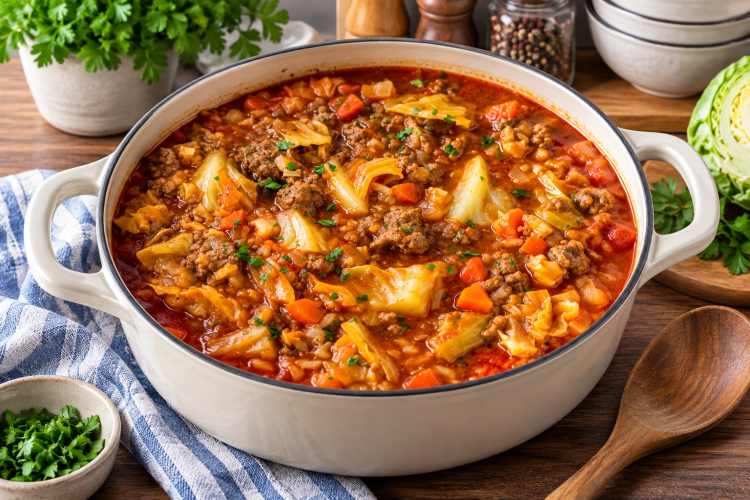
Cabbage Roll Soup is a simple one-pot dinner that brings the familiar flavors of traditional cabbage rolls to the table without the work of preparing individual rolls. Ground beef, tender cabbage, carrots, rice, tomato sauce, and beef broth cook together in one pot to make a warm and filling meal. It is an easy cabbage roll soup recipe for busy weeknights, family dinners, meal preparation, or any time you want a homemade soup without complicated steps. The original recipe uses everyday ingredients and takes about 45 minutes from preparation to serving.
What Makes Cabbage Roll Soup So Easy
Traditional cabbage rolls can take time because the cabbage leaves need to be softened, filled, rolled, arranged, and cooked. Cabbage Roll Soup keeps the same basic combination of meat, cabbage, rice, and tomato flavor but turns it into a straightforward soup. There is no need to form individual rolls or spend extra time arranging them in a baking dish. Everything goes into a large soup pot, which also means fewer dishes to wash after dinner. This makes the recipe especially useful when you want comfort food with a practical cooking method.
A Hearty One-Pot Family Meal
This soup is filling enough to serve as a main course because it combines protein, rice, and vegetables in the same bowl. Ground beef gives the soup a savory base, while long grain rice makes it more satisfying. Cabbage and carrots add vegetables, texture, and natural flavor. The beef broth and tomato sauce create the liquid base that brings all the ingredients together. Because the rice cooks directly in the broth, it absorbs some of the tomato and beef flavors as it becomes tender.
Ground Beef Builds the Flavor
Ground beef is the main protein in this cabbage soup recipe. The original ingredient list calls for one pound of 90% lean ground beef. Browning the beef at the beginning is important because it gives the meat a deeper savory flavor before the broth is added. Breaking the beef into small pieces while it cooks also helps distribute the meat throughout the soup. Lean ground beef is a practical choice because it provides a hearty texture while limiting the amount of excess grease in the finished broth.
Onion and Garlic Add a Simple Base
Once the beef is browned, diced onion and minced garlic are added to the same pot. These two ingredients do not require a long cooking time. A few minutes over medium heat is enough to soften the onion and release the aroma of the garlic. Cooking them with the browned beef allows their flavor to blend with the meat before the remaining ingredients are introduced. This small step helps create a fuller tasting soup without requiring a long list of seasonings.
Cabbage Is the Main Vegetable
Green cabbage is what gives this soup its connection to classic cabbage rolls. Four cups of coarsely chopped green cabbage are used in the recipe. Cutting the cabbage into bite-sized pieces makes it easier to eat and allows the pieces to cook more evenly. Cabbage can look like a large amount when it first goes into the pot, but it softens considerably during cooking. As it simmers, the cabbage absorbs some of the savory tomato and beef flavors while becoming tender without needing a separate cooking step.
Carrots Bring Natural Sweetness
Two carrots are included in the original recipe. They are peeled, quartered, and sliced before being added to the soup. Carrots bring a mild natural sweetness that works well with the tomato sauce and balances the savory flavor of the beef. They also add color to the bowl, making the finished soup look more inviting. Since the carrots cook in the same broth as the cabbage and rice, they gradually become tender while taking on some of the flavors from the other ingredients.
Tomato Sauce Creates the Rich Broth
Tomato sauce provides much of the character of this cabbage roll soup. The recipe uses three 8-ounce cans of tomato sauce along with four cups of beef broth. Together, these ingredients create a tomato-based liquid that is rich enough to support the beef, vegetables, and rice without turning the soup into a heavy stew. The tomato flavor also gives the soup the familiar taste associated with many traditional cabbage roll recipes, while the broth keeps the texture spoonable and suitable for serving in a bowl.
Beef Broth Connects Everything
Four cups of beef broth are added with the tomato sauce and vegetables. The broth acts as the cooking liquid for the rice while also carrying the flavors of the browned beef, onion, garlic, cabbage, and carrots. Choosing beef broth keeps the flavor consistent with the ground beef base. As the soup simmers, the rice absorbs part of this liquid and becomes tender. This also causes the broth to become slightly fuller and thicker as cooking progresses.
Long Grain Rice Makes the Soup Filling
Rice is an important part of this recipe because it helps turn the soup into a complete and satisfying meal. The original ingredient list uses one-half cup of uncooked long grain rice. It is added directly to the pot rather than cooked separately. This saves time and keeps the process simple. As the rice cooks, it absorbs flavorful broth and becomes tender. It is important not to cook the soup for much longer than necessary because overcooked rice can become very soft and absorb too much of the liquid.
Brown Sugar Balances the Tomato Flavor
The recipe includes three tablespoons of brown sugar. This ingredient helps balance the acidity of the tomato sauce and rounds out the flavor of the broth. It does not need to make the soup taste sweet. Instead, it works in the background to create a smoother balance between the tomato, beef, vegetables, and seasonings. Using the stated amount keeps the recipe consistent with the original ingredient list, while tasting the soup near the end allows you to decide whether additional salt or pepper is needed.
Bay Leaf Adds Background Flavor
One bay leaf is added while the soup simmers. Bay leaf is often used in soups because it can provide a subtle savory depth without becoming the main flavor. It remains in the pot during cooking and should be removed before the soup is served. There is no need to chop or prepare it in advance. Simply place the bay leaf into the pot with the other ingredients and remember to take it out after cooking. The original instructions specifically call for removing and discarding it before serving.
Fresh Parsley Finishes the Soup
Fresh parsley is added at the end rather than cooked for the full simmering time. The recipe uses two tablespoons of parsley. Sprinkling it over the finished soup gives the bowl a fresh appearance and adds a mild herbal note. Since the parsley is added just before serving, it keeps more of its fresh character. This small finishing step is easy but makes the soup look more complete when it is ladled into individual bowls.
How to Start the Cooking Process
Begin by heating two teaspoons of olive oil in a large soup pot over medium-high heat. Add the ground beef and season it with salt and pepper. Cook the beef for approximately four to five minutes, breaking it into small pieces as it browns. The goal is to cook the beef thoroughly while developing some browned edges. Once the meat is browned, continue with the onion and garlic rather than transferring the beef to another pan. Keeping everything in the same pot makes the recipe easier and helps retain the flavors created during browning.
Cook the Onion and Garlic
Add the finely diced onion and minced garlic to the browned beef. Stir the mixture well and cook for another two to three minutes. The onion should soften and the garlic should become fragrant. There is no need to cook these ingredients until deeply browned. Their purpose at this stage is to soften and blend with the beef before the liquid and vegetables are added. Stirring occasionally helps prevent the garlic from sitting against the hot bottom of the pot for too long.
Add the Main Soup Ingredients
After the onion and garlic have softened, add the chopped cabbage and sliced carrots. Pour in the beef broth and tomato sauce, then add the uncooked long grain rice, bay leaf, and brown sugar. Stir everything together so the ingredients are evenly distributed. At this point, the pot may appear quite full because the cabbage takes up considerable space before it softens. This is normal. Once the soup begins to simmer, the cabbage will reduce in volume and become easier to stir.
Keep the Soup at a Gentle Simmer
Bring the mixture to a gentle simmer, then reduce the heat slightly. The soup should cook for about 25 minutes, with occasional stirring. This gives the rice enough time to become tender and allows the cabbage and carrots to cook through. A gentle simmer is preferable to a strong boil because it helps the ingredients cook steadily. Stirring from time to time also helps keep the rice from settling and sticking to the bottom of the pot.
Avoid Overcooking the Rice
The cooking time matters because rice continues to absorb liquid while it is heated. If the soup stays on the stove much longer than necessary, the rice can become overly soft and the broth can become thicker than intended. The original notes also caution against overcooking because the rice may absorb too much of the broth. Checking the rice near the end of the stated cooking time is a useful way to judge whether the soup is ready.
Check the Seasoning Before Serving
Once the rice is tender and the vegetables are cooked, taste the broth. The ingredient list includes salt and pepper to taste, so the exact amount depends on the broth and tomato sauce used. If the soup needs more seasoning, add a small amount and stir before tasting again. Remove the bay leaf before serving. Finally, add the chopped parsley. These last steps take only a moment but help ensure the soup reaches the table with the right balance of flavor.
Serving Cabbage Roll Soup
Cabbage Roll Soup is satisfying by itself, but simple sides can make the meal more complete. Crusty bread is a natural pairing because it can be used to soak up the tomato-rich broth. Warm dinner rolls also work well when you want a softer side. A crisp green salad provides a fresh contrast to the warm soup. The original serving suggestion includes crusty bread, warm dinner rolls, or a green salad. These options keep the meal simple without competing with the main dish.
Making It for a Busy Weeknight
This easy cabbage roll soup works well for busy evenings because most of the active preparation involves browning the beef and chopping the vegetables. Once the ingredients are in the pot, the soup can simmer while you prepare a simple side dish or set the table. The stated preparation time is 15 minutes, while the cooking time is 30 minutes, giving a total time of about 45 minutes. Six servings are listed, making the recipe suitable for a family dinner or several portions for later.
Storing Leftover Soup
Leftover cabbage roll soup can be stored in an airtight container in the refrigerator for up to three days according to the original notes. Allow the soup to cool before transferring it to the container. When refrigerated, the rice may continue to absorb some of the broth, so the soup can become thicker than it was when freshly cooked. This is normal. When reheating, stir in a little additional beef broth if necessary until the soup reaches the consistency you prefer.
Freezing Cabbage Roll Soup
The soup can also be frozen after it has cooled completely. Divide it into freezer-safe containers, leaving some space for expansion. When you are ready to use it, thaw the container overnight in the refrigerator. Reheat the soup slowly and stir as it warms. If the rice has absorbed more liquid during storage, a small amount of beef broth can help loosen the soup. The original recipe notes that cooled soup can be frozen for longer storage and thawed overnight before reheating.
Simple Ingredient Substitutions
The original notes provide two useful substitutions. Ground turkey can be used in place of ground beef if preferred. Brown rice can also replace white long grain rice, although the recipe notes that brown rice will need approximately 20 additional minutes of cooking time. These substitutions change the cooking process slightly, so it is important to allow enough time for the rice to become tender. The original ingredients themselves remain unchanged in the main recipe, while these options can be considered when adapting the dish for different preferences.
What to Expect From the Finished Soup
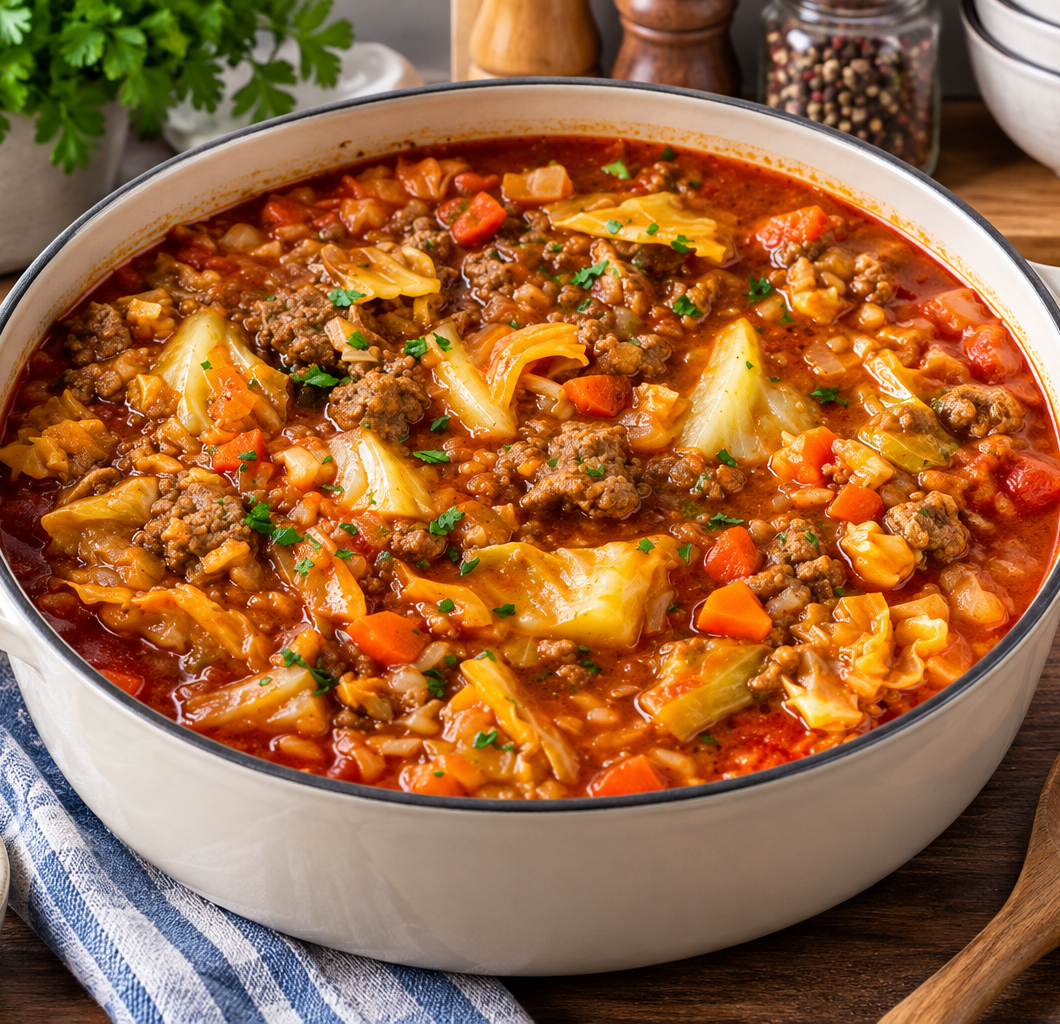
The finished Cabbage Roll Soup should have tender cabbage and carrots, cooked rice, small pieces of browned beef, and a tomato-based broth. The rice should be soft but not excessively mushy, while the vegetables should be tender enough to eat comfortably. The broth should remain loose enough to serve as soup rather than becoming as thick as a casserole. Fresh parsley adds a little color on top. The combination creates a familiar cabbage roll flavor in a much easier one-pot format.
Why One-Pot Cooking Helps
Cooking the entire recipe in one pot keeps the process organized and reduces cleanup. The beef is browned first, the aromatics are cooked in the same pot, and the remaining ingredients are then added to finish the soup. There is no separate saucepan for rice and no baking dish for assembled cabbage rolls. This makes the recipe useful for home cooks who want a hearty dinner while keeping preparation and cleanup manageable. The one-pot method also allows the flavors to develop together as the soup simmers.
A Practical Meal for Meal Prep
Because the recipe makes six servings, it can work well for meal planning. You can serve the soup for dinner and keep extra portions for another meal. When reheating refrigerated soup, remember that the rice may continue to absorb liquid. Adding a little beef broth can restore a looser soup texture. If freezing, use freezer-safe containers and thaw overnight in the refrigerator before reheating. These storage options make the recipe useful beyond the first meal and help reduce the need to cook from scratch every day.
Notes for Better Results
Cutting the cabbage and carrots into manageable pieces helps the vegetables cook evenly. Stir the soup occasionally while it simmers so the rice does not stick to the bottom of the pot. Keep the heat at a gentle simmer instead of allowing the soup to boil aggressively. Remove the bay leaf before serving, and check the seasoning near the end. If the soup becomes too thick after refrigeration, add a little broth while reheating. These small details follow the practical notes provided with the original recipe.
Cabbage Roll Soup
 Recipe by admin
A hearty one-pot soup made with lean ground beef, green cabbage, carrots, long grain rice, tomato sauce, and beef broth. This easy cabbage roll soup delivers the familiar flavors of traditional cabbage rolls in a simple format that is well suited to family dinners, busy weeknights, and meal preparation.
6
servings15
minutes30
minutes263
kcal45
minutesIngredients
2 teaspoons olive oil
Salt and pepper, to taste
1 pound ground beef (90% lean)
1 onion, finely diced
2 teaspoons minced garlic
4 cups coarsely chopped green cabbage
2 carrots, peeled, quartered, and sliced
4 cups beef broth
3 (8-ounce) cans tomato sauce
½ cup uncooked long grain rice
1 bay leaf
3 tablespoons brown sugar
2 tablespoons parsley
Directions
- Brown the Beef: Heat olive oil in a large soup pot over medium-high heat. Add ground beef and season with salt and pepper. Cook for 4–5 minutes, breaking the beef into small pieces until fully browned.
- Cook the Aromatics: Add diced onion and minced garlic to the browned beef. Stir and cook for 2–3 minutes, until the onion is soft and the garlic is fragrant.
- Add the Soup Ingredients: Stir in cabbage, carrots, beef broth, tomato sauce, uncooked long grain rice, bay leaf, and brown sugar. Mix well so everything is evenly combined.
- Simmer: Bring the soup to a gentle simmer. Reduce the heat slightly and cook for about 25 minutes, stirring occasionally, until the rice is tender and the vegetables are cooked through.
- Check and Finish: Taste the soup and add more salt or pepper if needed. Remove and discard the bay leaf.
- Serve: Sprinkle chopped parsley over the hot soup, ladle into bowls, and serve with crusty bread, warm dinner rolls, or a crisp green salad.
Notes
- Lean ground beef helps keep the broth flavorful without adding excessive grease.
- Ground turkey can be used instead of ground beef if preferred.
- Brown rice can replace white rice, but it will need approximately 20 additional minutes of cooking.
- Avoid overcooking because the rice can become too soft and absorb too much broth.
- Refrigerated leftovers may thicken as the rice absorbs liquid; add a little beef broth when reheating if needed.
- Store leftovers in an airtight container in the refrigerator for up to 3 days, or freeze cooled soup in freezer-safe containers.
Nutrition Facts
- Calories: 263kcal
- Fat: 9g
- Carbohydrates: 24g
- Fiber: 2g
- Sugar: 9g
- Protein: 19g