Learning how to make scrambled eggs properly is one of those simple kitchen skills that can make breakfast much better. Eggs require very little preparation, yet the difference between soft, creamy scrambled eggs and dry, rubbery eggs comes down to a few small details.
This easy scrambled eggs recipe uses just a handful of everyday ingredients and takes about one minute to cook once the pan is hot. The result is tender egg curds with a soft, custardy texture that is ideal for serving over warm, buttery toast.
Why This Scrambled Eggs Recipe Works
The secret to great scrambled eggs is not complicated equipment or a long list of ingredients. It is mostly about controlling the heat and moving the eggs gently while they cook. Starting with beaten eggs and cooking them over medium heat gives you enough time to create soft folds instead of allowing the mixture to become dry before you can shape it. The eggs continue cooking from the heat remaining in the pan after you remove them from the stove, so taking them off slightly before they look completely finished is an important part of the method.
Milk is optional in this recipe, which makes it flexible for different preferences. A small amount of milk can make the mixture slightly softer and lighter, while eggs without milk can still produce wonderfully creamy scrambled eggs when cooked correctly. Butter adds richness and helps create a smooth texture, although the original recipe also allows margarine or oil. Salt and freshly ground black pepper provide simple seasoning without covering up the natural flavor of the eggs.
How to Make Scrambled Eggs
Begin by choosing a suitable skillet. A non-stick skillet is particularly convenient because the eggs can be moved around the surface without sticking. A well-seasoned cast iron pan can also work very well. A skillet around 25 cm, or 10 inches, gives four eggs enough room to cook evenly without spreading the mixture too thin. You will also want a rubber spatula or a flat-edged wooden spoon that can easily reach around the sides and bottom of the pan.
Crack the eggs into a bowl and add the milk, salt, and black pepper. Whisk everything together until the yolks and whites are combined and the mixture looks evenly yellow. There is no need to whisk for an excessive amount of time. The goal is simply to distribute the ingredients evenly so that every bite has consistent seasoning. If you prefer your scrambled eggs without milk, you can leave it out because it is specifically listed as optional.
Place the skillet over medium heat and add the butter. Allow the butter to melt without letting it become heavily browned. Once the butter has melted, pour the beaten egg mixture into the skillet. This is where timing becomes especially important. Instead of immediately stirring the eggs rapidly, leave them alone for approximately five seconds. That short pause gives the bottom layer a chance to begin setting.
After those first few seconds, start moving the eggs with slow, deliberate strokes. Push the spatula back and forth across the pan and work around the edges. As the cooked egg moves aside, the uncooked portion can flow into the open area of the skillet and begin cooking. This technique creates larger, soft curds rather than the tiny, dry pieces that often result from vigorous stirring.
The Right Way to Move the Eggs
Scrambled eggs are easy to overwork. Rapidly stirring them from the moment they enter the pan can produce small pieces that cook too quickly. Instead, use long, relaxed movements with the spatula. Push the set egg gently toward the center or across the pan, allowing uncooked egg to replace it. Continue working around the edges so that the entire mixture cooks at a similar rate.
After roughly 30 seconds, introduce some folding into the process. Gently lift and fold sections of egg over themselves. This creates the characteristic soft folds or curds associated with creamy scrambled eggs. You are not trying to break every piece apart. Larger, tender folds generally give scrambled eggs a much more appealing texture than a fine, crumbly mixture.
The total cooking time is approximately 60 seconds. Your exact timing can vary slightly depending on the pan, burner, and quantity of eggs, but the visual appearance is more important than watching the clock. Look for eggs that have formed soft curds with no visible raw egg running freely around the edges. They should still appear moist and slightly glossy rather than completely dry.
When to Remove Scrambled Eggs From the Heat
One of the most common scrambled egg mistakes is leaving them in the pan until they look exactly right. By that point, they can quickly become overcooked. Eggs retain heat, and the hot skillet continues cooking them even after the burner is turned off. For this reason, remove the skillet from the stove when the eggs are still slightly softer or less cooked than your preferred final texture.
Once the pan is off the heat, gently push and fold the eggs for another 10 seconds. The remaining heat will finish the cooking process without exposing the eggs to continued direct burner heat. This short finishing stage is particularly useful when you want soft scrambled eggs rather than firm, dry curds.
The finished eggs should hold together in soft folds while remaining tender inside. They should not be watery, but they also should not have the firm, crumbly texture associated with overcooked scrambled eggs. If you are serving them immediately, transfer them from the skillet as soon as they reach the desired consistency because leaving them in the hot pan can continue cooking them.
Scrambled Eggs on Toast
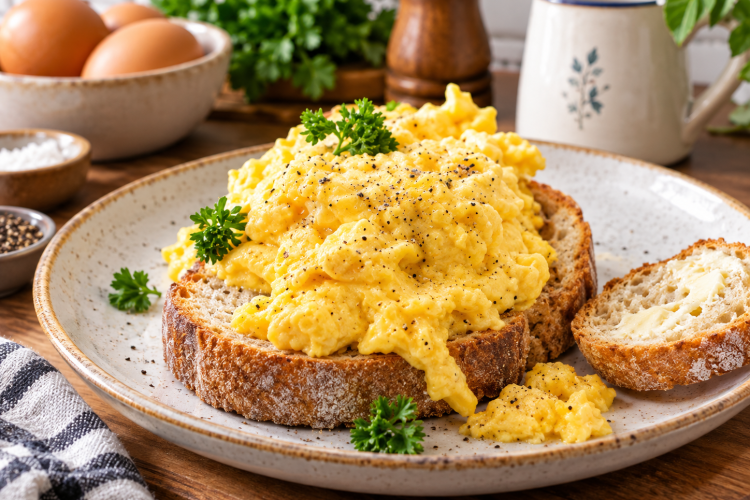
Few breakfasts are easier than scrambled eggs served on hot toast. Toasted bread gives the creamy eggs a crisp surface and a sturdy base, while butter adds another layer of richness. The combination is especially satisfying because the contrast between crunchy bread and soft scrambled egg makes every bite more interesting.
For serving, toast four slices of bread and spread them with butter. Artisan-style crusty bread works especially well because its crisp exterior and chewy interior provide a strong base for the eggs. However, almost any favorite bread can be used. Sourdough, country bread, whole wheat bread, or ordinary sandwich bread can all work depending on what you have available.
Slide the warm scrambled eggs directly onto the buttered toast. A final grind of black pepper gives the dish a fresh, slightly spicy finish. If you want a simple garnish, a small sprig of curly parsley adds color without changing the character of the breakfast. The important thing is to serve the eggs immediately while they are still warm, soft, and creamy.
Why Medium Heat Matters
Temperature plays a major role in scrambled egg texture. Very high heat can cause the egg proteins to tighten rapidly, resulting in firm, dry pieces before the entire mixture has cooked evenly. Medium heat gives you more control and allows the egg to set gradually. This makes it easier to create the large, soft folds that make this recipe distinctive.
A heavy or well-seasoned skillet can retain heat efficiently, so pay attention to how quickly the eggs begin setting. If they appear to be cooking extremely fast, your pan may be hotter than necessary. The goal is not simply to cook the eggs as quickly as possible. It is to cook them quickly while preserving moisture and tenderness.
Choosing the Best Eggs and Ingredients
The main ingredient is, of course, eggs, and fresh eggs are a natural choice for a breakfast recipe like this. The recipe uses four eggs for two servings, making it convenient for a small breakfast or brunch. Milk is optional and can be any fat percentage. Butter is used to cook the eggs, although margarine or oil can be substituted according to preference or availability.
Seasoning remains intentionally simple. A quarter teaspoon of salt and two grinds of black pepper are enough to bring out the flavor of the eggs. Because there are so few ingredients, seasoning is noticeable, so adding salt gradually and using freshly ground pepper can help produce a balanced result.
The accompanying bread is not merely decoration. Toast provides texture and makes the scrambled eggs easy to serve as a complete breakfast. Buttered toast also complements the mild flavor and creamy consistency of the eggs. If you want to keep the meal particularly straightforward, there is no need for additional sauces or elaborate toppings.
Common Mistakes to Avoid
One of the biggest mistakes is cooking scrambled eggs until they look completely finished while they are still sitting over the heat. Eggs continue to cook after being removed from the stove, so this approach often results in a drier breakfast than intended. Removing them while slightly underdone gives the residual heat an opportunity to finish the job.
Another mistake is stirring continuously and aggressively. Scrambled eggs do need movement, but frantic stirring can create small, uneven curds. Slow strokes followed by gentle folds encourage larger pieces and help the eggs remain soft. The spatula should guide the eggs rather than constantly chopping them into smaller pieces.
Using excessive heat is another common problem. High heat may seem like the fastest way to prepare breakfast, but it can make the outside of the curds firm while the rest of the mixture is still catching up. Medium heat provides a better balance between speed and control.
Finally, do not leave cooked eggs sitting in the skillet while you prepare the rest of breakfast. Transfer them to the toast promptly. Their delicate texture is best immediately after cooking, and the residual heat of the pan can quickly change soft scrambled eggs into firmer eggs.
Easy Ways to Serve Scrambled Eggs
This recipe is designed around buttered toast, but scrambled eggs can be served in several simple ways while keeping the preparation uncomplicated. They can be placed alongside additional toast, served as part of a larger breakfast plate, or spooned over crusty bread. The eggs are also suitable for a quick weekend brunch because the entire cooking process takes very little time.
For a classic presentation, place two slices of warm buttered toast on each plate and divide the eggs between them. Add a small amount of extra black pepper just before serving. A little parsley can provide a fresh visual finish, but it is entirely optional and does not need to be added for the dish to taste complete.
Making Soft Scrambled Eggs Consistently
Consistency comes from learning to recognize the texture rather than depending entirely on a fixed cooking time. The recipe gives a 60-second cooking period, but different stovetops and pans can behave differently. Watch the eggs closely as they begin to set. When the mixture changes from liquid to soft folds and no raw egg is escaping around the edges, it is nearly ready.
The final texture should be moist, creamy, and tender. If your eggs regularly turn out dry, try reducing the heat slightly, moving them more gently, and removing them from the pan sooner. If they remain too liquid, give them a little more time over medium heat before removing the skillet.
Notes
The milk in this recipe is optional, so the eggs can be prepared with or without it. Use any fat percentage of milk if you choose to include it. Butter provides a rich flavor, but margarine or oil can also be used as specified in the original ingredient list. A non-stick skillet or well-seasoned cast iron pan is recommended, along with a rubber spatula or flat-edged wooden spoon.
For the softest result, avoid waiting for the eggs to become completely firm before taking them off the stove. Residual heat will continue cooking them for a few seconds. Serve immediately on hot, buttered toast and finish with extra black pepper if desired. A simple curly parsley garnish can be added for presentation.
Frequently Asked Questions
How long does it take to make scrambled eggs?
This recipe takes about one minute to cook once the butter is melted and the egg mixture is added to the skillet. Preparation takes approximately one minute, making it a very quick breakfast for busy mornings.
Should I add milk to scrambled eggs?
Milk is optional in this recipe. It can be included for a softer texture, but you can also make creamy scrambled eggs without milk by controlling the heat and avoiding overcooking.
What temperature is best for scrambled eggs?
Medium heat works well because it gives you enough control to cook the eggs quickly without making them tough. Very high heat can cause the eggs to become dry or rubbery.
Why are my scrambled eggs dry?
Dry scrambled eggs are usually caused by overcooking, excessive heat, or leaving the eggs in the hot pan for too long. Remove them when they are still slightly under your preferred level of doneness because they will continue cooking from residual heat.
Can I use oil instead of butter?
Yes. The original recipe allows butter, margarine, or oil for cooking. Butter gives the eggs a rich flavor, while oil is a useful alternative when preferred.
What bread is best with scrambled eggs?
Crusty toasted bread is an excellent choice because it provides a crisp contrast to the soft eggs. Artisan bread, sourdough, country bread, or your preferred everyday bread can all be used.
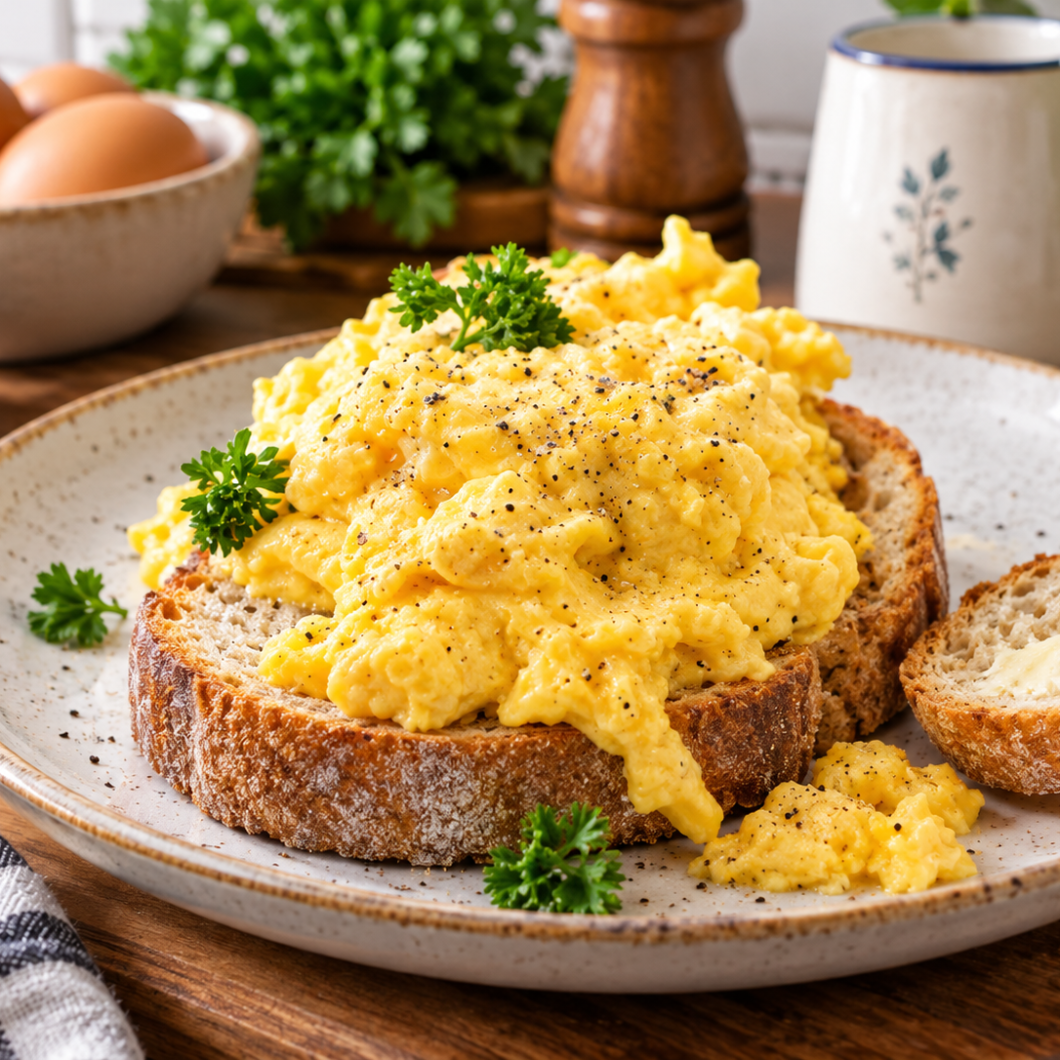
Creamy Soft Scrambled Eggs
 Recipe by admin
Soft, creamy scrambled eggs cooked in butter and served over hot, buttery toast. This quick breakfast recipe takes only about one minute to cook and delivers tender, custardy egg curds with simple seasoning.
2
servings1
minute1
minute182
kcal2
minutesIngredients
4 eggs
2 tbsp milk, any fat % (optional, Note 1)
1/4 tsp salt
2 grinds black pepper
1 tbsp / 15g butter (or margarine or oil)
Directions
- Use a non-stick skillet or well-seasoned cast iron pan, approximately 25 cm / 10 inches in size. Keep a rubber spatula or flat-edged wooden spoon ready.
- Crack the eggs into a bowl. Add the milk, salt, and black pepper, then whisk until the mixture is evenly combined.
- Place the skillet over medium heat. Add the butter and allow it to melt, then pour the beaten egg mixture into the pan.
- Leave the eggs undisturbed for about 5 seconds. Begin gently pushing the spatula back and forth in long strokes across the skillet.
- Work around the edges of the pan, pushing the set egg aside so that the uncooked egg can flow into the open areas and cook.
- After approximately 30 seconds, begin gently folding the eggs as well. Continue using slow movements to create soft, tender folds or curds.
- Cook for approximately 60 seconds in total, or until the eggs form soft curds and there is no raw egg leaking around the edges.
- Remove the skillet from the stove while the eggs are still slightly undercooked for your preferred final texture.
- Gently push and fold the eggs for another 10 seconds. The residual heat from the pan will finish cooking them.
- Slide the scrambled eggs onto hot toasted bread spread generously with butter.
- Add an extra grind of black pepper if desired and serve immediately. A small sprig of curly parsley can be used as an optional garnish.
Nutrition Facts
- Total number of serves: 1
- Calories: 182kcal
- Fat: 14g
- Carbohydrates: 1g
- Sugar: 1g
- Protein: 12g