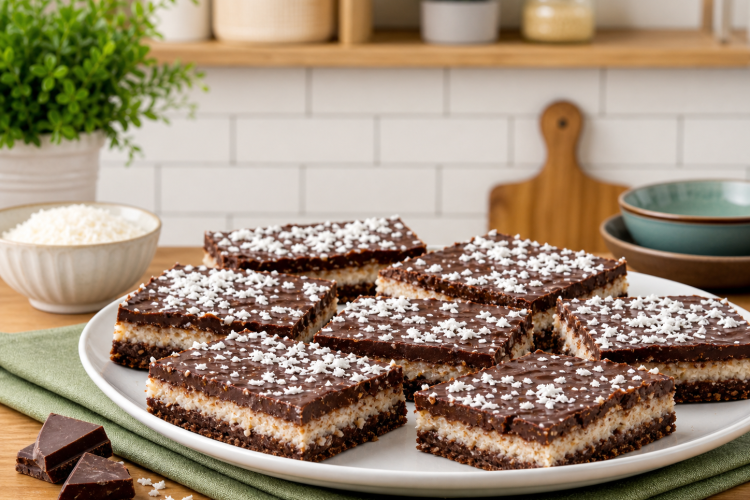
This Keto Bounty Bar Chocolate Bark is an easy chocolate coconut dessert made with just five main ingredients. It combines sugar-free chocolate with an unsweetened coconut filling to create a simple low-carb treat that tastes similar to a classic Bounty or Mounds bar.
The recipe needs only about 5 minutes of preparation before chilling. A layer of melted chocolate is topped with a soft coconut mixture and covered with another layer of chocolate. Once chilled and firm, the bark can be cut into small pieces for an easy keto snack or dessert.
Each serving contains only 1.2 grams of total carbohydrates and 0.4 grams of fiber according to the provided nutrition information. That makes this keto chocolate bark a useful option when you want something sweet while keeping your carbohydrate intake low.
Why Make Keto Chocolate Bark?
A Simple Low-Carb Dessert
Many traditional coconut chocolate bars contain a considerable amount of added sugar. This homemade version replaces regular chocolate and sweetened coconut with sugar-free or unsweetened alternatives.
The filling is made with unsweetened desiccated coconut, coconut cream, coconut oil, and a small amount of allulose or another preferred sweetener. Together, these ingredients create a soft coconut center without relying on regular sugar.
Only a Few Ingredients
You do not need a long shopping list for this keto Bounty bar recipe. The chocolate forms the outer layers, while the coconut mixture provides the creamy center.
Because the recipe uses only a handful of ingredients, it is also easy to prepare when you want a quick homemade dessert. Most of the work involves melting, blending, layering, and chilling.
Similar to Bounty and Mounds Bars
The combination of chocolate and coconut is what gives this dessert its familiar Bounty-style flavor. The coconut filling sits between two layers of chocolate, creating a simple homemade version of the classic combination.
The main difference is that this recipe is prepared as chocolate bark instead of individual candy bars. Once chilled, the bark is simply cut into pieces with a sharp knife.
Ingredients for Keto Bounty Bark
Sugar-Free Chocolate
The recipe begins with 7 ounces of sugar-free chocolate, which is divided into two portions. One portion creates the bottom chocolate layer, while the remaining chocolate forms the top.
The recipe also allows 90% dark chocolate or 100% unsweetened chocolate. If using unsweetened chocolate, it can be sweetened to taste with stevia drops or allulose.
Unsweetened Desiccated Coconut
The coconut filling uses 1 cup of unsweetened desiccated coconut. This is the main ingredient responsible for the texture and flavor of the center.
Using unsweetened coconut gives you control over the sweetness. It also allows the allulose or chosen sweetener to provide the level of sweetness you prefer without adding regular sugar.
Coconut Cream
Three tablespoons of coconut cream help soften the desiccated coconut and turn it into a sticky filling. The cream also contributes to the rich coconut flavor.
If you do not have prepared coconut cream, the original recipe suggests chilling a can of coconut milk so the cream separates from the liquid. The thicker portion can then be used for the filling.
Coconut Oil
One tablespoon of coconut oil is blended into the filling. It adds richness and helps bind the coconut mixture together.
Coconut oil also complements the coconut cream and desiccated coconut. Because only one tablespoon is used, it supports the filling without making it overly oily.
Allulose or Sweetener
The filling uses 1–2 tablespoons of allulose or another preferred sweetener. The amount can be adjusted according to taste.
The chocolate may also need sweetening if you choose completely unsweetened chocolate. The original recipe recommends adding stevia drops or allulose after the chocolate has cooled to lukewarm.
How to Melt the Chocolate
Use Low Heat
Melt half of the chocolate gently over low heat. The original recipe uses a pot, but a microwave can also be used.
If using a microwave, heat the chocolate in short intervals and stir between each interval. Gentle heating helps prevent the chocolate from becoming overheated or unevenly melted.
Sweeten Unsweetened Chocolate
If you are using 100% unsweetened chocolate, allow it to cool to lukewarm before adding stevia drops or allulose. This makes it easier to adjust the sweetness without working with very hot chocolate.
The recipe suggests approximately 12 drops of stevia per 100 grams as a starting point. Sweetness preferences vary, so taste and adjust carefully.
Preparing the Chocolate Base
Line the Dish
Line a small casserole dish with parchment paper. The original recipe uses a 10×7-inch dish.
The parchment makes it easier to lift the chilled bark out of the dish later. Make sure the paper covers the base well so the chocolate does not stick directly to the dish.
Spread the Chocolate
Pour the first portion of melted chocolate into the lined dish. Spread it evenly across the bottom using a spatula or the back of a spoon.
Try to create an even layer because this will become the base of the finished bark. The thickness does not need to be perfectly uniform, but spreading it evenly makes cutting easier.
Chill the Chocolate Layer
Place the dish in the refrigerator or freezer until the chocolate has hardened. This usually takes around 5–15 minutes.
The chocolate should be firm enough to support the coconut filling. Do not add the filling while the chocolate is still soft, as the layers can mix together.
Making the Coconut Filling
Blend Until Sticky
Add the desiccated coconut, coconut cream, coconut oil, and sweetener to a food processor. Blend for around 2 minutes, or until the mixture becomes soft and sticky.
A food processor is useful because it can break down the coconut and combine the ingredients evenly. An immersion blender can also be used with a tall, narrow mixing bowl.
Check the Texture
The finished coconut mixture should hold together when pressed. It does not need to become completely smooth because the desiccated coconut naturally provides some texture.
The goal is a soft, sticky filling that can be spread over the hardened chocolate. If the mixture is blended properly, it should be easy to press into an even layer.
Adding the Coconut Layer
Spread Over the Chocolate
Once the chocolate base is firm, spread the coconut mixture over the top. Use a spoon or spatula to distribute it across the chocolate.
Press the filling down gently so it forms a compact layer. A firm coconut layer will make the finished bark easier to cut into individual pieces.
Adjust the Coconut Thickness
The recipe notes that only about half of the prepared coconut filling may be needed. The nutrition calculation is also based on using half of the filling.
If you prefer a more coconut-heavy chocolate bark, you can use more of the prepared filling. The recipe’s ingredient quantities remain the same, while the amount used in the bark can affect the thickness and nutritional values per piece.
Adding the Top Chocolate Layer
Melt the Remaining Chocolate
Melt the second half of the chocolate using the same gentle method. Once smooth, pour it over the coconut layer.
Spread the chocolate carefully so it covers the filling. Work gently to avoid disturbing the coconut layer underneath.
Optional Coconut Topping
The recipe allows shredded coconut to be sprinkled over the chocolate topping. This is optional and does not form part of the required ingredient list.
If using it, add the coconut before the top chocolate layer sets. This helps it stay in place once the bark has been chilled.
Chilling and Cutting the Bark
Refrigerate Until Firm
Place the assembled chocolate bark in the refrigerator until the top layer has fully set. The original recipe indicates around 5–15 minutes for this stage.
Once firm, remove the bark from the dish using the parchment paper. Place it on a cutting surface and use a sharp knife to divide it into pieces.
Cut Into Small Pieces
The recipe is designed to produce approximately 15–20 pieces, with the nutrition information based on 15 servings. Smaller pieces make the bark convenient to serve as a quick dessert.
For cleaner cuts, use a sharp knife and apply steady pressure. If the chocolate is extremely hard, allowing it to sit briefly at room temperature can make cutting easier.
How This Keto Chocolate Bark Fits a Low-Carb Diet
Low Net Carbohydrates
The provided recipe information states approximately 0.8 grams of net carbohydrates per serving when divided into 15 servings. Total carbohydrates are listed at 1.2 grams per serving, with 0.4 grams of fiber.
The actual carbohydrate count can vary depending on the chocolate and sweetener used. Sugar-free chocolate brands can have different amounts of fiber, sugar alcohols, and other carbohydrates, so checking the product label is useful.
No Regular Added Sugar
This recipe is designed around sugar-free or unsweetened chocolate and a sugar substitute. Allulose or another preferred sweetener is used to sweeten the coconut filling.
If using unsweetened chocolate, you can control the sweetness yourself. This makes the recipe flexible for people who prefer a mildly sweet or more dessert-like chocolate flavor.
Making Keto Bounty Bars Instead of Bark
Shape the Coconut Filling
The same basic mixture can be used to create individual low-carb coconut bars. Instead of spreading the filling in a casserole dish, shape it into small bars.
The recipe suggests using 3.5 ounces of chocolate for the dipping method. Once the coconut centers are shaped, they can be coated in melted chocolate.
Dip in Chocolate
For proper Bounty-style bars, coat the shaped coconut centers in melted chocolate instead of creating layered bark. Allow the chocolate coating to set before serving.
This option gives you individual pieces that resemble traditional coconut chocolate bars. The bark method is faster because there is no need to shape each piece separately.
What to Do With Extra Coconut Filling
Make Coconut Bliss Balls
The recipe can leave some coconut filling unused because the entire quantity may not be needed for the bark. Rather than throwing it away, the remaining mixture can be turned into small coconut treats.
Shape the extra filling into small balls and roll them in cocoa powder. This creates another simple way to use the leftover coconut mixture.
Make a More Coconut-Heavy Bark
You can also use more of the prepared coconut filling in the bark. This gives each piece a thicker coconut center and reduces the relative amount of chocolate.
The nutrition calculation uses half of the filling, so using a larger amount will change the nutritional values. Keep this in mind if you are tracking carbohydrates or calories closely.
Choosing the Right Chocolate
100% Unsweetened Chocolate
The original recipe uses 100% unsweetened chocolate and sweetens it separately with stevia drops or allulose. This option gives you direct control over the sweetness.
It can be useful if you already have a preferred keto sweetener at home. Remember that unsweetened chocolate has a stronger, more bitter flavor before sweetening.
90% Dark Chocolate
The recipe also allows 90% dark chocolate. Because it already contains some sugar, check the nutrition label if you are following a strict keto diet.
Depending on the brand, you may not need additional sweetener. The original recipe states that no extra sweetener is needed with the specified 90% chocolate option.
Using Ready-Made Sugar-Free Chocolate
Sugar-Free Chocolate Options
The original recipe mentions ready-made sugar-free chocolate as another choice. It also references brands such as Lily’s and ChocZero, as well as 90% Lindt.
The important point is to select chocolate that fits your dietary requirements and check the nutrition label. Different products can vary in total carbohydrates, fiber, sugar alcohols, and sweetness.
Helpful Preparation Tips
Keep the Chocolate Layers Even
Spread each chocolate layer as evenly as possible. This helps the bark hold together and makes the finished pieces more consistent.
The bottom chocolate should be firm before the coconut filling is added. Likewise, allow the finished bark to set completely before cutting.
Do Not Overheat the Chocolate
Chocolate can become difficult to work with if it is overheated. Use low heat on the stovetop or short microwave intervals, stirring regularly.
If using unsweetened chocolate, let it cool to lukewarm before adding stevia drops. This gives you a better opportunity to adjust the sweetness.
Chill Between Layers
The short chilling stages are important because they allow each layer to become firm enough to support the next. The base generally needs 5–15 minutes before the coconut filling is added.
After the top chocolate layer is spread, chill the completed bark again until firm. Keeping the process short makes this a practical dessert when you want something quickly.
Common Questions
How Many Carbs Are in Keto Bounty Bark?
The provided nutrition information lists 1.2 grams of total carbohydrates and 0.4 grams of fiber per serving. That works out to approximately 0.8 grams of net carbohydrates per serving when the bark is divided into 15 servings.
Your exact values may differ depending on the chocolate and sweetener you choose. Always use the nutrition label of your specific ingredients when precise tracking is important.
Can I Use Regular Chocolate?
Regular sweetened chocolate can be used technically, but it will change the carbohydrate and sugar content. For a keto-friendly chocolate bark, sugar-free, 90% dark, or unsweetened chocolate is more appropriate.
If you choose 100% unsweetened chocolate, sweeten it according to taste with stevia drops or allulose as described in the original recipe.
How Long Does Keto Chocolate Bark Take?
The listed preparation time is 5 minutes, followed by about 1 hour of chilling time. The total stated time is 1 hour and 5 minutes.
Actual chilling can sometimes be shorter because each layer only needs around 5–15 minutes to firm. The full hour provides a simple overall preparation schedule.
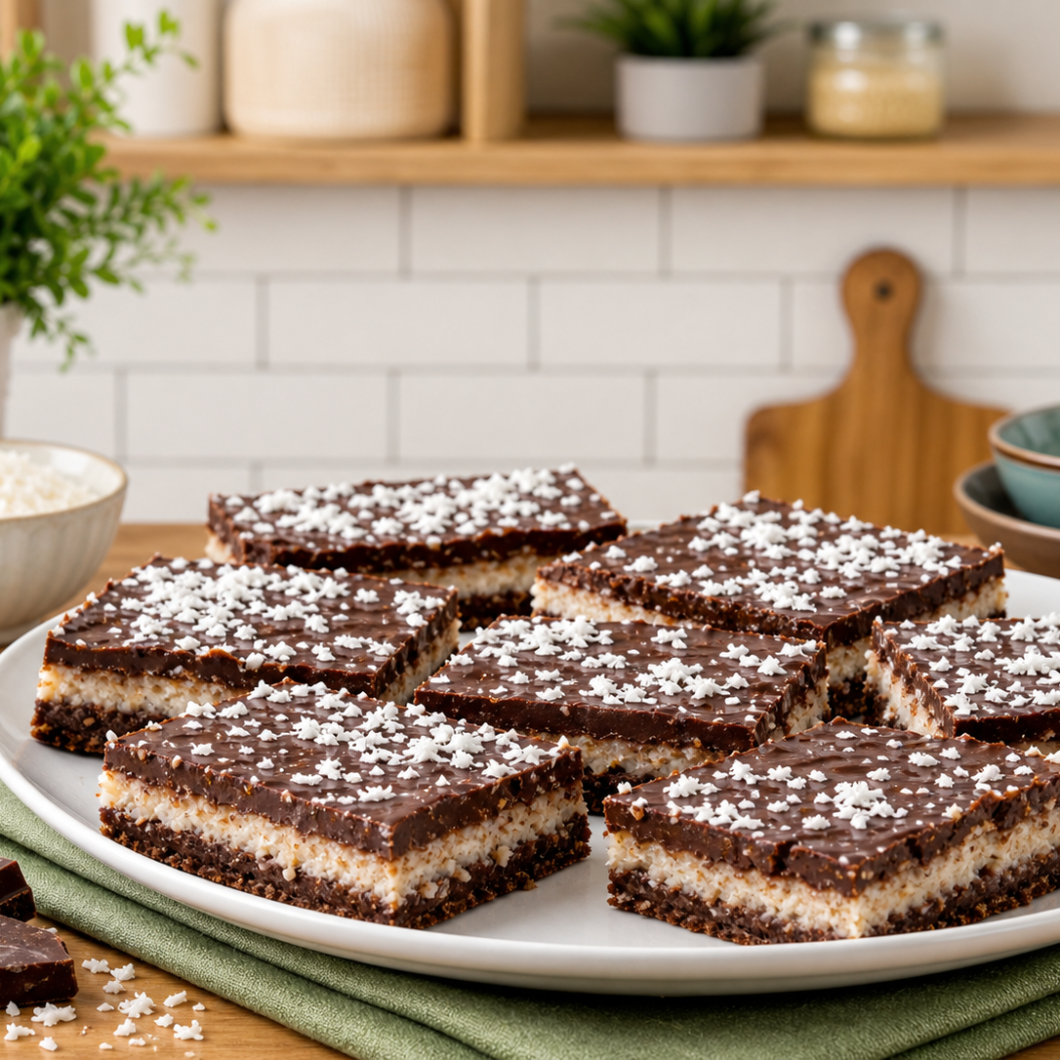
Keto Bounty Bars
It is a simple low-carb dessert that can be cut into small pieces and served as a chocolate coconut snack.
15
servings5
minutes1
hour106
kcal0.8
g1
hour5
minutesIngredients
- Chocolate Layers:
7 oz sugar-free chocolate (200 g), with the option to use 90% dark chocolate or 100% unsweetened chocolate
If using 100% unsweetened chocolate, sweeten to taste with stevia drops or allulose
- Coconut Filling:
1 cup unsweetened desiccated coconut (90 g)
3 tablespoons coconut cream
1 tablespoon coconut oil
1–2 tablespoons allulose or sweetener of choice, to taste
Directions
- Melt half of the chocolate over low heat in a pot or carefully in the microwave. If using unsweetened chocolate, allow it to cool to lukewarm and sweeten to taste with stevia drops or allulose.
- Line a small 10×7-inch casserole dish with parchment paper. Pour the melted chocolate into the dish and spread it into an even layer. Refrigerate or freeze for 5–15 minutes, until firm.
- Add the desiccated coconut, coconut cream, coconut oil, and sweetener to a food processor. Blend for about 2 minutes, until the mixture becomes soft and sticky.
- Spread the coconut filling over the hardened chocolate base and press it down gently. The original recipe uses approximately half of the prepared filling, but more can be used for a thicker coconut layer.
- Melt the remaining chocolate and pour it over the coconut layer. Spread carefully across the top. If desired, sprinkle shredded coconut over the chocolate before it sets.
- Refrigerate until completely set, about 5–15 minutes. Remove from the dish using the parchment paper and cut into 15–20 pieces with a sharp knife.
Nutrition Facts
- Calories: 106kcal
- Fat: 9.7g
- Carbohydrates: 1.2g
- Fiber: 0.4g
- Sugar: 0.3g
- Protein: 2.2g