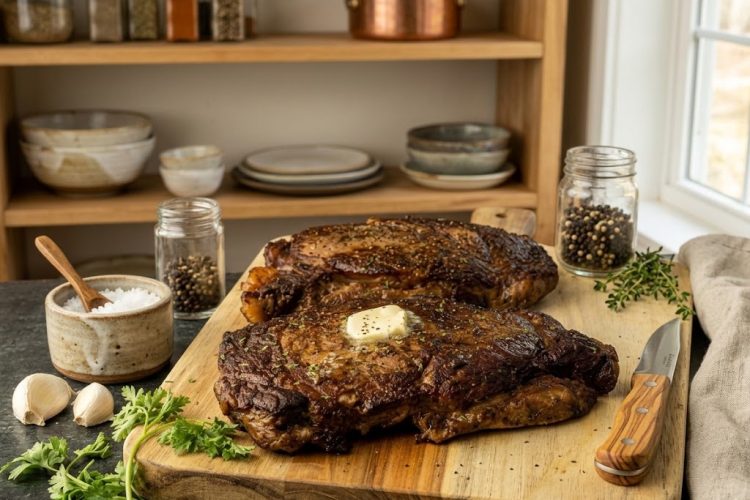
A Blackstone ribeye steak is a simple way to make a deeply browned, juicy steak at home. The hot griddle creates strong contact with the meat, helping form a flavorful crust while the center cooks to your preferred level of doneness.
This recipe uses a short list of ingredients: ribeye steaks, salt, pepper, garlic powder, oil, and butter. The seasoning is kept simple so the rich flavor of the ribeye remains the main part of the meal.
Cooking the steaks on a Blackstone griddle also makes it easy to control the searing process. The steaks are first cooked over high heat at about 500°F, then the temperature is reduced so they can finish cooking without burning the outside.
Why Ribeye Works So Well on a Blackstone
Ribeye is known for its marbling, which gives the steak a rich flavor and tender texture when cooked properly. The fat running through the meat begins to render as the steak hits the hot griddle.
A Blackstone griddle provides a broad, flat cooking surface that makes direct contact with the steak. This allows the meat to develop a browned crust across the areas touching the hot surface.
The result is a steak with a savory crust and a juicy center. Because ribeye already has plenty of natural flavor, only a small amount of seasoning is needed.
Choosing Ribeye Steaks
Start with four ribeye steaks that are similar in size and thickness. Similar steaks are easier to cook together because they tend to reach their desired internal temperature at a similar rate.
The recipe does not specify a particular thickness, so cooking time should be treated as a guide rather than a guarantee. Thicker steaks will usually need more time to reach the desired internal temperature.
Look for steaks with visible marbling throughout the meat. Evenly distributed fat can contribute to tenderness and flavor as the ribeye cooks on the hot griddle.
Simple Seasoning for Ribeye
The seasoning mixture contains salt, pepper, and garlic powder. These three ingredients give the steak a savory flavor without covering up the natural taste of the beef.
For four ribeye steaks, the recipe uses 2 teaspoons of salt, 1 teaspoon of pepper, and 1 teaspoon of garlic powder. Mix the seasonings together before applying them to the meat.
The original method suggests using approximately half a teaspoon of the seasoning mixture per steak. Apply it evenly so each steak receives a balanced amount of flavor.
Preparing the Steaks Before Cooking
Pat the ribeye steaks dry with paper towels before seasoning them. Removing surface moisture helps the meat make better contact with the hot griddle and encourages browning.
The original recipe also recommends allowing the steaks to come to room temperature before cooking. This can help them cook more evenly from the outside toward the center.
Do not skip the drying step. Excess surface moisture can interfere with the searing process and make it harder to achieve the browned crust associated with a good Blackstone steak.
Getting the Blackstone Hot
Preheat the Blackstone griddle over high heat until it reaches approximately 500°F. A properly heated surface is important because the steaks need strong heat when they first hit the griddle.
The high temperature helps create a crust during the first few minutes of cooking. If the cooking surface is not hot enough, the steak may take longer to brown and can release more moisture.
Use the griddle’s temperature controls according to your particular model. The goal is to have a very hot cooking surface before adding the oil and steaks.
Adding the Oil
Once the Blackstone is hot, spread 2 tablespoons of oil over the cooking surface. Distribute it across the area where the steaks will be placed.
The oil helps prevent sticking and supports browning when the steaks are added. It also provides a layer of fat between the hot cooking surface and the meat.
Avoid adding the steaks before the oil and griddle are properly heated. The first contact with the surface is important for developing the seared exterior.
Searing the First Side
Place the seasoned ribeye steaks directly onto the oiled Blackstone griddle. Once they are down, leave them in place for about 2–3 minutes without moving them.
Keeping the steaks still gives the surface time to brown. Constantly shifting or lifting the meat can interfere with the crust forming underneath.
After the first 2–3 minutes, gently try to lift one steak with tongs. If it releases easily, it is generally ready to turn. If it is still sticking firmly, give it a little more time.
Flipping the Steaks
Use tongs to carefully lift and turn each steak. Place the steaks on another section of the griddle so the second side gets strong contact with the hot surface.
Cook the opposite side for another 2–3 minutes. The exact time depends on steak thickness and how well done you want the center.
Avoid pressing down on the steaks while they cook. Pressing can force flavorful juices out of the meat and does not improve the sear.
Why You Should Not Move the Steak Too Much
A good steak crust needs uninterrupted contact with the hot cooking surface. Moving the steak repeatedly can prevent the surface from developing an even brown color.
Let the first side cook undisturbed until it is ready to release. The same approach can be used on the second side.
You do not need to keep flipping the steaks back and forth. Once both sides have been seared, the temperature can be lowered so the steaks can finish cooking to the desired level.
Finishing the Steaks on Medium Heat
After both sides have been seared, reduce the Blackstone to medium heat. This gives the steaks time to reach their preferred internal temperature without continuing to expose the exterior to the highest heat.
This step is especially useful for thicker ribeye steaks. The surface can already have a good crust while the center still needs additional cooking.
Use an instant-read meat thermometer to check the temperature. Insert it into the thickest part of the steak from the side for the most useful reading.
Using a Meat Thermometer
An instant-read thermometer is the most reliable way to check steak doneness. Insert the probe through the side of the ribeye rather than straight down through the top.
Aim the thermometer toward the center of the thickest portion. This helps you measure the part of the steak that takes the longest to cook.
The recipe provides temperature targets for rare, medium rare, medium, medium well, and well done. Use the temperature that matches your preferred level of doneness.
Steak Temperature Guide
For rare, the recipe lists an internal temperature of 120°F, with a cool to warm red center. This produces a very red interior and a softer texture.
For medium rare, aim for 130°F, which gives the steak a warm red center. This is a common choice for ribeye because the marbling remains tender and juicy.
For medium, the listed temperature is 140°F, producing a hot pink center. Medium well is 150°F with a mostly brown center, while well done is 160°F with a fully brown interior.
Adding Butter to the Steak
Once the ribeye has reached the desired internal temperature, place approximately 1/2 tablespoon of butter on top of each steak. Allow the butter to melt over the hot meat.
The butter adds richness and a smooth finish to the seasoned beef. As it melts, it coats the surface and adds another layer of flavor.
Because the recipe already includes oil for the griddle, the butter is added at the end rather than used as the primary cooking fat. This keeps the searing process focused on creating a strong crust.
Why Resting the Steak Matters
After cooking, let the ribeye steaks rest for 5 minutes before serving. Resting gives the meat a short period to settle after the high-heat cooking process.
Cutting into a steak immediately can cause more of its juices to run onto the plate. A short resting period can help keep the slices moist when you serve them.
Place the steaks on a clean plate or serving surface while they rest. There is no need for a complicated resting method; simply allow the five-minute period before slicing.
How to Get a Better Steak Crust
A dry steak surface and a hot Blackstone are two important factors when you want good browning. Pat the meat dry before seasoning and wait until the griddle has reached about 500°F.
Once the steak touches the surface, avoid moving it for the first 2–3 minutes. This gives the bottom enough time to develop color and a crust.
Using too much moisture or moving the steak too soon can reduce browning. Keep the preparation simple and let the hot griddle do the work.
Cooking Different Steak Thicknesses
The stated cooking time is based on the method in the original recipe, but steaks are not always the same thickness. A thinner ribeye may reach the target temperature quickly, while a thicker steak can need more time.
This is why the thermometer is more important than the clock. Use the 2–3 minute searing periods as a starting point, then monitor the internal temperature while finishing the steak over medium heat.
If your steaks are especially thick, allow additional cooking time after the initial sear. Check the temperature regularly so the center reaches your preferred doneness without overcooking.
Avoiding an Overcooked Ribeye
One of the easiest ways to overcook steak is to rely only on a fixed cooking time. The same six-minute cooking period can produce different results depending on thickness, starting temperature, and griddle heat.
Instead, begin checking the internal temperature as the steaks finish over medium heat. Remove them when they reach the temperature appropriate for your preferred doneness.
Remember that the steak is extremely hot when it leaves the griddle. Resting is part of the cooking process, so avoid leaving the meat on the hot surface longer than necessary.
What to Do If the Steak Sticks
If the steak seems stuck when you first try to flip it, do not immediately force it off the griddle. The original instructions point out that sticking can indicate the steak needs more time before flipping.
Give it another short period of cooking, then gently test it again with tongs. As the surface develops a crust, it may release more easily.
Using the stated 2 tablespoons of oil also helps reduce sticking. Make sure the oil is spread over the cooking surface before placing the steaks down.
Keeping the Seasoning Balanced
The recipe uses a moderate combination of salt, pepper, and garlic powder. Mixing the seasonings first makes it easier to distribute them across all four ribeye steaks.
Avoid piling seasoning into one area of the steak. An even layer gives every bite a consistent savory flavor.
Because ribeye has strong natural flavor from its marbling, there is no need for a complicated marinade. The simple seasoning allows the beef and its browned crust to remain the focus.
Blackstone Ribeye for a Weeknight Dinner
Although ribeye can feel like a special meal, the preparation itself is straightforward. The steaks need only a short seasoning step before they go onto the hot griddle.
The recipe takes approximately 10 minutes to prepare, 6 minutes for the initial cooking period, and 5 minutes of resting according to the supplied recipe timing.
That makes this a practical option when you want a filling dinner without preparing a complicated side or sauce. Serve the steaks with vegetables, potatoes, salad, or another preferred side dish.
Serving Blackstone Ribeye Steak
Slice the rested ribeye steaks if desired, or serve them whole. The melted butter on top provides a simple finishing touch without requiring a separate sauce.
Ribeye works well with many classic steak sides. Roasted vegetables, green beans, salads, potatoes, or simple steamed vegetables can all be served alongside it.
For a straightforward dinner, let the steak remain the main feature and keep the side dishes simple. The garlic, pepper, salt, and butter provide enough flavor without additional toppings.
Common Questions
Can Any Steak Be Used?
The recipe notes that you can use any type of steak for this cooking method. However, ribeye is the steak specifically used in this recipe and is known for its marbling and rich flavor.
What Temperature Should Ribeye Reach?
The target depends on your preferred doneness. The supplied guide lists 120°F for rare, 130°F for medium rare, 140°F for medium, 150°F for medium well, and 160°F for well done.
Should I Move the Steak While Searing?
It is best to leave the steak in place during the initial 2–3 minute sear. This allows the surface to develop a browned crust before the steak is flipped.
Why Is My Steak Sticking?
If the steak sticks when you first try to flip it, allow it to cook a little longer. The original method explains that sticking can mean the steak is not yet ready to turn.
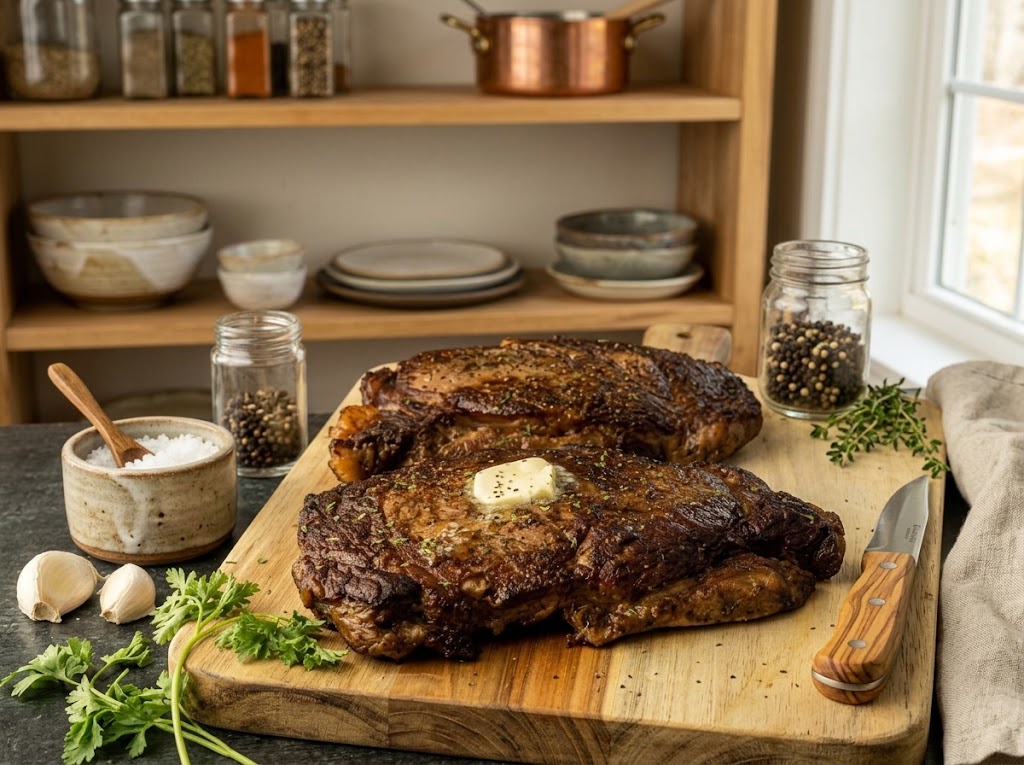
Ribeye Steak with Garlic Rosemary Butter
 Recipe by admin
This Blackstone Ribeye Steak recipe uses a hot griddle to create a browned crust while the center cooks to your preferred level of doneness.
4
servings10
minutes6
minutes586
kcal5
minutes21
minutesIngredients
4 ribeye steaks
2 teaspoons salt
1 teaspoon pepper
1 teaspoon garlic powder
2 tablespoons oil
2 tablespoons butter
Directions
- Preheat the Blackstone griddle over high heat to approximately 500°F. Pat the ribeye steaks dry and allow them to come toward room temperature. Mix the salt, pepper, and garlic powder, then season the steaks evenly.
- Spread the 2 tablespoons of oil over the hot Blackstone surface. Place the seasoned ribeye steaks on the griddle and cook without moving them for about 2–3 minutes to develop a browned crust.
- Gently lift and flip the steaks with tongs. If a steak is still sticking firmly, allow it to cook a little longer before turning. Cook the second side for another 2–3 minutes.
- Reduce the Blackstone to medium heat and continue cooking the steaks until they reach your preferred internal temperature. Check the thickest part from the side with an instant-read thermometer.
- Top each cooked steak with approximately 1/2 tablespoon of butter and allow it to melt over the meat. Remove the steaks from the griddle and let them rest for 5 minutes.
- Serve the ribeye steaks warm after resting. Use the following temperatures as the supplied doneness guide: 120°F rare, 130°F medium rare, 140°F medium, 150°F medium well, and 160°F well done.
Nutrition Facts
- Calories: 586kcal
- Fat: 45g
- Carbohydrates: 1g
- Fiber: 1g
- Sugar: 1g
- Protein: 46g