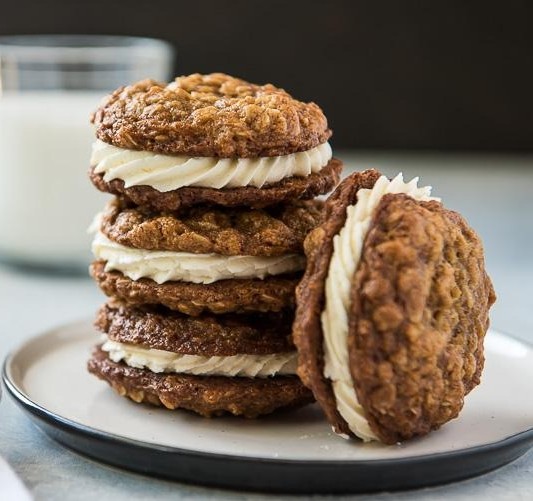
Homemade Sourdough Oatmeal Cream Pies are a delicious treat made with soft oatmeal cookies and a smooth, sweet vanilla cream filling. These cookies have a chewy texture, lightly golden edges, and a warm flavor from brown sugar, molasses, cinnamon, and nutmeg. The sourdough starter adds a gentle depth of flavor, making these homemade sandwich cookies a lovely way to use leftover sourdough discard.
If you enjoy classic oatmeal cookies, you will love turning them into sandwich cookies with a creamy center. Each pie is made by spreading vanilla cream filling between two cooled oatmeal cookies. The result is a comforting homemade dessert that is perfect for sharing with family, serving with a glass of milk, or enjoying with your favorite cup of tea or coffee.
This recipe uses simple baking ingredients and easy steps. You do not need a complicated sourdough schedule or special baking skills to make these cookies. Prepare the dough, bake the cookies until their centers are set, make the cream filling, and put everything together once the cookies have cooled.
What Makes These Sourdough Oatmeal Cream Pies Special?
These homemade oatmeal cream pies combine familiar flavors with the extra character of sourdough. The oats create a chewy texture, while brown sugar and molasses give the cookies a rich sweetness. Cinnamon and nutmeg add gentle warmth without overpowering the other ingredients.
The vanilla cream filling brings everything together. It is smooth, sweet, and soft enough to spread between the cookies. When you take a bite, you get the chewy oatmeal cookies and creamy filling together in every mouthful.
Another reason to make these cookies at home is that you can control their size and thickness. You can make large sandwich cookies for a satisfying dessert or prepare smaller ones for parties, lunchboxes, and afternoon snacks.
Homemade cookies also allow you to enjoy them fresh from your own kitchen. Their rustic appearance, soft centers, and generous cream filling make them attractive without needing extra decorations.
Why Use Sourdough Discard in Cookies?
Sourdough discard is the portion of starter that is often removed when feeding and maintaining a sourdough starter. Instead of throwing it away, you can use it in different recipes, including cookies, pancakes, waffles, and other baked treats.
In this recipe, sourdough discard is mixed with the wet ingredients before the dry ingredients are added. It contributes moisture and a subtle fermented flavor that works well with the brown sugar, molasses, oats, and spices.
You can use either sourdough discard or active sourdough starter, according to the ingredient list. Both options are suitable for this recipe, so you can use whichever one you have available.
Unlike some sourdough bread recipes, these cookies do not require a long rising period. The usual method involves preparing the dough and baking it directly. This makes them convenient when you want to use your starter without planning an entire day around baking.
If you prefer to prepare the dough ahead of time, there is also an overnight refrigeration option. Cover the prepared dough and refrigerate it overnight. Before baking, leave it at room temperature for about one hour, then continue with the recipe.
Choosing the Right Oats
Quick oats are an important ingredient in these sourdough oatmeal cream pies. They help give the cookies their familiar oatmeal texture while blending easily into the dough.
For the best results, use the quick oats specified in the recipe rather than changing the type. This recipe calls for 2½ cups, or 250 grams, of quick oats. Measuring them correctly helps maintain the intended balance between the dry and wet ingredients.
Oats absorb moisture, so adding too many can make the cookies dense. Using too few may change the texture and how the cookies spread during baking. Measuring carefully helps you get a soft, chewy cookie that holds together well when filled.
The oats also complement the deeper flavors of brown sugar and molasses. Their mild taste allows the cinnamon, nutmeg, and vanilla to come through without making the cookies overly sweet or heavily spiced.
The Importance of Butter, Brown Sugar, and Molasses
Room-temperature butter is used to prepare the cookie dough. Softened butter is easier to beat with the sugars and helps create a smooth, fluffy mixture. This step also helps the other ingredients blend evenly into the dough.
Brown sugar gives the cookies sweetness and moisture. It contributes to their soft texture and rich flavor, making it a good match for oatmeal cookies. Granulated sugar adds another layer of sweetness and works alongside the brown sugar to create the cookie’s overall texture.
Molasses provides a deeper flavor with a slightly caramel-like taste. It pairs especially well with oats, cinnamon, and nutmeg. The recipe specifically calls for molasses that is not blackstrap molasses. Blackstrap molasses has a much stronger and more bitter taste, so it is not the recommended choice here.
When the butter, sugars, and molasses are beaten together until light and fluffy, they create a good starting point for the dough. Take time to scrape the sides of the bowl when needed so the ingredients are mixed evenly.
Adding the Egg, Vanilla, and Sourdough Starter
After creaming the butter, sugars, and molasses, add the room-temperature egg and vanilla extract. Beat them into the mixture until well combined.
The egg helps hold the dough together and contributes moisture. Vanilla gives the cookies a familiar bakery-style aroma that works beautifully with the oats and spices.
Next, mix in the sourdough discard or active starter. Make sure it is evenly incorporated before adding the dry ingredients. Scraping the sides and bottom of the bowl can help prevent unmixed ingredients from remaining in the mixture.
Using room-temperature ingredients where specified makes mixing easier and helps the dough come together smoothly.
Mixing the Dry Ingredients
The dry ingredients should be combined in a separate bowl before they are added to the wet mixture. These include all-purpose flour, cornstarch, baking soda, salt, cinnamon, nutmeg, and quick oats.
Mixing them separately helps distribute the smaller ingredients throughout the flour and oats. This is especially helpful for the baking soda, salt, and spices, which need to be spread evenly through the dough.
All-purpose flour provides the basic structure of the cookies. Cornstarch helps create a tender texture, while baking soda supports the cookies as they bake. Salt balances the sweetness, and the cinnamon and nutmeg add gentle warmth.
Once the dry mixture is ready, add it to the wet ingredients. Use a rubber spatula to mix everything together gently. Stop when the ingredients are combined and no obvious dry patches remain.
Avoid overmixing the dough. Mixing for too long after adding the flour can make the cookies tougher than intended. A gentle approach helps preserve the soft, chewy texture that makes oatmeal cream pies so enjoyable.
Preparing the Cookies for Baking
Before shaping the cookies, preheat your oven to 375°F. If your oven has a convection setting, you can use it.
Line a baking sheet with parchment paper. This helps keep the cookies from sticking and makes cleanup easier. It also allows you to transfer the baked cookies without damaging their soft texture.
For large oatmeal cream pies, scoop approximately three tablespoons of dough for each cookie. Place six cookies on each baking sheet, leaving enough room between them for spreading.
The original recipe makes approximately nine large oatmeal cream pies. Since each sandwich requires two cookies, the baked cookies should be reasonably similar in size so they can be paired easily.
You can leave the scooped dough as it is for thicker cookies. If you prefer flatter cookies, gently press each portion with your hand before baking. Avoid pressing too hard, because the cookies should still have enough thickness to remain soft and chewy.
For smaller oatmeal cream pies, use approximately 1½ tablespoons of dough per cookie. Place twelve portions on a baking sheet and flatten them slightly. Smaller cookies bake more quickly, so they need less time in the oven.
Baking the Oatmeal Cookies
Bake the large cookies for approximately 10–11 minutes at 375°F. Look for centers that are set and edges that are lightly golden brown.
Do not wait until the entire cookie becomes deeply brown. These oatmeal cookies are meant to stay soft, and their centers may continue to firm up slightly after they come out of the oven.
Oven temperatures and cookie sizes can affect baking time, so use the appearance of the cookies as your guide. The edges should have a light golden color, while the centers should look set rather than wet.
For smaller cookies, bake for approximately 7–9 minutes. Begin checking them early because their smaller size allows them to bake faster.
Keeping the cookie portions similar in size helps them bake at a similar rate. If you make both large and small cookies, bake them in separate batches so you can monitor each batch properly.
Cooling the Cookies Before Filling
Once the cookies are baked, remove the baking sheet from the oven and let them rest for about five minutes. This short resting period allows them to firm up enough to move without breaking.
Oatmeal cookies can be delicate while they are hot. Moving them too quickly may cause them to bend or fall apart. After five minutes, carefully transfer them to a wire rack.
Let the cookies cool completely before adding the cream filling. This step is important because warm cookies can soften the filling and make it runny. Fully cooled cookies are easier to handle and allow you to assemble neat sandwich cookies.
While the cookies cool, you can prepare the vanilla cream filling.
Making the Smooth Vanilla Cream Filling
The filling is made with softened unsalted butter, powdered sugar, heavy whipping cream, vanilla extract, salt, and optional ground cinnamon.
Begin by placing the softened butter in a mixing bowl. Beat it on medium-high speed for about two minutes, until it becomes smooth. You can use a stand mixer with a whisk attachment or a hand mixer and a medium bowl.
Next, add the vanilla extract, salt, and powdered sugar. Start mixing at a low speed so the powdered sugar does not scatter out of the bowl. Continue until the ingredients begin to combine into a smooth mixture.
Add the heavy whipping cream one tablespoon at a time. Beat the filling well after each addition before adding more cream. The recipe calls for 7–8 tablespoons, but the amount needed can depend on the consistency of the mixture.
Adding the cream gradually gives you better control over the texture. You want a filling that is creamy and easy to spread, but thick enough to stay between the cookies.
If you want a little extra warmth, add the ground cinnamon and mix until it is evenly distributed. The cinnamon is included in the ingredient list as an optional addition, so you can use it according to your preference.
Getting the Right Filling Consistency
The cream filling should be soft enough to spread over a cookie without tearing it. At the same time, it should not be so loose that it runs out when the top cookie is placed on it.
After each addition of heavy whipping cream, check the texture. Stop adding cream once the filling becomes smooth, creamy, and spreadable. You may not need to add the full amount if the filling has already reached the desired consistency.
If you add the cream too quickly, it can be harder to control how thin the filling becomes. Taking your time helps you achieve a better texture for assembling the oatmeal cream pies.
The softened butter is also important. Butter that is too cold may leave lumps, while butter that has melted excessively can affect the filling’s consistency. Softened butter is easier to beat into a smooth base.
Assembling the Sourdough Oatmeal Cream Pies
Once the cookies have cooled completely and the filling is ready, you can assemble the sandwiches.
Place one cookie with its flat underside facing up. Spread a layer of cream filling over the flat surface, keeping the filling fairly even. Place a second cookie on top, with its flat side against the filling.
Press the top cookie gently until the filling spreads toward the edges. Avoid pressing too hard, because too much pressure can squeeze the filling out of the sides.
Continue pairing the cookies and adding filling until all the cream pies are assembled. If some cookies are larger than others, match similar-sized cookies together. This helps each sandwich look balanced and keeps the filling distributed more evenly.
The finished cookies do not need extra decoration. Their oatmeal texture and creamy vanilla center already give them a classic homemade look.
Flavor and Texture of the Finished Cookies
These sourdough oatmeal cream pies combine several flavors and textures in one dessert. The cookies are soft and chewy, with a gentle crunch from the oats and lightly golden edges. Brown sugar and molasses add a rich sweetness, while cinnamon and nutmeg create a warm aroma.
The sourdough starter contributes a subtle flavor that blends with the other ingredients. It does not need to overpower the cookies; instead, it adds a little extra character to a familiar dessert.
The filling is smooth, sweet, and creamy. Vanilla ties the filling and cookies together, while the optional cinnamon adds another gentle layer of spice.
Each sandwich offers a contrast between the chewy cookie layers and the soft cream in the center. This combination makes the cookies suitable for an everyday treat as well as a dessert to share with guests.
How to Prepare the Recipe Ahead of Time
You can prepare parts of this recipe in advance to make baking more convenient. For example, you can bake the cookies first and assemble them later. Keep the cooled cookies and cream filling separate until you are ready to put the sandwiches together.
The cream filling can be covered and refrigerated separately. Before using it, allow it to become soft enough to spread smoothly. It should be easy to work with without being runny.
You can also prepare the cookie dough the night before. Cover it well and refrigerate it overnight. When you are ready to bake, let the dough sit at room temperature for approximately one hour before portioning and baking.
This make-ahead option is useful when you want freshly baked cookies the next day but prefer to do some preparation in advance.
Storing Homemade Oatmeal Cream Pies
After assembling the oatmeal cream pies, place them in an airtight container and store them in the refrigerator. The recipe recommends keeping them refrigerated for approximately four to five days.
A tightly sealed container helps protect the cookies from drying out and prevents the cream filling from absorbing other refrigerator odors. Keep the cookies covered when they are not being served.
When you want to enjoy one, you can let it sit briefly before eating if you prefer a softer texture. Avoid leaving the filled cookies uncovered for long periods.
For longer preparation plans, the baked cookies can be frozen before they are filled. Place the unassembled cookies in an airtight container to protect them from moisture and freezer odors. Thaw them appropriately before making the cream filling and assembling the sandwiches.
Freezing the cookies separately gives you flexibility because you can prepare only the number of cream pies you need.
Tips for Making the Best Sourdough Oatmeal Cream Pies
- Use room-temperature butter for the cookie dough and softened butter for the filling.
- Measure the quick oats carefully to maintain the intended cookie texture.
- Mix the dry ingredients separately before adding them to the wet mixture.
- Do not overmix the dough after adding the flour and oats.
- Leave enough space between the cookies so they can spread without touching.
- Use approximately three tablespoons of dough for large cookies or 1½ tablespoons for smaller ones.
- Watch the cookies closely toward the end of baking and remove them when the centers are set and the edges are lightly golden.
- Allow the cookies to cool completely before adding the cream filling.
- Add the heavy whipping cream gradually so the filling stays thick enough to spread.
- Use molasses that is not blackstrap molasses, as specified in the recipe.
- If preparing the dough overnight, cover it and refrigerate it, then let it stand at room temperature for about one hour before baking.
- Store assembled oatmeal cream pies in an airtight container in the refrigerator for four to five days.
How to Serve Homemade Sourdough Oatmeal Cream Pies
These cookies are delicious served with a cold glass of milk, a warm cup of tea, or coffee. They make a lovely afternoon snack, a homemade dessert, or a sweet addition to a family gathering.
For parties, you can prepare the smaller version so guests can enjoy individual sandwich cookies. For a simple dessert plate, arrange the cream pies neatly and let their golden oatmeal edges and vanilla filling speak for themselves.
Homemade Sourdough Oatmeal Cream Pies are a satisfying way to use sourdough starter in a sweet recipe. With their soft cookies, warm spices, and smooth cream filling, they bring a homemade touch to a classic sandwich-cookie dessert.
Homemade Sourdough Oatmeal Cream Pies
Soft, chewy oatmeal cookies with a smooth vanilla cream filling.
Prep time
Not specified
Bake time
10–11 min
Yield
9 large pies
Description
These homemade sourdough oatmeal cream pies feature soft, chewy oatmeal cookies flavored with brown sugar, molasses, cinnamon, and nutmeg. Sourdough discard adds a subtle flavor, while the smooth vanilla cream filling creates a delicious sandwich cookie. They are perfect for snacks, dessert, and sharing with family.
Duration
- Preparation: Not specified in the source recipe
- Baking: 10–11 minutes per batch for large cookies
- Cooling: 5 minutes on the baking sheet, followed by complete cooling on a wire rack
- Filling and assembly: Not specified
- Yield: Approximately 9 large cream pies
- Oven temperature: 375°F
Ingredients
For the sourdough oatmeal cookies
- ¾ cup (180 g) butter, at room temperature
- ¾ cup (140 g) brown sugar
- ¼ cup (50 g) granulated sugar
- 2 tablespoons molasses, not blackstrap
- 1 egg, at room temperature
- 1 teaspoon (8 g) pure vanilla extract
- ½ cup (120 g) sourdough discard or active starter
- 1 cup (140 g) all-purpose flour
- 1 teaspoon (3 g) cornstarch
- 1 teaspoon (5 g) baking soda
- ½ teaspoon (3 g) salt
- 1 teaspoon (3 g) cinnamon
- ⅛ teaspoon nutmeg
- 2½ cups (250 g) quick oats
For the cream filling
- ½ cup unsalted butter, softened
- ¼ teaspoon salt
- 1½ cups powdered sugar
- 7–8 tablespoons heavy whipping cream
- 1 teaspoon pure vanilla extract
- ⅛ teaspoon ground cinnamon
Instructions
- Step 1: Prepare the dough
- Preheat the oven to 375°F. You can use the convection setting if your oven has one. Beat the room-temperature butter in a large bowl or stand mixer on medium-high speed for about 2 minutes.
- Step 2: Add the sugars
- Add the brown sugar, granulated sugar, and molasses. Beat for about 3 minutes until the mixture becomes light and fluffy. Scrape the sides of the bowl when needed.
- Step 3: Mix in the wet ingredients
- Add the room-temperature egg and vanilla extract. Beat for another 2 minutes. Add the sourdough discard or active starter and mix until evenly combined.
- Step 4: Combine the dry ingredients
- In a separate bowl, mix the all-purpose flour, cornstarch, baking soda, salt, cinnamon, nutmeg, and quick oats.
- Step 5: Finish the cookie dough
- Add the dry ingredients to the wet mixture. Use a rubber spatula to mix gently until everything is combined. Do not overmix.
- Step 6: Shape the cookies
- Line a baking sheet with parchment paper. Scoop about 3 tablespoons of dough for each large cookie. Place six cookies on each baking sheet, leaving enough space between them. If you prefer flatter cookies, gently press the dough portions with your hand.
- Step 7: Bake the cookies
- Bake for 10–11 minutes, or until the centers are set and the edges are lightly golden brown.
- Step 8: Cool the cookies
- Let the cookies rest on the baking sheet for 5 minutes. Transfer them to a wire rack and allow them to cool completely.
- Step 9: Prepare the cream filling
- Beat the softened unsalted butter on medium-high speed for about 2 minutes until smooth.
- Step 10: Add the sugar and vanilla
- Add the vanilla extract, salt, and powdered sugar. Start mixing on low speed until the powdered sugar is incorporated.
- Step 11: Add the cream
- Add the heavy whipping cream one tablespoon at a time, beating well after each addition. Continue until the filling is smooth, creamy, and easy to spread. Add the ground cinnamon if desired and mix well.
- Step 12: Assemble the cream pies
- Make sure the cookies are completely cool. Spread the cream filling over the flat underside of one cookie, then place another cookie on top to make a sandwich. Repeat with the remaining cookies and filling.
- Step 13: Serve and store
- Serve the cream pies or place them in an airtight container and refrigerate. Store them in the refrigerator for approximately 4–5 days.
Tips & Tricks
- Use room-temperature butter for the cookie dough and softened butter for the filling.
- Use sourdough discard or active starter as listed.
- Mix the dry ingredients separately to distribute the baking soda, salt, and spices evenly.
- Avoid overmixing the dough to help keep the cookies tender.
- For smaller cream pies, use approximately 1½ tablespoons of dough per cookie, place twelve cookies on a baking sheet, flatten them slightly, and bake for 7–9 minutes.
- Cool the cookies completely before adding the cream filling.
- Add the heavy whipping cream gradually to control the filling’s consistency.
- For overnight preparation, cover and refrigerate the dough, then let it sit at room temperature for approximately one hour before baking.
- The cream filling can be prepared ahead and refrigerated separately.
- Freeze the baked cookies without filling in an airtight container.
- Keep assembled cream pies refrigerated in an airtight container for approximately 4–5 days.
- Use regular molasses, not blackstrap molasses. Copy recipe card