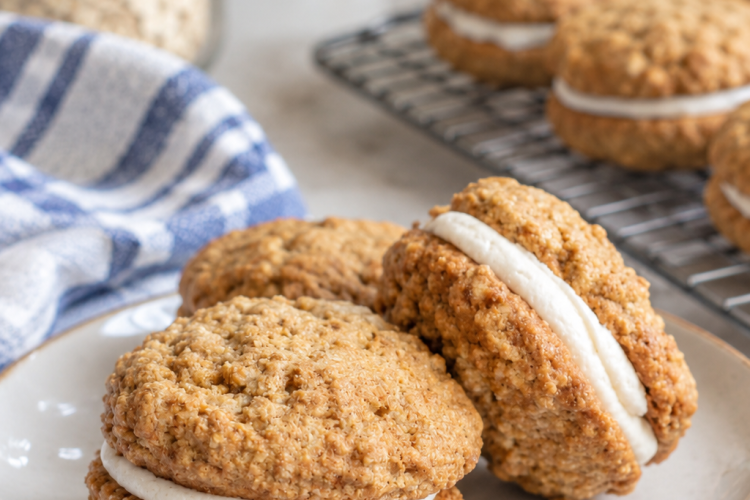
Homemade sourdough oatmeal cream pies bring together two soft, chewy oatmeal cookies and a generous layer of sweet, fluffy frosting. Made with sourdough discard, brown sugar, warm cinnamon, and vanilla, these cookie sandwiches offer a delicious homemade take on a familiar childhood favorite. Each bite combines the hearty texture of oats with a creamy filling, making these treats a wonderful choice for dessert, afternoon snacks, holiday gatherings, and homemade gifts.
Unlike packaged oatmeal cream pies, this homemade version uses familiar baking ingredients and lets you control how the cookies are prepared and assembled. The sourdough discard adds a subtle depth of flavor while helping create a tender cookie texture. Paired with a smooth cream cheese and butter frosting, the result is a satisfying dessert that balances sweetness, warmth, and a gentle tang. Whether you regularly bake with sourdough starter or are just beginning to explore sourdough discard recipes, these oatmeal cream pies are an enjoyable addition to your baking collection.
What Makes Sourdough Oatmeal Cream Pies Special?
The appeal of sourdough oatmeal cream pies comes from the contrast between their soft cookies and creamy centers. The oatmeal cookies have lightly crisp, golden edges and tender middles, while the frosting adds a smooth texture that makes every sandwich feel rich and indulgent. Brown sugar provides a deeper sweetness than granulated sugar alone, and cinnamon gives the cookies a comforting aroma that works beautifully with the oats and vanilla.
Sourdough discard is another ingredient that makes this recipe stand out. Rather than throwing away the portion of starter removed during feeding, you can incorporate it into cookie dough and other baked goods. In this recipe, discard contributes moisture and a mild fermented flavor that complements the sweetness of the frosting. The finished cookies still taste like classic oatmeal treats, but with an extra layer of flavor that makes them distinctive.
Why You Will Love This Homemade Oatmeal Cream Pie Recipe
One of the best things about this sourdough oatmeal cream pie recipe is that it transforms everyday pantry ingredients into a dessert that feels special. Butter, sugar, oats, flour, eggs, and sourdough discard form the cookie dough, while butter, cream cheese, vanilla, and powdered sugar create the filling. There is no need for complicated techniques or professional baking equipment. A stand mixer is convenient, but a large mixing bowl and electric hand mixer can also get the job done.
These cookies are also a great way to use up sourdough discard without making another loaf of bread. If you bake sourdough regularly, you may already have starter waiting in your refrigerator. Adding it to oatmeal cookie dough gives it a practical purpose while producing a dessert that family and friends can enjoy. The recipe makes approximately 18 sandwich cookies, making it suitable for sharing at parties, potlucks, family celebrations, and weekend gatherings.
Another advantage is that you can prepare the cookies and frosting separately before assembling them. This makes the process manageable even when you have other dishes to prepare. Once the cookies have cooled, simply add the frosting and sandwich them together. Their familiar appearance and homemade flavor make them appealing to both children and adults.
Understanding the Main Ingredients
Butter and Sugar for Soft, Chewy Cookies
Butter plays an important role in the flavor, texture, and structure of oatmeal cream pie cookies. Softened unsalted butter combines smoothly with brown sugar and granulated sugar, helping create a creamy mixture that forms the foundation of the dough. Using unsalted butter also allows you to follow the recipe’s specified salt quantity without introducing additional salt from the butter itself.
Brown sugar adds moisture, richness, and a subtle caramel-like flavor. Light or dark brown sugar can be used, depending on what you have available. Granulated sugar balances the deeper taste of brown sugar and contributes to the cookies’ texture. Creaming the butter and sugars thoroughly before adding the remaining ingredients helps distribute them evenly throughout the dough.
Sourdough Discard for Added Flavor
Sourdough discard is the portion of starter that is removed during the feeding process. It can be used in a variety of baked goods, including crackers, pancakes, muffins, and cookies. For these homemade oatmeal cream pies, the discard adds moisture and a mild tang that complements the sweet ingredients. It is a particularly useful ingredient for home bakers who want to reduce waste while exploring new sourdough discard dessert recipes.
The recipe uses half a cup of sourdough discard, which is mixed with the wet ingredients before the dry ingredients are incorporated. Active sourdough starter can also work, although the flavor may differ depending on its maturity and fermentation. Because starter hydration and acidity vary, the final cookie texture can vary slightly from one batch to another. For the most consistent results, measure the discard accurately and mix the dough only until the ingredients are combined.
Oats and Flour for the Perfect Cookie Texture
Oats give these cookies their familiar oatmeal flavor and pleasantly chewy texture. The recipe allows you to use either old-fashioned oats or quick-cooking oats, depending on your preference. Old-fashioned oats generally provide a more noticeable texture, while quick oats produce a finer, more uniform cookie. If you prefer a less pronounced oat texture, you can pulse old-fashioned oats briefly in a blender before mixing them into the dough.
All-purpose flour provides structure, helping the cookies hold their shape while remaining soft. Baking soda and baking powder work as leavening agents, contributing to the cookies’ rise and texture. Measuring the dry ingredients carefully is important because too much flour can make the cookies dense, while an imbalance in the leavening ingredients can affect their spread and softness.
Cinnamon, Vanilla, and Salt for Balanced Flavor
Cinnamon brings gentle warmth to the oatmeal cookies and enhances the caramel notes of brown sugar. Vanilla adds a familiar bakery-style aroma that ties the cookie and frosting flavors together. Salt balances the sweetness and helps bring out the other ingredients without making the cookies taste salty.
These flavors are intentionally simple. Rather than relying on elaborate additions, the recipe allows the oats, brown sugar, cinnamon, and vanilla to work together. The frosting provides most of the sweetness in the center, so the cookies do not need an excessive number of extra ingredients to taste delicious.
Cream Cheese and Butter for the Filling
The creamy center is made with room-temperature butter, cream cheese, vanilla, salt, and powdered sugar. Butter gives the frosting richness and helps it hold its shape, while cream cheese contributes a slight tang that balances the sweetness. Powdered sugar creates a smooth, thick consistency, making the filling suitable for spreading or piping between the cookies.
Allowing the butter and cream cheese to soften before mixing helps prevent lumps. The powdered sugar should be added gradually at low speed to reduce mess and keep the mixture smooth. Once all the sugar has been incorporated, beating the frosting at medium-high speed makes it lighter and fluffier. The finished filling should be thick enough to stay between the cookies without squeezing out excessively when the sandwiches are assembled.
Essential Equipment for Making Oatmeal Cream Pies
You do not need specialized baking equipment to make sourdough oatmeal cream pies, but a few basic tools make the process easier. A stand mixer with a paddle attachment is useful for preparing the cookie dough, and a whisk attachment works well for whipping the frosting. If you do not have a stand mixer, use a large mixing bowl and an electric hand mixer. Mixing by hand is also possible, although creaming the butter and sugar will require more effort.
Baking sheets lined with parchment paper help prevent the cookies from sticking and make cleanup easier. A cookie scoop is helpful for portioning the dough evenly, which encourages the cookies to bake at a similar rate. You will also need a separate bowl for the dry ingredients, measuring cups and spoons, a cooling rack, and a spatula. A piping bag makes it easy to distribute the frosting evenly, but a small offset spatula or ordinary butter knife works just as well.
How to Make Sourdough Oatmeal Cream Pies
Step 1: Prepare the Oven and Cookie Dough
Begin by preheating your oven to 350°F. Prepare your baking sheets by lining them with parchment paper so the cookies can be removed easily after baking. Add the softened unsalted butter, brown sugar, and granulated sugar to the bowl of a stand mixer fitted with a paddle attachment. Beat the ingredients until they are creamy and well combined, stopping occasionally to scrape down the sides of the bowl so that no pockets of butter or sugar remain unmixed.
Properly creaming the butter and sugars helps create a consistent dough. The butter should be soft enough to blend easily but should not be melted. Melted butter changes the dough’s structure and may cause the cookies to spread more than expected. If your butter is too firm, allow it to soften at room temperature before starting rather than heating it until liquid.
Step 2: Add the Eggs, Vanilla, and Sourdough Discard
Add the eggs one at a time, mixing after each addition until incorporated. Next, add the vanilla and sourdough discard, then mix until the wet ingredients are evenly combined. Scrape the sides and bottom of the bowl as needed. At this stage, the mixture may look softer or slightly different in texture than the butter-and-sugar mixture, which is normal when eggs and starter are introduced.
Adding the eggs gradually helps them blend into the mixture rather than leaving streaks of liquid. Make sure the sourdough discard is evenly distributed before moving on to the dry ingredients. This step is important because an uneven mixture can lead to differences in flavor and texture from one cookie to another.
Step 3: Combine the Dry Ingredients
In a separate bowl, combine the oats, all-purpose flour, baking soda, baking powder, cinnamon, and salt. Stir the ingredients together so the leavening agents and cinnamon are distributed throughout the flour and oats. This simple step helps prevent isolated areas of baking soda, baking powder, or salt from affecting individual cookies.
Add the dry mixture to the wet ingredients in approximately three portions, mixing after each addition. Continue until the flour is incorporated and the dough comes together, but avoid overmixing. Excessive mixing after adding flour can encourage a tougher texture. The finished dough should be thick enough to scoop onto the baking sheets while remaining soft and slightly sticky.
Step 4: Portion and Bake the Cookies
Use a cookie scoop or spoon to portion approximately 36 cookies onto the prepared baking sheets. Leave about two inches between each portion to allow space for spreading during baking. If your baking sheets are small, work in batches rather than crowding the dough together. Keeping the portions reasonably consistent will help the cookies bake evenly and make it easier to match pairs when assembling the cream pies.
Bake the cookies for approximately 10 minutes at 350°F. Look for lightly golden edges while the centers still appear a little soft. They may not look completely set when you first remove them from the oven, but they will continue to firm up as they rest on the hot baking sheet. Avoid baking them until the centers become very firm, as this can produce a drier cookie once cooled.
Step 5: Cool the Cookies Completely
After removing the baking sheets from the oven, leave the cookies on the trays for about two minutes. This short resting period allows them to set enough to move without breaking. Transfer them carefully to a cooling rack and allow them to cool completely before adding the filling. Warm cookies can melt the frosting, making the cream pies difficult to assemble and causing the filling to slide out of the center.
Cooling is an important part of achieving the right texture. The cookies should remain tender, but they also need enough structure to support the frosting and the second cookie. If you are baking multiple batches, allow the baking sheets to cool appropriately before adding more dough, especially if the sheets are still very hot.
Step 6: Make the Cream Cheese Buttercream Frosting
Once the cookies are cooling, prepare the filling. Clean the mixer bowl if needed, then add the room-temperature butter and cream cheese. Using the whisk attachment, beat them until the mixture becomes smooth and creamy. Scrape the bowl as necessary to ensure that both ingredients are fully incorporated. Starting with softened ingredients makes a noticeable difference in the finished frosting.
Add the vanilla and salt, then gradually incorporate the powdered sugar with the mixer running at low speed. Adding the sugar slowly helps prevent it from scattering outside the bowl. When all the powdered sugar has been added, increase the speed to medium-high and whip the frosting until it becomes fluffy. The filling should be smooth and thick enough to hold between two cookies while still being easy to spread or pipe.
Step 7: Assemble the Oatmeal Cream Pies
Choose cookies of similar size and pair them together. Turn one cookie over so its flat underside faces upward, then spread or pipe a portion of frosting onto that surface. Place the second cookie on top, pressing gently until the filling reaches the edges without squeezing out excessively. Repeat with the remaining cookies and frosting until you have approximately 18 sandwich cookies.
A piping bag is especially useful if you want neat, evenly distributed filling, but there is no need to make the cookies look perfectly identical. A slightly rustic appearance suits homemade baking and does not affect their flavor. If the frosting becomes too soft while you work, refrigerate it briefly until it is easier to handle. Once assembled, the cookies are ready to serve or store for later.
Tips for the Best Sourdough Oatmeal Cream Pies
Use Consistent Cookie Portions
Evenly sized cookies make the finished sandwiches easier to assemble and give each serving a balanced amount of cookie and filling. A cookie scoop is a simple way to keep the portions similar. If you are using a spoon, try to estimate the same amount of dough for each cookie and leave sufficient space between portions on the baking sheet. Consistent sizing also helps prevent smaller cookies from overbaking while larger ones remain underdone.
Avoid Overbaking the Cookies
The key to soft oatmeal cream pies is removing the cookies while their centers are still slightly soft. The edges should look set and lightly golden, but the middle may appear a little underdone at the end of the baking time. Since ovens and cookie sizes differ, use the stated 10 minutes as a starting point and check the appearance of the cookies. Leaving them on the baking sheet for two minutes helps them finish setting without excessive baking.
Chill the Dough When It Is Difficult to Handle
Chilling the dough is optional, but it can make portioning easier if the mixture feels especially soft or sticky. Cover the dough and refrigerate it until it is easier to scoop. Chilling may also affect how quickly the cookies spread in the oven, so keep an eye on their shape and baking time. If the dough is already easy to handle, you can proceed directly to portioning and baking.
Try a Longer Fermentation for the Dough
For a longer-fermented sourdough discard variation, place the prepared cookie dough in an airtight container and refrigerate it for 12 hours or up to three days, as suggested by the recipe. This gives you flexibility to prepare the dough ahead of time and bake the cookies later. Fermentation can change the dough’s flavor and texture, so results may vary with the starter and refrigeration conditions. Keep the dough refrigerated during this period, and check its consistency before baking.
Make the Frosting Easy to Spread
Room-temperature butter and cream cheese are essential for a smooth filling. If the ingredients are too cold, the frosting may become lumpy, while overly warm ingredients can create a loose mixture. Add powdered sugar gradually, then whip the frosting until it is light and creamy. Allow the cookies to cool completely before assembling, and use a piping bag or small offset spatula to distribute the filling evenly.
Variations and Serving Suggestions
Adjust the Oat Texture
You can choose old-fashioned oats for a more noticeable, chewy texture or quick-cooking oats for a finer result. If you enjoy oatmeal cookies but prefer a less textured bite, pulse the old-fashioned oats briefly in a blender before adding them to the dry ingredients. Avoid blending them into a fine powder, as the aim is simply to reduce the size of the flakes rather than completely change their structure.
Prepare the Cookies Ahead of Time
The cookie shells and frosting can be prepared separately to make assembly more convenient. Bake the cookies, let them cool fully, and keep them in an airtight container until you are ready to fill them. The frosting can be prepared separately and refrigerated if needed; let it soften enough to spread or pipe before assembling. Keeping the components organized helps when preparing desserts for gatherings or when you want to divide the work across more than one day.
Serve Them for Parties and Special Occasions
Sourdough oatmeal cream pies are suitable for dessert tables, picnics, family celebrations, school events, and holiday gatherings. Arrange them on a serving platter for a casual presentation, or place them in individual paper liners when packing them for a party. Their sandwich shape makes them easy to pick up and serve, and their familiar combination of oats, cinnamon, and vanilla appeals to a wide range of dessert lovers.
Because the filling contains cream cheese, pay attention to storage and serving time, especially in warm conditions. Keep the assembled cookies chilled when they will not be served promptly, and avoid leaving them out for extended periods. For the best eating experience, serve them when the cookies are tender and the filling is creamy but firm enough to stay in place.
How to Store Homemade Sourdough Oatmeal Cream Pies
Store the assembled cream pies in an airtight container to help prevent the cookies from drying out and absorbing unwanted odors. Although plain oatmeal cookies may keep well at room temperature, the cream cheese-based filling makes refrigeration the more cautious choice for these assembled sandwiches. Refrigerate them promptly and follow food-safety guidance for perishable dairy-based fillings, particularly if the kitchen is warm.
For longer storage, place the cream pies in a freezer-safe container or bag, separating layers with parchment paper to reduce sticking. Freeze them in a way that protects the cookies from being crushed. When you are ready to serve them, thaw the desired quantity in the refrigerator or according to your preferred serving texture. Avoid repeatedly warming and chilling the entire batch; removing only what you need helps maintain quality.
Frequently Asked Questions About Sourdough Oatmeal Cream Pies
Can I Use Active Sourdough Starter Instead of Discard?
Yes, active sourdough starter can be used in this recipe. The flavor may be slightly different, depending on the starter’s maturity and fermentation level. For the most predictable result, measure the starter carefully and keep the other ingredient quantities unchanged. The recipe is designed to use sourdough discard, making it a convenient option for bakers who want to use the starter removed during routine feeding.
Do I Have to Chill the Cookie Dough?
No, chilling is not required. You can scoop and bake the dough immediately if it is easy to handle. Refrigeration is helpful when the dough feels too soft or sticky, and it offers the added convenience of preparing the dough in advance. If you choose a longer fermentation, store it in an airtight container in the refrigerator for 12 hours to three days, as described in the recipe.
Can I Use Quick Oats Instead of Old-Fashioned Oats?
Yes, either quick-cooking oats or old-fashioned oats can be used. Quick oats generally create a finer texture, while old-fashioned oats produce more noticeable flakes and chewiness. You can also pulse old-fashioned oats briefly in a blender if you prefer a more uniform cookie. Whichever option you choose, use the same quantity specified in the recipe card.
How Do I Keep the Frosting From Squeezing Out?
Start with fully cooled cookies and make sure the frosting is thick enough to hold its shape. Spread or pipe a moderate amount onto the flat side of each cookie, then place the second cookie on top and press gently. Applying too much pressure can push the filling out around the edges. If the frosting feels too soft, refrigerate it briefly before continuing with assembly.
How Long Do Homemade Oatmeal Cream Pies Last?
The shelf life depends on storage conditions and the freshness of the ingredients. Because this recipe uses cream cheese in the filling, store the assembled cream pies in an airtight container in the refrigerator rather than relying on extended room-temperature storage. For longer storage, freeze them in a freezer-safe container. Thaw only the quantity you plan to serve and avoid leaving the dairy-based filling unrefrigerated for extended periods.
Can I Make These Cookies Without a Stand Mixer?
Yes. A hand mixer and a large mixing bowl work well for both the cookie dough and the frosting. You can also mix by hand, although creaming the butter and sugar and whipping the frosting will take more effort. Use a sturdy spoon or spatula, scrape the bowl regularly, and make sure the wet and dry ingredients are evenly combined without overmixing.
Final Thoughts on Homemade Sourdough Oatmeal Cream Pies
Homemade sourdough oatmeal cream pies are a rewarding way to turn everyday baking ingredients and leftover starter into a nostalgic dessert. The cookies bring together oats, cinnamon, brown sugar, and vanilla, while the creamy filling adds a rich, lightly tangy contrast. With straightforward preparation and a manageable baking time, this recipe works for both experienced sourdough bakers and anyone looking for a new oatmeal cookie recipe to try.
Make a batch for your next family gathering, prepare the dough ahead of a busy weekend, or keep a few sandwiches in the freezer for a future treat. By paying attention to cookie size, baking time, cooling, and frosting consistency, you can create soft, flavorful oatmeal cream pies that are enjoyable to share. The homemade approach gives you a fresh alternative to packaged treats while making practical use of sourdough discard.
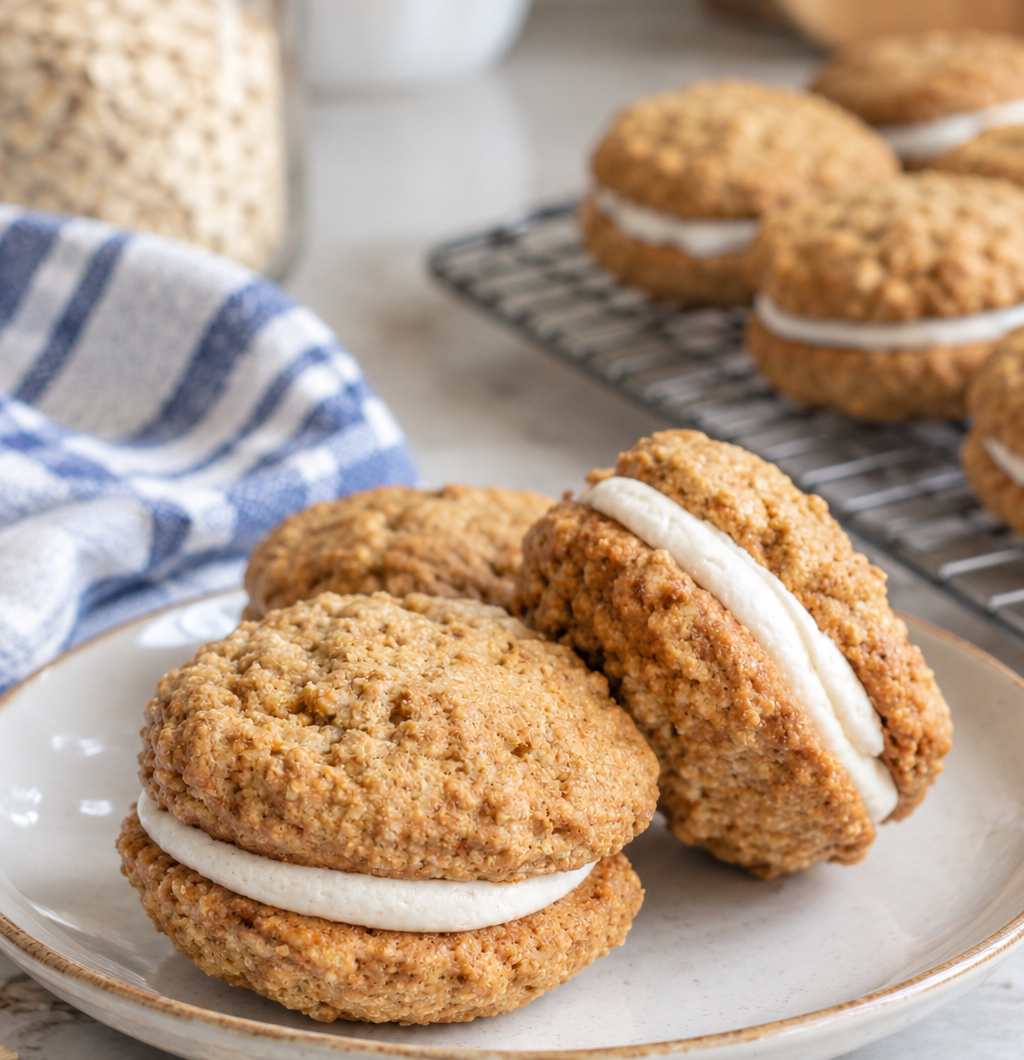
Homemade Sourdough Oatmeal Cream Pies
Soft, chewy sourdough oatmeal cookies filled with fluffy vanilla cream cheese frosting make these homemade oatmeal cream pies a delicious twist on a nostalgic dessert. Made with sourdough discard, oats, brown sugar, and cinnamon, these cookie sandwiches are perfect for sharing at parties, family gatherings, or whenever you want a homemade sweet treat.
18
servings15
minutes10
minutes458
kcal25
minutesIngredients
- For the oatmeal cookies
1 cup unsalted butter, softened
3/4 cup brown sugar
1/2 cup granulated sugar
2 large eggs
2 teaspoons vanilla
1/2 cup sourdough discard
3 cups oats
2 cups all-purpose flour
1 teaspoon baking soda
1/2 teaspoon baking powder
2 teaspoons cinnamon
1 teaspoon salt
- For the cream cheese frosting
1/2 cup butter, room temperature
8 ounces cream cheese, room temperature
2 teaspoons vanilla
1/4 teaspoon salt
4 cups powdered sugar
Directions
- Preheat the oven:
Set the oven to 350°F (175°C). Line baking sheets with parchment paper. - Cream the butter and sugars:
Beat the softened unsalted butter, brown sugar, and granulated sugar in a stand mixer until creamy, scraping down the sides of the bowl as needed. - Add the wet ingredients:
Mix in the eggs one at a time. Add the vanilla and sourdough discard, then beat until everything is evenly combined. - Mix the dry ingredients:
In a separate bowl, combine the oats, all-purpose flour, baking soda, baking powder, cinnamon, and salt. - Prepare the cookie dough:
Gradually add the dry mixture to the wet ingredients in three portions. Mix after each addition and stop once the ingredients are incorporated. Avoid overmixing. - Shape the cookies:
Scoop approximately 36 cookies onto the prepared baking sheets, leaving about 2 inches between each portion. - Bake:
Bake for approximately 10 minutes, or until the edges are lightly golden and the centers remain slightly soft. - Cool the cookies:
Leave the cookies on the baking sheets for 2 minutes after baking. Transfer them to a cooling rack and allow them to cool completely. - Prepare the frosting:
In a clean mixer bowl, beat the room-temperature butter and cream cheese with the whisk attachment until smooth and creamy. - Add the remaining frosting ingredients:
Mix in the vanilla and salt. Gradually add the powdered sugar on low speed. Once incorporated, increase the speed to medium-high and whip until the frosting is light and fluffy. - 11. Assemble the cream pies:
Spread or pipe frosting onto the flat underside of one completely cooled cookie. Place a second cookie on top and press gently to form a sandwich. - Finish and serve:
Repeat with the remaining cookies and frosting to make approximately 18 sourdough oatmeal cream pies.
Notes
- Cookie size:
Use a cookie scoop to make evenly sized cookies that fit together neatly. - Chilling the dough:
Refrigerating the dough is optional but can make it easier to scoop and handle. - Long fermentation:
For a longer-fermented variation, refrigerate the dough in an airtight container for 12 hours or up to 3 days. - Oat options:
Old-fashioned oats provide a chewier texture, while quick-cooking oats produce a finer texture. - Frosting alternative:
You can use vanilla cream cheese frosting as an alternative filling if you prefer a stronger cream cheese flavor. - Cooling:
Allow the cookies to cool completely before adding frosting to prevent the filling from melting. - Storage:
Store assembled cream pies in an airtight container in the refrigerator because the filling contains cream cheese. They can also be frozen in a freezer-safe container. - Ingredient measurements:
Double-check ingredient quantities when scaling the recipe. Use a kitchen scale for metric measurements if preferred.
Nutrition Facts
18 servings per container
- Amount Per ServingCalories458
- % Daily Value *
- Total Fat
21g
27%
- Total Carbohydrate
63g
23%
- Total Sugars 41g
- Protein 5g 10%
* The % Daily Value tells you how much a nutrient in a serving of food contributes to a daily diet. 2,000 calories a day is used for general nutrition advice.