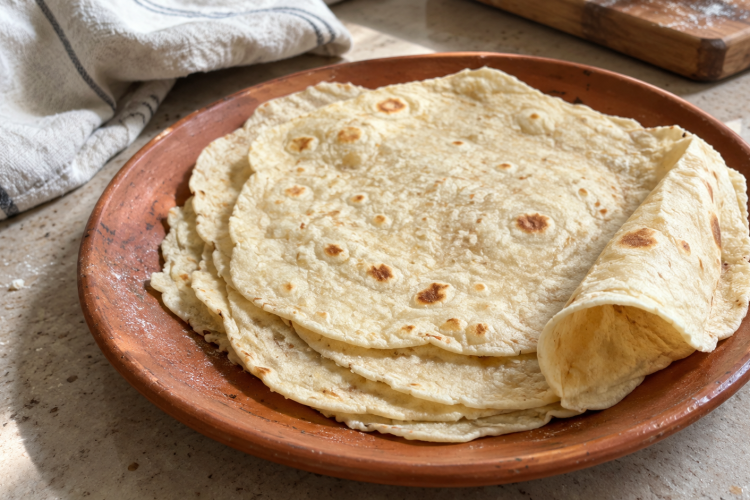
Easy sourdough tortillas are a delicious way to make fresh, soft flour tortillas at home using simple pantry ingredients and sourdough discard. They are perfect for tacos, burritos, quesadillas, wraps, and many other meals. Unlike recipes that require a long fermentation process, these homemade sourdough flour tortillas can be prepared in about 50 minutes, including resting time. With a little mixing, rolling, and cooking in a hot skillet, you can enjoy warm tortillas that are tender, flexible, and full of homemade flavor.
Making tortillas from scratch is easier than many people expect. You do not need a special tortilla-making machine, an oven, or complicated baking equipment. A mixing bowl, rolling pin, clean countertop, and frying pan are enough to get started. The dough comes together quickly, and the short resting period makes it easier to roll into thin rounds. Once cooked, the tortillas develop light golden spots and occasional air bubbles while remaining soft enough to fold around your favorite fillings.
One of the best things about this sourdough tortilla recipe is the opportunity to use leftover sourdough discard. If you regularly maintain a sourdough starter, you may have extra starter that would otherwise be thrown away during feeding. Adding it to tortilla dough gives it another useful purpose while contributing moisture and a gentle sourdough flavor. Instead of buying packaged tortillas for every meal, you can prepare a fresh batch at home with ingredients you may already have in your kitchen.
Why You’ll Love These Homemade Sourdough Flour Tortillas
Soft and Flexible Texture
Homemade flour tortillas should be soft enough to fold without cracking, and this recipe is designed to achieve that result. The combination of all-purpose flour, coconut oil, sourdough discard, and hot water creates a dough that can be rolled thin and cooked quickly. Resting the dough before shaping helps relax the gluten, making the tortillas easier to handle. Keeping the cooked tortillas covered with a clean kitchen towel also helps preserve their moisture and flexibility.
A Simple Way to Use Sourdough Discard
Sourdough discard is useful in many recipes beyond bread, pancakes, and crackers. These easy sourdough discard tortillas offer another practical way to use it without committing to a lengthy fermentation schedule. The discard adds moisture and flavor while blending naturally into the flour-based dough. You can use freshly collected discard for a milder taste or older refrigerated discard for a more noticeable tang, provided your starter is healthy and suitable for baking.
Quick Preparation for Busy Days
This recipe is especially convenient when you need a homemade bread option without spending the entire day in the kitchen. The ingredients take only a few minutes to combine, and the dough needs approximately 20 minutes to rest before shaping. Each tortilla cooks in roughly a minute and a half, depending on the heat of the pan and its thickness. This makes sourdough flour tortillas a practical choice for weeknight dinners, weekend lunches, and quick homemade snacks.
Versatile for Different Meals
Fresh sourdough tortillas are not limited to traditional tacos. Their neutral, slightly tangy flavor pairs well with grilled chicken, seasoned beef, roasted vegetables, scrambled eggs, beans, cheese, and fresh salad ingredients. You can also use them to make breakfast burritos, lunch wraps, quesadillas, or simple tortilla pizzas. Serve them alongside soups, curries, or rice dishes when you want a soft bread to scoop up sauces and flavorful fillings.
Ingredients for Easy Sourdough Tortillas
All-Purpose Flour
All-purpose flour forms the structure of these homemade tortillas. It provides enough gluten to make the dough elastic while helping the finished tortillas remain tender. The recipe uses 350 grams of flour, which is approximately 2½ cups, although measuring by weight generally produces more consistent results. Bread flour is not necessary because its higher protein content may create a chewier texture than desired. For the softest results, measure the flour carefully and avoid adding excessive amounts during rolling.
Sourdough Discard
Sourdough discard is the ingredient that gives these tortillas their distinctive character. The recipe calls for 125 grams of discard at 100% hydration, meaning the starter contains equal weights of flour and water. Room-temperature discard blends more easily into the dough than very cold starter straight from the refrigerator. The age of the discard can influence the flavor, so choose fresher discard if you prefer a milder taste or older discard if you enjoy a more pronounced sourdough note.
Coconut Oil
Coconut oil contributes richness and helps create a soft, flexible tortilla. The recipe uses 70 grams, approximately one-third cup, and either solid or liquid coconut oil can be incorporated into the dough. When using solid oil, kneading helps distribute it throughout the flour mixture. Although coconut oil is used in the original recipe, lard, vegetable shortening, or softened butter can be substituted if necessary. Different fats may slightly change the flavor, texture, and flexibility of the finished tortillas.
Hot Water
Hot water helps bring the dough together and makes it easier to knead and roll. This recipe uses 180 grams, approximately three-quarters of a cup, at 100°F or warmer. The warm liquid helps the ingredients combine smoothly and encourages a workable dough. Measure the water carefully rather than adding all-purpose flour unnecessarily to correct a dough that feels soft. A slightly warm, pliable dough is easier to shape than a dry mixture that crumbles or cracks around the edges.
Salt and Baking Powder
Salt improves the flavor of the tortillas, while baking powder provides a little lift during cooking. The recipe includes 5 grams of salt, approximately one teaspoon, and 2 grams of baking powder, approximately half a teaspoon. These quantities may appear small, but they contribute to the final result. Whisking both ingredients thoroughly into the flour before adding the wet ingredients helps distribute them evenly, ensuring that each tortilla has a balanced taste and a consistent texture.
Tips for the Best Homemade Sourdough Tortillas
Roll the Dough Evenly
The secret to soft, evenly cooked tortillas is rolling the dough to a consistent thickness. If the center is thick while the edges are very thin, the tortilla may cook unevenly and become difficult to fold. Turn the dough frequently as you roll and use only enough flour to prevent sticking. If the dough keeps shrinking, stop rolling and allow it to rest for another minute or two before trying again.
Adjust the Heat as Needed
A hot skillet helps tortillas develop bubbles without requiring a long cooking time. However, the ideal heat setting can vary between gas, electric, and induction stoves. Begin with medium to medium-high heat and observe the first tortilla carefully. If it becomes too dark before the surface develops bubbles, lower the temperature. If it stays pale and dry, increase the heat slightly. Small adjustments throughout cooking will help you achieve better results.
Avoid Overcooking
Tortillas can become stiff when they spend too much time in the skillet. Because the dough is rolled thin, each tortilla cooks quickly and needs only a short time on each side. Look for light brown spots, small bubbles, and a cooked surface rather than waiting for the entire tortilla to turn deeply golden. Transfer each tortilla to the covered stack immediately after cooking to preserve its moisture.
Frequently Asked Questions
Do Sourdough Tortillas Taste Sour?
These tortillas can have a mild sourdough flavor, but the intensity depends on the discard you use. Fresh discard usually produces a more subtle taste, while older discard may contribute a stronger tang. The flour, fat, and other ingredients help balance the flavor, making the tortillas suitable for a wide variety of savory fillings. If you prefer a neutral-tasting tortilla, start with recently fed or freshly collected discard.
Can I Make the Dough Ahead of Time?
Yes, you can prepare the dough ahead and refrigerate it overnight. Keep it covered to prevent the surface from drying out, and allow it to return closer to room temperature before rolling. Cold dough may be firmer and more resistant to shaping, so a little extra resting time can help. For the best results, check that the dough remains soft and manageable before dividing it into portions.
Why Aren’t My Tortillas Puffing Up?
Tortillas may fail to puff if the skillet is not hot enough, the dough is rolled unevenly, or the surface has dried out. Try heating the pan more thoroughly and rolling the dough to a consistent, thin thickness. Small bubbles are a good sign, but every tortilla will not necessarily puff dramatically. Even without large air pockets, properly cooked tortillas can still be soft, flavorful, and suitable for wraps or tacos.
Why Does the Dough Spring Back When I Roll It?
Dough that springs back is usually showing the elasticity of its gluten. This is normal, especially if the dough has not rested long enough. Cover the portion and leave it undisturbed for another minute or two, then roll it again with gentle, even pressure. Avoid forcing the dough into shape, as this can make rolling frustrating and produce uneven edges. Adequate resting time is often all that is needed to make the dough easier to handle.
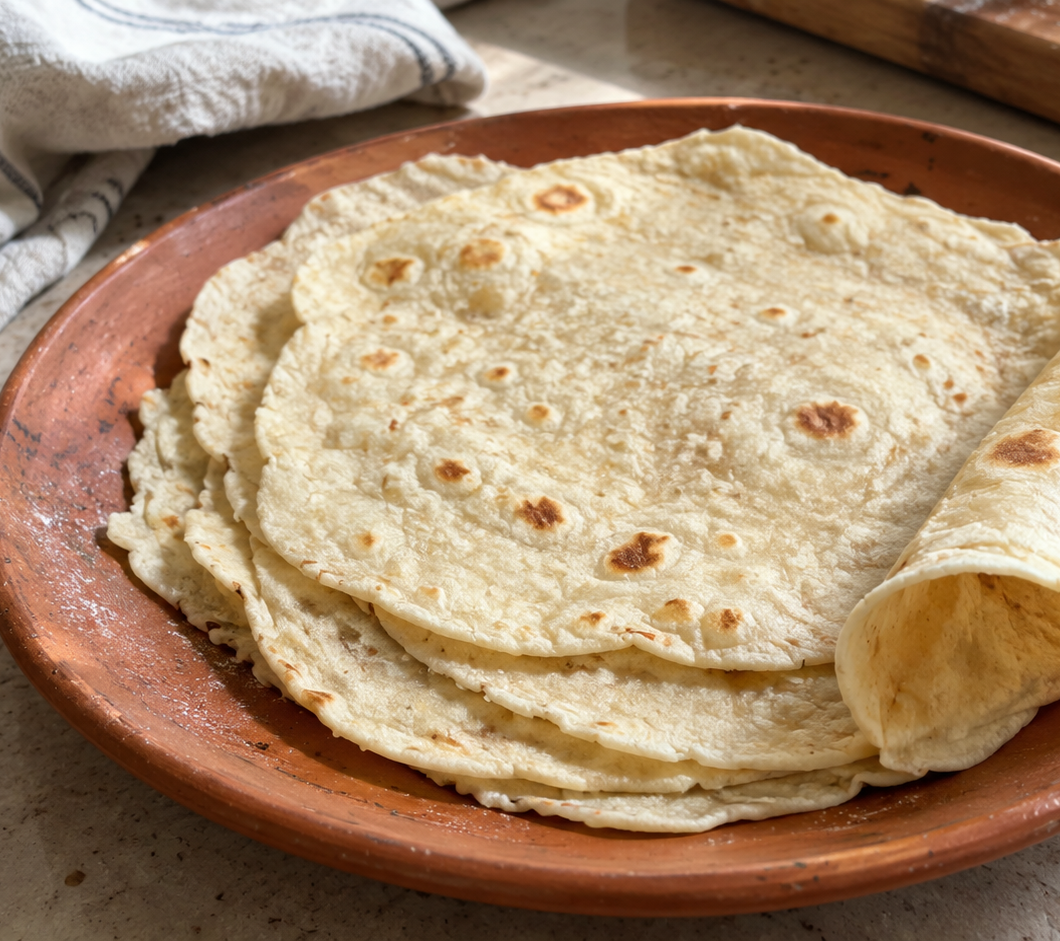
Sourdough Flour Tortillas
 Recipe by admin
These soft and flexible sourdough tortillas are made with simple pantry ingredients and sourdough discard.
10
servings10
minutes20
minutes197
kcal20
minutes50
minutesIngredients
350 grams all-purpose flour (about 2½ cups)
5 grams salt (about 1 teaspoon)
2 grams baking powder (about ½ teaspoon)
70 grams coconut oil or lard (about ⅓ cup)
125 grams sourdough discard, 100% hydration (about ½ cup)
180 grams hot water (about ¾ cup), at 100°F or warmer
Directions
- Mix the Dough
Whisk the all-purpose flour, salt, and baking powder together in a large bowl. Add the coconut oil, sourdough discard, and hot water. Mix until a dough forms, then knead by hand for approximately 2–5 minutes until smooth and soft. - Rest the Dough
Cover the dough with a clean kitchen towel and let it rest at room temperature for 20 minutes. This helps relax the gluten and makes the dough easier to roll. - Divide and Shape
Divide the dough into 10 equal portions for large tortillas or 16 portions for smaller tortillas. Shape each piece into a smooth ball, cover with a towel, and let the dough balls rest for another 5 minutes. - Roll the Tortillas
Lightly flour a clean countertop and roll each dough ball into a thin, round tortilla. Turn the dough as you roll to create an even shape and thickness. - Heat the Skillet
Preheat a large frying pan or griddle over medium to medium-high heat. Make sure the cooking surface is hot before adding the first tortilla. - Cook the Tortillas
Place one tortilla in the hot, dry skillet. Cook for about 1 minute until bubbles appear and light brown spots develop. Flip and cook for another 30 seconds. Adjust the heat as necessary and repeat with the remaining dough. - Keep the Tortillas Soft
Stack the cooked tortillas on a plate lined with a clean kitchen towel. Cover them as you work to trap steam and maintain their soft, flexible texture. Serve warm with your favorite fillings.
Notes
- Sourdough discard: Room-temperature discard works best. Fresher discard gives a milder flavor, while older discard produces a tangier taste.
- Fat substitution: Coconut oil can be replaced with lard, vegetable shortening, or softened butter.
- Flour variation: Replace up to half of the all-purpose flour with whole wheat flour for a heartier texture.
- Make ahead: Prepare the dough and refrigerate it overnight in a covered container. Let it warm up before rolling.
- Storage: Keep cooled tortillas in an airtight container for short-term use or freeze for up to 3 months.
- Reheating: Thaw frozen tortillas at room temperature, microwave them with a slightly damp paper towel, or warm them briefly in a skillet.
Nutrition Facts
- Calories: 197kcal
- Fat: 7g
- Carbohydrates: 29g
- Fiber: 1g
- Sugar: 0.1g
- Protein: 4g