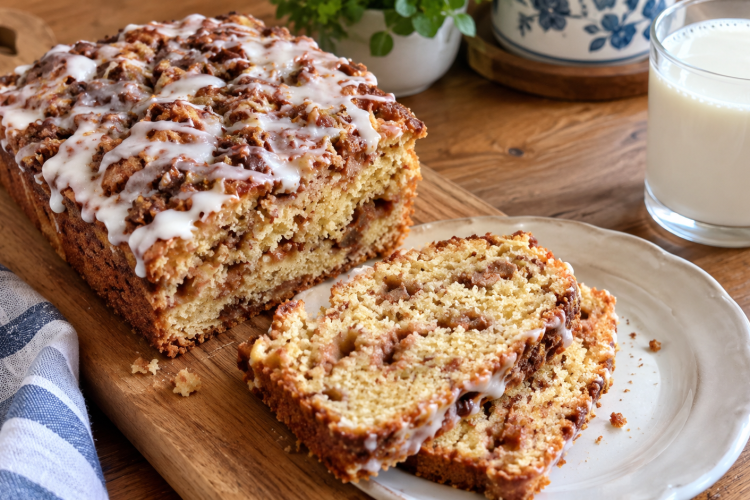
Sourdough apple fritter bread is a delicious homemade quick bread that combines tender apples, warm cinnamon, a buttery crumb, and a sweet vanilla glaze. Made with sourdough discard, this easy apple bread offers a slightly tangy flavor that balances the sweetness of the brown sugar and apples. Each slice contains soft pieces of cinnamon-coated fruit surrounded by a rich, moist crumb, making it a wonderful choice for breakfast, an afternoon snack, or a comforting dessert.
Unlike traditional sourdough bread, this recipe does not require kneading, yeast, or a long fermentation process. Baking powder helps the batter rise in the oven, while the sourdough discard adds moisture and flavor. The preparation involves mixing a thick batter, layering it with cinnamon apples and brown sugar, and baking everything in a loaf pan. Once the bread has cooled, a simple vanilla glaze adds a sweet finishing touch that resembles the sugary coating on a classic apple fritter.
One of the best features of this sourdough discard apple bread is the way the apples are distributed throughout the loaf. Instead of placing all the fruit in one thick layer, you divide it between two layers of batter. This creates a more balanced texture, allowing each slice to contain tender apple pieces and cinnamon sweetness. Whether you have leftover sourdough starter from regular baking or simply enjoy homemade apple desserts, this recipe is an excellent way to make something special from everyday ingredients.
What Makes Sourdough Apple Fritter Bread Special?
This cinnamon apple quick bread brings together several flavors and textures that work beautifully together. The sourdough discard provides a mild tang, the apples contribute natural fruitiness, and the cinnamon creates a warm, familiar aroma. Brown sugar adds a deeper caramel-like sweetness, while melted butter gives the bread a rich taste and a tender texture. The vanilla glaze ties everything together without overpowering the apple and cinnamon flavors.
Another advantage is that this recipe is approachable for home bakers of different experience levels. You do not need a stand mixer, special sourdough equipment, or advanced baking skills. A couple of mixing bowls, a whisk, a spatula, and a standard loaf pan are enough to prepare the batter. Since the bread uses baking powder instead of commercial yeast, there is no traditional proofing stage, and the assembled loaf can go directly into the oven.
The recipe is also a practical way to use unfed sourdough starter. Rather than throwing away the discard collected during starter maintenance, you can turn it into a flavorful baked treat. Its acidity adds complexity to the finished bread, creating a taste that is more interesting than an ordinary sweet apple loaf. The result is a comforting homemade bake with the character of sourdough and the familiar appeal of an apple fritter.
Ingredients That Give This Apple Bread Its Flavor
Sourdough discard
Sourdough discard is the ingredient that distinguishes this loaf from a standard apple cinnamon bread. It contributes moisture and a gentle fermented flavor, helping balance the sweetness of the sugar and glaze. A full cup is used in the batter, making this recipe especially useful when you have extra starter to use. The discard does not need to be freshly fed, provided it has been stored and handled safely and shows no signs of spoilage.
Apples and cinnamon
Apples provide the fruit-filled texture that makes this bread resemble an apple fritter. Firm varieties such as Granny Smith, Braeburn, Northern Spy, and Honeycrisp are suitable choices because they tend to retain their shape during baking. Tart apples are particularly useful because their flavor balances the sweet batter and cinnamon sugar. Peeling the fruit and cutting it into small pieces helps distribute it evenly and makes the loaf easier to slice.
Ground cinnamon seasons both the apples and the brown sugar topping, creating a consistent flavor throughout the bread. Tossing the diced apples with white sugar and cinnamon before assembling the loaf allows the seasoning to coat the fruit evenly. Smaller apple pieces are preferable to large chunks because they fit neatly between the layers of batter and are less likely to leave large gaps when they soften in the oven.
Flour, sugar, eggs, and butter
All-purpose flour gives the bread its structure, while baking powder helps it rise without yeast. A combination of brown sugar and white cane sugar sweetens the batter and contributes a pleasant flavor. The eggs bind the ingredients together and help create a soft, sliceable crumb. Melted unsalted butter adds richness and supports the tender texture that makes this bread enjoyable with coffee, tea, or a glass of milk.
The batter is intentionally thick rather than runny. The sourdough discard supplies much of the moisture needed to bring the ingredients together, so additional milk is not required in the bread mixture. Folding the wet ingredients into the dry ingredients just until the flour disappears helps prevent unnecessary gluten development. This simple mixing approach is important for keeping the finished loaf tender instead of dense or tough.
Brown sugar topping and vanilla glaze
The topping is made with brown sugar and cinnamon, which melt together during baking to form a sweet, lightly crisp layer. It is different from a traditional crumb streusel because it does not contain butter or flour. Instead, it creates a thin cinnamon-sugar coating that complements the soft apple pieces underneath.
The vanilla glaze uses powdered sugar, vanilla extract, and milk. Adjusting the amount of milk allows you to control the thickness, from a narrow drizzle to a more generous coating. Applying the glaze only after the loaf has cooled helps it remain visible on the surface instead of melting immediately into the warm bread.
Tips for the Best Sourdough Apple Fritter Bread
Choose apples that hold their shape
The type of apple you use can make a noticeable difference in the finished loaf. Firm varieties such as Granny Smith, Braeburn, Northern Spy, and Honeycrisp generally hold their shape better than softer apples. Varieties such as McIntosh and Cortland can soften considerably and release more moisture during baking, potentially creating a wet layer in the bread. Choose firm fruit and cut it into small, even pieces for a more consistent result.
Cover the loaf before the topping becomes too dark
Brown sugar caramelizes as it heats, so the top of this apple fritter loaf may look finished before the center is fully baked. Check the surface at around 40 minutes and loosely tent the pan with aluminum foil if the topping is already deeply browned. This allows the middle to continue cooking without excessive darkening on top. Always confirm that the center is baked through before removing the loaf from the oven.
Avoid overmixing the batter
Once you combine the wet and dry ingredients, fold them together only until the flour is incorporated. A few thick ridges in the batter are not a problem, but dry pockets of flour should be mixed in. Excessive stirring can make quick bread tougher than intended. Because this batter is naturally thick, a flexible spatula is especially helpful for spreading it across the pan and covering the apple layers.
Let the bread cool before glazing
Although warm apple bread smells tempting, glazing it immediately after baking can cause the powdered sugar mixture to melt and disappear into the surface. Allowing the loaf to cool completely gives the glaze a better chance to remain visible and set into a delicate sweet coating. For clean slices, use a sharp serrated knife and wipe the blade between cuts if cinnamon sugar or glaze begins to collect on it.
Optional Overnight Sourdough Fermentation
If you prefer a stronger sourdough flavor, you can rest the batter before baking. This option is useful for bakers who enjoy the gentle tang of fermented starter and want to prepare some of the work ahead of time. The resting method requires one adjustment: leave the baking powder out initially, because it begins reacting once it comes into contact with moisture.
Mix the flour, sugars, salt, sourdough discard, eggs, vanilla, and melted butter, following the recipe’s mixing method but omitting the baking powder. Cover the mixture and let it rest at room temperature for 60 to 90 minutes, or refrigerate it overnight. When you are ready to bake, sprinkle the baking powder over the mixture and fold it in gently before assembling the loaf with the apples and cinnamon sugar.
Prepare the apples immediately before assembling the bread rather than leaving them mixed with sugar overnight. Sugar draws moisture out of fruit, and excess liquid can affect the texture of the loaf. The overnight method is optional, so if you want a straightforward quick bread without extra planning, you can simply mix the batter with baking powder and bake it as directed.
Frequently Asked Questions
Is sourdough apple fritter bread made with yeast?
No. This recipe is a quick bread that uses baking powder as its leavening agent. It does not require commercial yeast, kneading, or a traditional proofing stage. The sourdough discard contributes moisture and flavor, but the loaf rises primarily because of the baking powder. This makes the recipe much more straightforward than a traditional sourdough loaf while still giving it a distinctive sourdough character.
Can I use sourdough discard straight from the refrigerator?
Yes, provided the discard has been stored properly and is safe to use. Cold discard can be mixed into the batter, although bringing it closer to room temperature may make it easier to combine with the other ingredients. Discard that shows visible mold or unusual discoloration should be thrown away. A strong fermented smell can be normal, but signs of spoilage should never be ignored.
Why is the center of my apple bread still wet?
The apples naturally release moisture during baking, and the thick batter takes time to cook through. A loaf that looks browned on top may still need additional baking. Cover the surface loosely with foil when it becomes dark and continue cooking until a toothpick inserted into the crumb between apple pieces comes out without wet batter. Using firm apples and cutting them into small pieces also helps reduce texture problems.
Can I make this recipe ahead of time?
Yes. You can bake the bread a day before serving and store it tightly wrapped at room temperature. The flavors often blend nicely by the following day, making it an excellent make-ahead option. If you prefer a stronger sourdough flavor, you can also use the optional overnight batter-resting method. Remember to add the reserved baking powder before assembling and baking the rested batter.
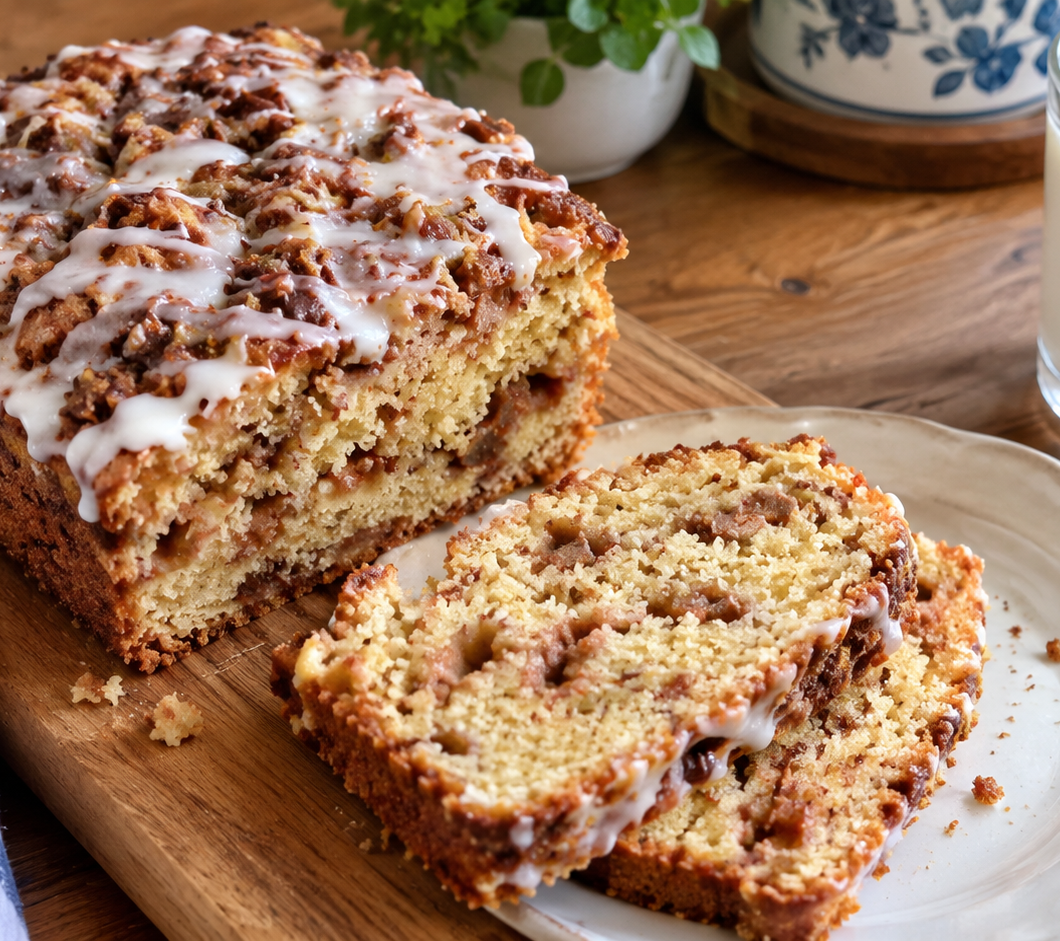
Sourdough Apple Fritter Bread
 Recipe by admin
A moist sourdough discard quick bread filled with cinnamon apples, topped with brown sugar and cinnamon, and finished with a sweet vanilla glaze. No kneading or yeast required.
10
servings30
minutes1
hour306
kcal1
hour30
minutesIngredients
- For the bread
1 1/2 cups all-purpose flour
1/4 cup brown sugar
1/4 cup white cane sugar
1 teaspoon baking powder
1/2 teaspoon salt
1 cup sourdough discard
2 large eggs
1 teaspoon vanilla extract
- For the apple cinnamon mixture
3 medium apples, about 300 g, peeled and diced (Granny Smith or a similar tart variety works best)
1 tablespoon white cane sugar
1 teaspoon ground cinnamon
- For the streusel-style topping
1/2 cup brown sugar
1 teaspoon ground cinnamon
- For the vanilla glaze
1/2 cup powdered sugar
1/2 teaspoon vanilla extract
1–3 tablespoons milk, adjusted to the desired glaze consistency
Directions
- Set the oven to 350°F (175°C). Generously butter a 9-by-5-inch loaf pan and dust it with flour, or line it with parchment paper.
- Melt the unsalted butter in a small saucepan over low heat or in the microwave. Set aside to cool slightly.
- In a large bowl, whisk together the flour, brown sugar, white sugar, baking powder, and salt. Make a well in the center.
- In a separate bowl, stir the sourdough discard, eggs, vanilla extract, and melted butter until smooth.
- Pour the wet ingredients into the dry mixture. Fold gently with a spatula until no dry flour remains. The batter will be thick; avoid overmixing.
- Peel, core, and dice the apples into approximately 1/4-inch pieces. Toss them with the white sugar and cinnamon.
- Mix the brown sugar and cinnamon in a small bowl.
- Spread half the batter into the prepared loaf pan. Add half the apples and half the cinnamon-sugar topping.
- Spread the remaining batter over the first layer. Add the remaining apples and finish with the rest of the cinnamon-sugar mixture.
- Bake for 60–70 minutes. Check after 40 minutes and loosely cover with foil if the top is becoming too dark. Test the center between the apple pieces with a toothpick.
- Leave the bread in the pan for 20 minutes, then transfer it to a wire rack to cool fully.
- Whisk the powdered sugar, vanilla extract, and 1 tablespoon of milk. Add more milk gradually until the glaze reaches a pourable consistency.
- Drizzle the glaze over the cooled loaf. Allow it to set before slicing and serving.
Notes
- Granny Smith, Braeburn, Northern Spy, and Honeycrisp are good choices because they retain their shape during baking.
- Mix the batter without baking powder, cover, and rest at room temperature for 60–90 minutes or refrigerate overnight. Fold in the baking powder immediately before assembling and baking.
- Tent the loaf with foil at around 40 minutes if the top is already deeply browned.
- Divide the batter and apples among 12 lined muffin cups. Bake at 350°F (175°C) for 22–26 minutes.
- For a crumbly streusel, rub 1/4 cup flour and 3 tablespoons cold butter into the brown sugar and cinnamon. Use this variation on the top layer.
- Keep tightly wrapped at room temperature for up to 3 days or refrigerate for up to 5 days.
- Freeze the loaf or individual slices without glaze for up to 3 months. Thaw at room temperature and glaze before serving.
Nutrition Facts
- Total number of serves: 1
- Calories: 306kcal
- Fat: 8g
- Carbohydrates: 56g
- Fiber: 2g
- Sugar: 34g
- Protein: 4g