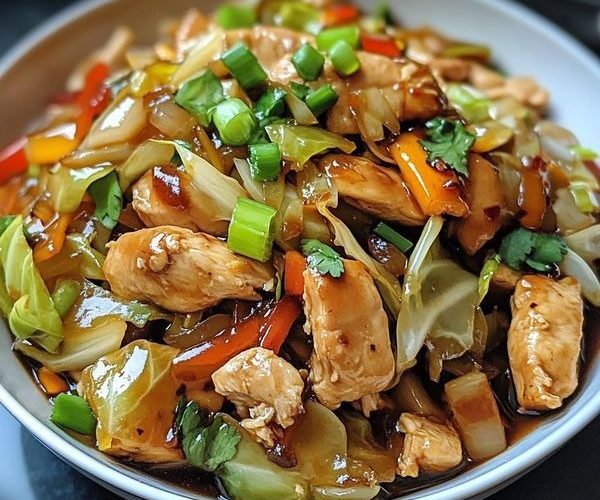
Garlic Chicken Cabbage Stir-Fry is a simple, delicious, and satisfying meal that brings together tender chicken, fresh cabbage, fragrant garlic, and a tasty homemade sauce. It is a wonderful choice when you want to prepare something flavorful at home without spending too much time in the kitchen. The ingredients are easy to find, the cooking steps are simple, and everything comes together in one pan.
This recipe combines juicy chicken pieces with lightly cooked cabbage, sweet onion, fresh green onions, and plenty of garlic. The chicken develops a beautiful golden color as it cooks, while the cabbage becomes tender but keeps a little crunch. Garlic gives the dish its wonderful smell and strong flavor, while soy sauce, paprika, black pepper, and other seasonings bring everything together.
One of the best things about this chicken cabbage stir-fry is that it can be served in different ways. You can enjoy it on its own for a light meal or serve it with steamed rice, noodles, or cauliflower rice for a more filling dinner. It is also a good option for meal preparation because it stores well and can be reheated when needed.
The recipe is suitable for busy weekdays, family dinners, and simple lunches. You do not need special cooking equipment or advanced cooking skills. A large frying pan, wok, or skillet is enough to prepare this delicious meal.
The chicken provides plenty of protein, while cabbage and other vegetables add color, texture, and freshness. The garlic sauce gives the ingredients a savory coating that makes every bite enjoyable.
What Makes This Recipe Special?
There are many reasons to enjoy Garlic Chicken Cabbage Stir-Fry. First, it is a one-pan meal, which means you do not have to use several pots and pans. The chicken and vegetables are cooked in the same pan at different stages, allowing all the flavors to come together.
Another reason is the combination of simple ingredients. Chicken and cabbage are affordable and easy to find in most grocery stores. Fresh garlic, onion, soy sauce, and a few basic seasonings turn these everyday ingredients into a delicious homemade meal.
The texture also makes this recipe special. The chicken becomes tender and lightly browned, while the cabbage stays slightly crisp if you avoid overcooking it. Onions become soft and sweet, and green onions add freshness at the end.
The homemade sauce is another important part of this dish. Soy sauce gives it a rich, salty taste, while oyster sauce adds extra depth. A little vinegar or lemon juice balances the flavors, and optional honey or brown sugar brings a gentle sweetness.
You can also adjust the amount of garlic, black pepper, and chili flakes according to your taste. Whether you prefer a mild meal or something with a little heat, this recipe is easy to customize.
Ingredients You Need for the Recipe
The ingredients in this recipe work together to create a balanced dish with tender chicken, flavorful vegetables, and a delicious garlic coating.
Chicken
You will need 600 grams of boneless, skinless chicken breast or boneless chicken thighs. Chicken breast is a good choice if you prefer lean meat with a mild taste. It cooks quickly and provides plenty of protein.
Chicken thighs are another option. They contain slightly more fat, which gives them a richer flavor and helps keep the meat juicy.
Cut the chicken into small, bite-sized pieces. Try to keep the pieces close to the same size so they cook evenly.
Fresh Garlic
Garlic is one of the main ingredients in this recipe. Use four to six fresh garlic cloves and mince them finely.
Fresh garlic gives the chicken and vegetables a wonderful smell and strong flavor. Some of the garlic is mixed with the chicken before cooking, while the remaining garlic is added to the pan with the vegetables.
If you enjoy a stronger garlic taste, you can add a little extra according to your preference.
Soy Sauce and Seasonings
One tablespoon of low-sodium soy sauce is used to season the chicken. It adds a savory taste and helps the chicken develop a deeper color during cooking.
Paprika gives the chicken a warm flavor and a lovely reddish-golden appearance. You can use regular sweet paprika or smoked paprika.
Black pepper adds gentle warmth, while salt helps bring out the natural flavors. Start with a small amount of salt because soy sauce already contains sodium.
One teaspoon of cornstarch can also be added to the chicken if you want a lightly coated exterior. This ingredient is optional, but it helps the seasoning stick to the chicken.
Fresh Cabbage
Prepare approximately 500–600 grams of fresh green cabbage. Remove any damaged outer leaves, wash the cabbage, remove the hard center, and cut the leaves into thin strips.
Cabbage is an important ingredient because it gives the stir-fry its texture and freshness. It softens quickly in a hot pan and absorbs the flavors of the garlic sauce.
Try not to slice it too thickly because large pieces take longer to cook. Thin strips are easier to stir and combine with the chicken.
Onion and Green Onions
One medium onion adds natural sweetness and flavor to the dish. Slice it thinly so it softens quickly during cooking.
You will also need four green onions. Cut them into small pieces and keep the white and green parts separate.
The white parts are added earlier with the onion because they need a little more cooking. The green tops are added near the end to give the finished dish a fresh flavor and attractive appearance.
Optional Vegetables
You can include one medium carrot cut into thin matchsticks. Carrot adds a little sweetness, color, and crunch.
One small red bell pepper is another optional addition. Slice it into thin strips and remove the seeds before cooking.
You can also add one teaspoon of freshly grated ginger if you enjoy its warm and slightly spicy flavor. Ginger works especially well with garlic, chicken, and soy sauce.
One teaspoon of cooking oil can be used for the vegetables if the pan becomes dry.
Preparing the Garlic Stir-Fry Sauce
The sauce brings all the ingredients together and gives the dish its delicious savory taste.
You will need two tablespoons of low-sodium soy sauce and one tablespoon of oyster sauce. Soy sauce provides the main salty flavor, while oyster sauce makes the sauce richer.
Add one tablespoon of water or low-sodium chicken broth to help spread the sauce throughout the chicken and vegetables.
One teaspoon of rice vinegar or fresh lemon juice adds a little acidity and balances the savory ingredients.
If you like a slightly sweet flavor, add half a teaspoon of honey or brown sugar. This is optional, so you can leave it out if you prefer a sauce without added sugar.
For a little heat, add one-quarter teaspoon of red chili flakes.
You can also finish the dish with one teaspoon of toasted sesame oil. It has a strong aroma, so a small amount is enough.
If you prefer a thicker sauce, prepare a separate mixture using one teaspoon of cornstarch and one tablespoon of cold water. This can be added near the end of cooking.
Mix all the sauce ingredients in a small bowl and keep them ready before you start cooking.
Preparing the Chicken and Vegetables
Good preparation makes cooking much easier. Since stir-frying happens quickly over medium-high heat, it is best to prepare everything before heating the pan.
Start by preparing the chicken. Pat it dry with paper towels if it has excess moisture. Cut it into bite-sized pieces of similar size.
Place the chicken in a bowl and add one tablespoon of soy sauce, paprika, black pepper, salt, and the optional cornstarch.
Add approximately half of the minced garlic and mix everything until the chicken is evenly coated.
Let the chicken rest for 10–15 minutes while you prepare the remaining ingredients. If you need to leave it for longer, cover the bowl and keep it in the refrigerator.
Next, prepare the cabbage. Remove the outer leaves, cut the cabbage into quarters, remove the hard middle section, and slice the leaves into thin strips. Wash them well and allow them to drain.
Peel and slice the onion. Prepare the carrot and bell pepper if you are using them. Mince the remaining garlic and grate the ginger if desired.
Finally, slice the green onions and separate their white and green portions.
Once everything is ready, mix the sauce ingredients in a small bowl. Having all the ingredients prepared will make the cooking process smooth and easy.
How to Cook Garlic Chicken Cabbage Stir-Fry
Step 1: Heat the Pan
Choose a large frying pan, wok, or wide skillet. A large pan gives the ingredients enough space to cook properly without becoming crowded.
Place it over medium-high heat and add one tablespoon of cooking oil.
Allow the oil to heat until it becomes slightly shiny and moves easily around the pan. Avoid letting it smoke heavily.
A properly heated pan helps the chicken brown nicely and gives the stir-fry a better flavor.
Step 2: Cook the Chicken
Add the seasoned chicken pieces to the hot pan in a single layer.
Let them cook without moving for approximately two minutes. This helps one side develop a golden-brown color.
Turn the chicken and continue cooking for another three to five minutes, depending on the size of the pieces.
Stir occasionally to help the chicken cook evenly. Do not move it constantly because it needs enough contact with the hot pan to brown properly.
The chicken should be cooked through and lightly browned on the outside. Its thickest pieces must reach an internal temperature of 165°F or 74°C.
Remove the cooked chicken from the pan and place it on a clean plate.
Step 3: Cook the Onion
Check the pan and add a little more oil if it looks dry.
Add the sliced onion and the white portions of the green onions.
Stir-fry for about two minutes until the onion begins to soften and becomes slightly transparent.
If you are using ginger, add it during the final 30 seconds and stir continuously.
The onion should become soft and fragrant without turning dark or burning.
Step 4: Add the Garlic
Add the remaining minced garlic to the pan.
Stir continuously for approximately 20–30 seconds until the garlic releases its wonderful aroma.
Garlic cooks quickly, especially over high heat, so keep an eye on it. If it becomes dark or burns, it can give the whole dish a bitter taste.
Lower the heat slightly if the pan is too hot.
Step 5: Add Carrot and Bell Pepper
If you are using carrot and red bell pepper, add them to the pan now.
Stir-fry for two to three minutes, moving the vegetables regularly.
The carrot should begin to soften while keeping a little firmness. The bell pepper should become slightly tender and glossy.
You can cook them a little longer if you prefer softer vegetables.
Step 6: Add the Cabbage
Add the sliced cabbage to the pan. If you have a large amount, add it in two or three batches.
The cabbage may look like too much at first, but it will shrink as it cooks.
Use a spatula or tongs to lift and turn the cabbage so it cooks evenly.
Continue stir-frying for approximately four to six minutes. The exact time depends on how thinly you sliced the cabbage and how soft you like it.
For a slightly crunchy texture, cook it until it becomes tender but still has some firmness. If you prefer softer cabbage, continue cooking for another two or three minutes.
Avoid adding too much water because cabbage naturally releases moisture during cooking.
Step 7: Return the Chicken
Once the cabbage reaches your preferred texture, add the cooked chicken back to the pan.
Mix the chicken with the cabbage and other vegetables until everything is evenly combined.
Cook for approximately one minute so the chicken becomes hot again and starts absorbing the vegetable flavors.
Step 8: Pour in the Garlic Sauce
Pour the prepared sauce over the chicken and cabbage.
Stir everything together immediately so the sauce coats the ingredients evenly.
Allow the mixture to cook for one to two minutes, stirring frequently.
The soy sauce and oyster sauce will give the dish a deep savory flavor, while vinegar or lemon juice adds freshness.
The sauce should become slightly glossy and coat the chicken and cabbage.
If the mixture looks too dry, add one tablespoon of water or broth at a time. If it looks too wet, continue cooking briefly so some of the extra moisture can evaporate.
Step 9: Thicken the Sauce
This step is optional.
If you want a thicker sauce, stir the prepared cornstarch and cold water mixture again.
Pour a small amount into the pan while stirring continuously.
Let the sauce cook for 30–60 seconds until it becomes slightly thicker and shinier.
Add more only if needed. Too much cornstarch can make the sauce overly sticky.
You can skip this step if you prefer a lighter coating.
Step 10: Finish with Green Onions
Add the green portions of the sliced green onions.
Stir for approximately 20–30 seconds so their fresh flavor spreads throughout the dish.
Turn off the heat and add one teaspoon of toasted sesame oil if desired.
Mix gently to distribute the aroma.
Taste the stir-fry and adjust the seasoning if necessary. You can add a little black pepper, lemon juice, or chili flakes according to your preference.
Be careful when adding extra salt because the soy sauce and oyster sauce already provide plenty of seasoning.
Step 11: Serve and Enjoy
Turn off the heat and allow the stir-fry to rest for approximately one minute.
Transfer it to a serving plate or bowl.
The finished dish should have tender chicken pieces, glossy cabbage, soft onions, colorful vegetables, and a fragrant garlic sauce.
Serve immediately while everything is hot and fresh.
How to Make the Chicken Tender and Juicy
Tender chicken makes a big difference in this recipe. The good news is that you do not need complicated techniques to achieve a juicy result.
First, cut the chicken into similar-sized pieces. This helps every piece cook at the same speed and prevents smaller pieces from drying out while larger ones finish cooking.
If you can see the direction of the muscle fibers, cut across them. This helps make the chicken easier to chew.
Another important point is to avoid overcrowding the pan. Too much chicken at once lowers the temperature and causes the meat to release moisture. Instead of browning, the chicken may begin to steam.
If your pan is small, cook the chicken in two batches.
Do not cook the chicken longer than necessary. Chicken breast especially can become dry when left in the pan for too long. Use a food thermometer to check that the thickest pieces reach 165°F or 74°C.
The optional cornstarch coating is also helpful. It creates a light outer layer and allows the sauce to stick to the chicken more easily.
How to Keep the Cabbage Fresh and Slightly Crunchy
The cabbage should be tender but not overly soft. To get the best texture, make sure it is properly drained after washing.
Too much water on the cabbage can make the pan watery and prevent the vegetables from browning.
Slice the cabbage into thin, even strips so everything cooks at a similar speed.
Use a large pan and cook over medium-high heat. Stir the cabbage regularly so it does not stick or burn.
Avoid covering the pan because the trapped steam can make the cabbage softer than you want.
Add the sauce after the cabbage has started cooking. This gives the vegetables time to develop their flavor before being coated.
Remember that cabbage continues to soften slightly after cooking, so remove the pan from the heat when it reaches your preferred texture.
Different Ways to Enjoy This Recipe
One of the best features of Garlic Chicken Cabbage Stir-Fry is how easy it is to adjust.
Spicy Garlic Chicken Cabbage Stir-Fry: Add red chili flakes, finely chopped fresh chili, or a little chili paste to the sauce. Start with a small amount and increase it until you reach your preferred heat level. A little honey or extra cabbage can help balance the spice.
Lemon Garlic Chicken Cabbage Stir-Fry: Use fresh lemon juice instead of rice vinegar. You can also add a little lemon zest at the end for a fresh citrus flavor. Avoid adding too much lemon juice because it can overpower the other ingredients.
Ginger Garlic Chicken Cabbage Stir-Fry: Add one to two teaspoons of freshly grated ginger along with the garlic. Ginger gives the dish a warm aroma and pairs beautifully with chicken, cabbage, and soy sauce.
Mushroom Garlic Chicken Cabbage Stir-Fry: Add approximately 150–200 grams of sliced mushrooms. Cook them after browning the chicken and before adding the cabbage. Allow their moisture to evaporate so they develop a deeper flavor.
Broccoli Garlic Chicken Cabbage Stir-Fry: Add one cup of small broccoli florets. You can briefly steam or blanch them before adding them to the pan, or cook them before the cabbage because broccoli needs more time to become tender.
Low-Sodium Garlic Chicken Cabbage Stir-Fry: Use reduced-sodium soy sauce, leave out the additional salt, and omit the oyster sauce or use a suitable lower-sodium alternative. Fresh garlic, ginger, black pepper, and lemon juice can help provide extra flavor.
Garlic Chicken Cabbage Stir-Fry Without Added Sugar: Simply leave out the honey or brown sugar. The cabbage and onion provide natural sweetness, so the dish can still taste delicious without additional sugar.
Gluten-Free Garlic Chicken Cabbage Stir-Fry: Choose a certified gluten-free soy sauce alternative, such as gluten-free tamari. Check the labels of oyster sauce and other prepared sauces to make sure they are suitable for your needs.
Extra-Vegetable Chicken Stir-Fry: Add more vegetables such as zucchini, snap peas, mushrooms, broccoli, or bell pepper. Cook firmer vegetables first and add softer vegetables later.
What to Serve with Garlic Chicken Cabbage Stir-Fry
This recipe tastes delicious on its own, but you can also serve it with different side dishes.
Steamed white rice is one of the easiest choices. Its mild flavor balances the savory garlic sauce and makes the meal more filling.
Brown rice is another good option if you enjoy its slightly nutty taste and firmer texture.
Rice noodles or wheat noodles can also be served with the stir-fry. Cook them separately according to the package instructions, drain them, and mix them with the chicken and vegetables near the end of cooking.
If you prefer a vegetable-based side, cauliflower rice is a good choice.
You can also enjoy the stir-fry with whole-wheat flatbread or your favorite bread.
For a lighter meal, serve it with fresh cucumber, sliced tomatoes, or a simple vegetable salad.
How to Store and Reheat Leftovers
This chicken cabbage stir-fry is useful for meal preparation because you can make it ahead and enjoy it later.
Allow the cooked food to cool slightly before placing it in shallow, airtight containers. Refrigerate it promptly rather than leaving it at room temperature for a long time.
Cooked chicken should not be left at room temperature for more than two hours, or more than one hour when the temperature is above 90°F or 32°C.
Store leftovers in the refrigerator at 40°F or 4°C or below and eat them within three to four days.
For the best results, keep the stir-fry separate from rice or noodles when possible. This helps prevent the vegetables from becoming too soft.
To reheat, place the desired portion in a frying pan over medium heat. Add one or two teaspoons of water if the sauce has become too thick.
Stir gently until the entire portion is thoroughly hot. Leftovers should reach 165°F or 74°C when reheated.
You can also use a microwave. Place the food in a microwave-safe container, cover it loosely, and stir halfway through heating. Make sure it is hot throughout before serving.
Avoid reheating the same food several times. It is better to warm only the amount you plan to eat.
You can freeze this dish in an airtight freezer-safe container, although the cabbage may become softer after thawing. Thaw it safely in the refrigerator before reheating.
Estimated Nutrition Information
Garlic Chicken Cabbage Stir-Fry provides a combination of protein, vegetables, and satisfying flavor.
The chicken supplies most of the protein, while cabbage, onion, carrot, and bell pepper contribute fiber and different vitamins and minerals.
The estimated nutritional values for one serving, when the recipe is divided into four portions, are:
- Calories: Approximately 250–350
- Protein: Approximately 30–40 grams
- Carbohydrates: Approximately 12–20 grams
- Fat: Approximately 7–14 grams
- Fiber: Approximately 3–5 grams
These numbers are estimates and can change depending on the chicken cut, cooking oil, sauces, serving size, and optional ingredients.
Adding rice, noodles, extra oil, or additional sweetener will also change the nutritional values.
Common Mistakes to Avoid
Cooking everything together: Chicken and cabbage need different cooking times. Cook the chicken first, remove it from the pan, and prepare the vegetables separately before combining everything.
Using a small pan: A crowded pan holds too much moisture and makes it difficult for the ingredients to brown. Use a large skillet or wok, or cook in batches.
Adding too much sauce: Too much liquid can make the cabbage watery. Begin with the recommended amount and add more only when needed.
Burning the garlic: Garlic cooks quickly and can become bitter if left in a hot pan for too long. Add it after the onion has started softening and stir continuously.
Overcooking the cabbage: Cabbage becomes softer as it cooks and continues cooking slightly after the heat is turned off. Check it regularly.
Adding too much salt: Soy sauce and oyster sauce already contain salt. Taste the finished dish before adding more.
Using wet chicken: Excess moisture makes it difficult for chicken to develop a golden-brown surface. Pat it dry before seasoning.
Garlic Chicken Cabbage Stir-Fry
Description: Garlic Chicken Cabbage Stir-Fry is an easy and flavorful one-pan meal made with tender chicken, fresh cabbage, garlic, onion, and a savory homemade sauce. It is perfect for a quick lunch or dinner and can be served with rice, noodles, or enjoyed on its own.
Duration:
- Preparation Time: 15–20 minutes
- Cooking Time: 15–20 minutes
- Total Time: 35–40 minutes
- Servings: 4
- Cuisine: Asian-inspired
- Cooking Method: Stovetop stir-frying
- Difficulty: Easy
Ingredients
For the chicken:
- 600 grams boneless, skinless chicken breast or boneless chicken thighs, cut into bite-sized pieces
- 4–6 cloves fresh garlic, finely minced
- 1 tablespoon low-sodium soy sauce
- 1 teaspoon paprika
- ½ teaspoon freshly ground black pepper
- ½ teaspoon salt, adjusted to taste
- 1 teaspoon cornstarch (optional)
- 1 tablespoon neutral cooking oil
For the cabbage and vegetables:
- 500–600 grams fresh green cabbage, thinly sliced
- 1 medium onion, thinly sliced
- 4 green onions, sliced (white and green parts separated)
- 1 medium carrot, cut into thin matchsticks (optional)
- 1 small red bell pepper, thinly sliced (optional)
- 1 teaspoon freshly grated ginger (optional)
- 1 teaspoon cooking oil, if needed
For the garlic stir-fry sauce:
- 2 tablespoons low-sodium soy sauce
- 1 tablespoon oyster sauce
- 1 tablespoon water or low-sodium chicken broth
- 1 teaspoon rice vinegar or fresh lemon juice
- ½ teaspoon honey or brown sugar (optional)
- ¼ teaspoon red chili flakes (optional)
- 1 teaspoon toasted sesame oil (optional)
For thickening the sauce (optional):
- 1 teaspoon cornstarch
- 1 tablespoon cold water
Instructions
- 1. Prepare the chicken: Place the chicken pieces in a bowl. Add one tablespoon of soy sauce, paprika, black pepper, salt, optional cornstarch, and approximately half of the minced garlic. Mix well and leave for 10–15 minutes.
- 2. Prepare the vegetables: Slice the cabbage, onion, carrot, bell pepper, and green onions. Separate the white and green parts of the green onions. Mince the remaining garlic and grate the ginger if using.
- 3. Mix the sauce: Combine two tablespoons of soy sauce, oyster sauce, water or chicken broth, vinegar or lemon juice, optional honey or brown sugar, and chili flakes in a small bowl.
- 4. Heat the pan: Place a large frying pan or wok over medium-high heat. Add one tablespoon of cooking oil and allow it to heat.
- 5. Cook the chicken: Add the seasoned chicken in a single layer. Cook for approximately two minutes without moving, then turn and cook for another three to five minutes until browned and fully cooked. The thickest pieces should reach 165°F or 74°C inside. Transfer to a clean plate.
- 6. Cook the onion: Add a little more oil if needed. Add the sliced onion and white parts of the green onions. Stir-fry for about two minutes until softened. Add ginger if using and cook for another 30 seconds.
- 7. Add the garlic: Add the remaining minced garlic and stir continuously for 20–30 seconds until fragrant. Do not allow it to burn.
- 8. Cook the optional vegetables: Add the carrot and red bell pepper if using. Stir-fry for two to three minutes until slightly tender.
- 9. Add the cabbage: Add the sliced cabbage and stir-fry for four to six minutes until tender but still slightly crisp. Cook for another two to three minutes if you prefer softer cabbage.
- 10. Return the chicken: Add the cooked chicken back to the pan. Mix it with the vegetables and heat for approximately one minute.
- 11. Add the sauce: Pour the prepared garlic sauce over the chicken and cabbage. Stir well and cook for one to two minutes until everything is evenly coated.
- 12. Thicken the sauce (optional): Mix one teaspoon of cornstarch with one tablespoon of cold water. Stir again and add a little to the pan while mixing. Cook for 30–60 seconds until the sauce thickens.
- 13. Finish the stir-fry: Add the green parts of the green onions and stir for 20–30 seconds. Turn off the heat and add toasted sesame oil if desired.
- 14. Serve: Taste and adjust the seasoning if needed. Transfer to a serving dish and enjoy hot with steamed rice, noodles, or your favorite side.
Tips & Tricks
- Cut the chicken into similar-sized pieces so it cooks evenly.
- Pat the chicken dry before seasoning to help it brown properly.
- Use a large pan to prevent the chicken and vegetables from becoming crowded.
- Cook the chicken separately before adding the vegetables.
- Avoid overcooking the cabbage if you prefer a slightly crunchy texture.
- Add garlic carefully because it can burn quickly.
- Use less salt at first because soy sauce and oyster sauce already contain sodium.
- Add chili flakes for extra heat or honey for a little sweetness.
- Cornstarch is optional and can be skipped for a thinner sauce.
- Store leftovers in airtight containers in the refrigerator for three to four days.
- Reheat leftovers until thoroughly hot, reaching 165°F or 74°C.