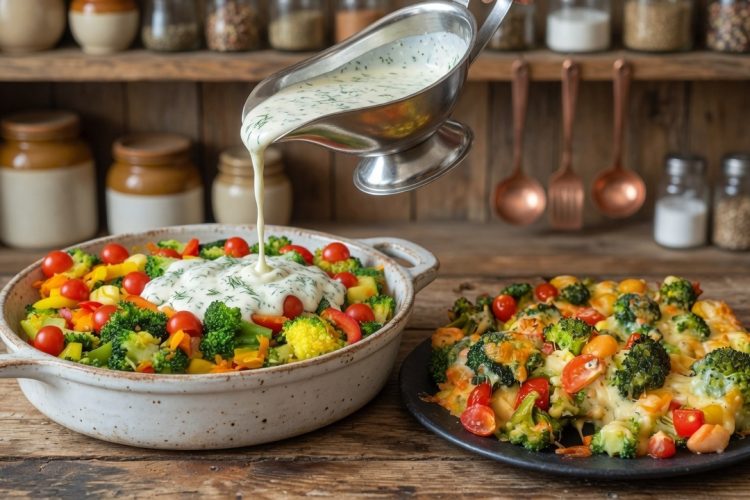
This easy vegetable gratin is a comforting baked vegetable recipe made with potatoes, carrots, cauliflower, and frozen peas in a creamy garlic and herb sauce. Everything is finished with grated cheese and baked until the top is melted and lightly golden.
With only 10 minutes of preparation and 30 minutes in the oven and on the stovetop, this vegetable casserole is a practical choice for a busy weeknight. The combination of tender vegetables, creamy sauce, and melted cheese makes it satisfying enough to serve as a main course or alongside fish, schnitzel, or another favorite protein.
Why Make This Vegetable Casserole
A vegetable gratin is a useful recipe when you want something warm, filling, and easy to prepare without relying on complicated cooking techniques. This version uses everyday vegetables that are easy to find and combines them with a simple homemade cheese sauce.
Potatoes make the dish hearty, carrots bring natural sweetness, cauliflower adds a soft, mild texture, and peas provide small pops of color. The cream cheese gives the sauce a smooth garlic and herb flavor, while the grated cheese forms a golden topping during baking. Everything comes together in one casserole dish, which also makes serving straightforward.
Potatoes, Carrots, and Cauliflower
The vegetables form the main body of this baked vegetable casserole, so preparing them correctly is important. Potatoes should be peeled and cut into bite-sized pieces so they cook evenly and are easy to eat with the other vegetables. Carrots are sliced into rounds, while cauliflower is separated into small florets.
Boiling these vegetables briefly before baking helps them become tender without requiring a long time in the oven. The goal is to cook them until they are just tender rather than completely soft. They will continue cooking when covered with the creamy sauce and baked with the cheese topping.
Preparing the Vegetables Before Baking
Place the chopped potatoes, sliced carrots, and cauliflower florets in a large pot and cover them with water. Add 1 teaspoon of salt and cook the vegetables for about 10 minutes. Check them toward the end of this time because cooking speed can vary depending on the size of the pieces. Once they are just tender, drain them thoroughly and set them aside.
Removing excess water is helpful because the vegetables will later be combined with the creamy sauce. Well-drained vegetables allow the sauce to cling to them instead of becoming unnecessarily diluted, giving the finished gratin a richer and more consistent texture.
How to Make the Creamy Sauce
The creamy sauce starts with a simple roux made from butter and all-purpose flour. Melt the butter in a saucepan over medium heat, then stir in the flour until the mixture forms a thick paste. This mixture provides the base needed to thicken the broth. Slowly adding the beef broth in small amounts is important because it allows the liquid to blend smoothly with the flour mixture. Stir continuously as you add the broth and wait for each portion to combine before adding more. This method helps reduce the chance of lumps and creates a smooth sauce that can coat the vegetables evenly.
Adding Garlic Herb Cream Cheese
Once the broth has been incorporated and the sauce is smooth, stir in the cream cheese with garlic and herb flavor. The cream cheese adds body and a mild seasoned taste without requiring several separate herbs and flavorings. Continue stirring until it is fully incorporated into the sauce.
At this stage, taste the sauce and season with salt and pepper as needed. Because the broth, cream cheese, and grated cheese can all vary in saltiness, it is better to taste before adding a large amount of additional seasoning. The finished sauce should be creamy enough to cover the vegetables without being excessively thick.
Using Frozen Peas
Frozen peas make this vegetable gratin especially convenient because they do not need to be cooked before going into the casserole dish. Add them directly to the drained potatoes, carrots, and cauliflower. The peas will heat through while the gratin bakes, so there is no need to thaw them or use another pan. They also add a fresh green color that makes the finished casserole more appealing. Since the peas are small, they distribute easily among the other vegetables. This simple step saves preparation time and keeps the recipe suitable for busy evenings when you want a homemade meal without a long list of cooking tasks.
Assembling the Vegetable Gratin
Once the vegetables and sauce are ready, transfer the drained potatoes, carrots, and cauliflower to a large casserole dish. A 9×13-inch or approximately 23×33-centimeter dish works well for the stated quantity. Add the frozen peas and pour the creamy sauce over the top. Gently stir the mixture so the sauce reaches the vegetables throughout the dish. Avoid stirring too forcefully because the potatoes and cauliflower can become fragile after boiling. When everything is evenly coated, spread the vegetables into an even layer. This helps the cheese topping cover the surface and allows the gratin to bake consistently.
Adding the Cheese Topping
The grated cheese is the final layer before the vegetable gratin goes into the oven. Sprinkle it evenly across the surface rather than placing it in only a few thick patches. Gouda, cheddar, or your preferred grated cheese can be used according to the original ingredient list. As the casserole bakes, the cheese melts over the creamy vegetables and develops lightly crisp, golden edges. This topping adds a different texture to the soft vegetables and smooth sauce underneath. For the best result, make sure the cheese is spread across the whole surface so each serving gets some of the melted topping.
Baking the Vegetable Casserole
Before baking, preheat the oven to 200°C (400°F). Place the assembled casserole into the hot oven and bake for approximately 20 minutes. The vegetables have already been partially cooked, so the oven mainly needs to heat the casserole, finish tenderizing the vegetables, and melt and brown the cheese. Look for melted cheese with lightly crisped golden edges across the surface. If your oven cooks unevenly, position the casserole on the center rack where possible. Once the topping has reached the desired golden color and the casserole is hot throughout, remove it carefully and allow it to settle briefly before serving.
What to Serve With Vegetable Gratin
This creamy vegetable gratin can be served on its own as a filling main course, but it also works well as a side dish. The original recipe suggests serving it with fish, schnitzel, or another preferred protein. Its creamy sauce and tender vegetables pair particularly well with simply prepared main dishes because the gratin already provides plenty of texture and flavor. For a weeknight meal, you can place the casserole in the center of the table and serve portions directly from the baking dish. It is also suitable for family dinners because the familiar combination of potatoes, carrots, cauliflower, peas, and cheese is easy to pair with many meals.
How to Get the Best Texture
The texture of this potato and vegetable gratin depends largely on how the vegetables are prepared before baking. Cut the potatoes and carrots into reasonably similar pieces so they cook at a similar rate, and keep the cauliflower florets manageable in size. Do not boil the vegetables until they are falling apart because they still need time in the oven. Draining them thoroughly is also important. When making the sauce, add the broth gradually and stir continuously to keep it smooth. Finally, avoid overmixing the casserole after the sauce is added. Gentle stirring keeps the vegetables intact and helps the finished dish maintain a pleasant texture.
Notes for Preparing the Gratin
A few simple details can make this baked vegetable recipe easier to prepare. The vegetables should be just tender after their initial 10-minute cooking period, not completely soft. The frozen peas can be added straight from the freezer. When preparing the sauce, adding the broth gradually is the easiest way to achieve a smooth consistency. Taste the sauce before adjusting salt and pepper, especially because the cheese and cream cheese contribute seasoning. The cheese should be distributed evenly over the surface for consistent browning. Once baked, serve the gratin while it is hot so the sauce remains creamy and the cheese topping is at its best.
Storing and Reheating
If you have leftover vegetable gratin, allow it to cool before transferring it to a suitable covered container and refrigerating it. When reheating, warm individual portions gently until heated through. The creamy sauce may become thicker after refrigeration, which is normal for a baked dish containing flour, butter, and cream cheese. Reheating slowly can help the sauce loosen as it warms. If you are preparing the dish ahead for a meal, keep the assembled casserole refrigerated until it is ready to be baked, provided it is handled and stored safely. For the best texture, the cheese topping should be baked until melted and lightly golden rather than left under the heat for too long.
Vegetable Gratin for a Weeknight Meal
This easy vegetable gratin fits well into a simple weeknight meal plan because the preparation is divided into straightforward stages. First, prepare and briefly cook the vegetables. While they are cooking, heat the oven and prepare the creamy sauce. Once the vegetables are drained, combine them with the peas and sauce in the casserole dish, add the cheese, and bake. There is no need for complicated equipment beyond a pot, saucepan, and casserole dish. The finished dish provides potatoes and several vegetables in a creamy baked format, making it an easy option when you want a warm casserole that feels more substantial than plain steamed or boiled vegetables.
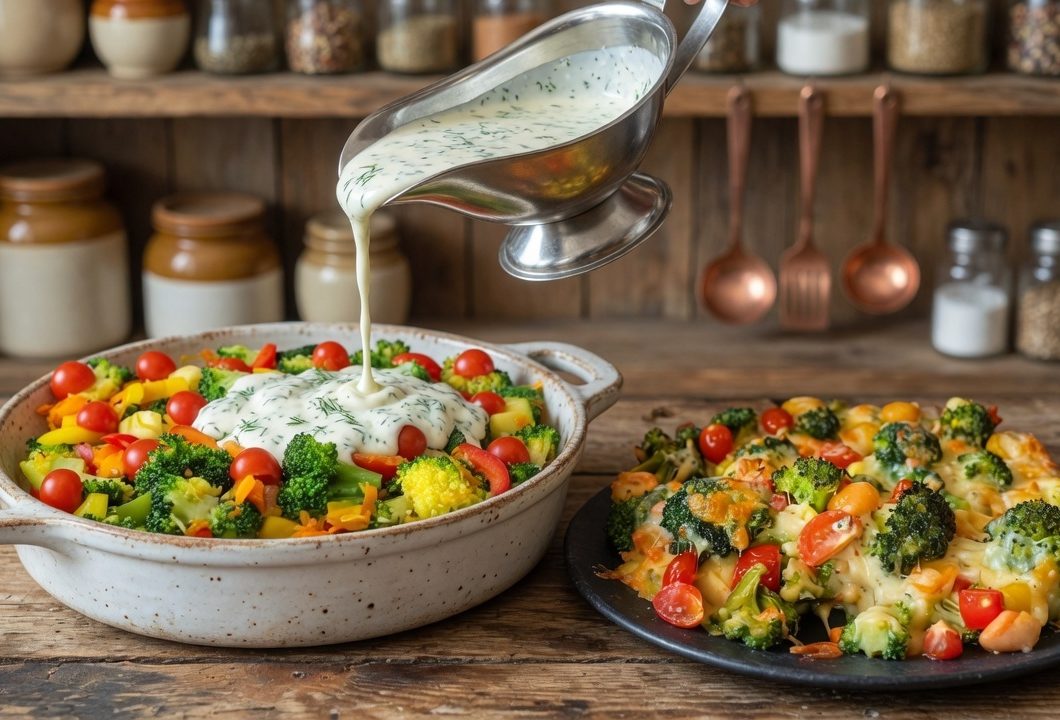
Ultimate Low Calorie Vegetable Bake
 Recipe by admin
This easy vegetable gratin combines tender potatoes, carrots, cauliflower, and peas with a creamy garlic and herb sauce. The casserole is finished with grated cheese and baked until the topping is melted and lightly golden. It makes a comforting main course or a hearty side dish for fish, schnitzel, or your preferred protein.
4
servings10
minutes30
minutes386
kcal40
minutesIngredients
- Vegetables
500 g (1 lb) potatoes, waxy or starchy potato of your choice
3 carrots, about 200 g (7 oz), thinly sliced
500 g (1 lb) cauliflower florets, about ½ a head of cauliflower
150 g (1 5/7 cups) frozen peas
- Creamy Sauce
2 tablespoons butter (30 g / 1 oz)
30 g (¼ cup) all-purpose flour
500 ml (2 cups) beef broth, UK beef stock
120 g (½ cup) cream cheese with garlic and herb flavor
- Cheese Topping
120 g (1 cup) grated cheese, such as Gouda, cheddar, or your favorite
Directions
- Prepare and cook the vegetables. Peel and cut the potatoes into bite-sized pieces. Peel and slice the carrots, then divide the cauliflower into florets. Put the vegetables in a large pot, cover with water, add 1 teaspoon salt, and cook for 10 minutes until just tender. Drain well. Preheat the oven to 200°C (400°F).
- Make the creamy sauce. Melt the butter in a saucepan over medium heat. Stir in the flour to make a thick paste. Slowly add the beef broth in small amounts, stirring continuously until smooth before adding more. Once all the broth is incorporated, stir in the garlic and herb cream cheese. Season with salt and pepper to taste.
- Combine the vegetables and sauce. Transfer the drained vegetables to a large casserole dish. Add the frozen peas directly without cooking them first. Pour the creamy sauce over everything and gently stir until the vegetables are evenly coated.
- Add the cheese. Spread the vegetables evenly in the casserole dish, then sprinkle the grated cheese over the entire surface.
- Bake the gratin. Place the casserole in the preheated oven and bake for about 20 minutes, or until the cheese has melted and the edges are lightly golden and crisp.
- Serve. Serve the vegetable gratin hot as a main course or use it as a side dish with fish, schnitzel, or your preferred protein.
Notes
- Cut the vegetables into similar-sized pieces so they cook evenly.
- Drain the vegetables well before adding the sauce.
- Add the beef broth gradually while making the sauce to help prevent lumps.
- Frozen peas can be added directly to the casserole without thawing or precooking.
- Taste the sauce before adding extra salt because the broth, cream cheese, and grated cheese may already contain seasoning.
- For the best texture, serve the gratin while it is hot and the cheese topping is still melted.